
Selle SMP Saddles
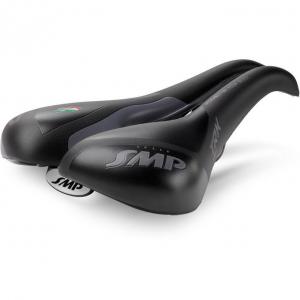
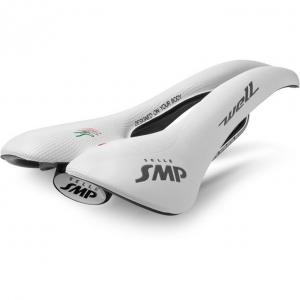
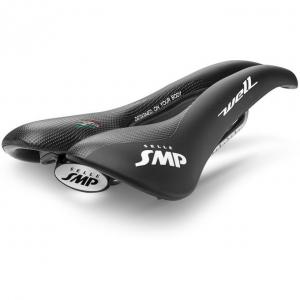
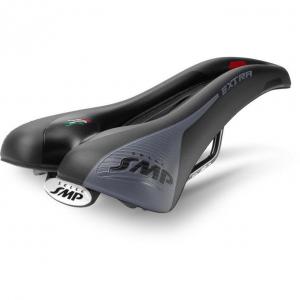
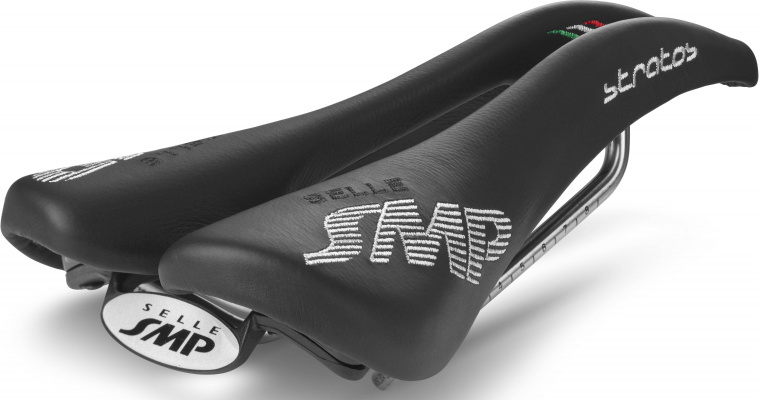
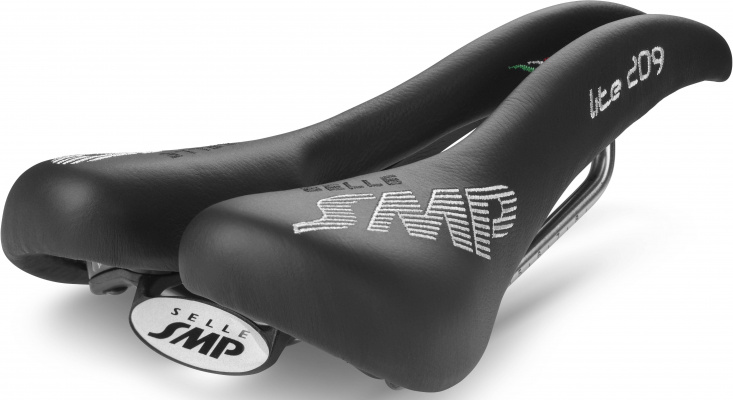
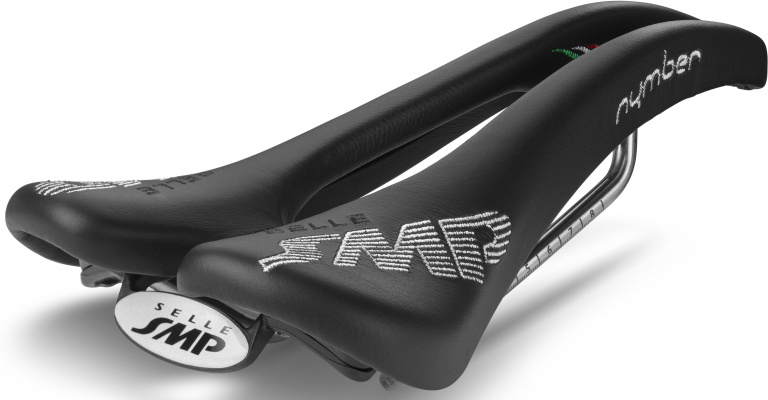
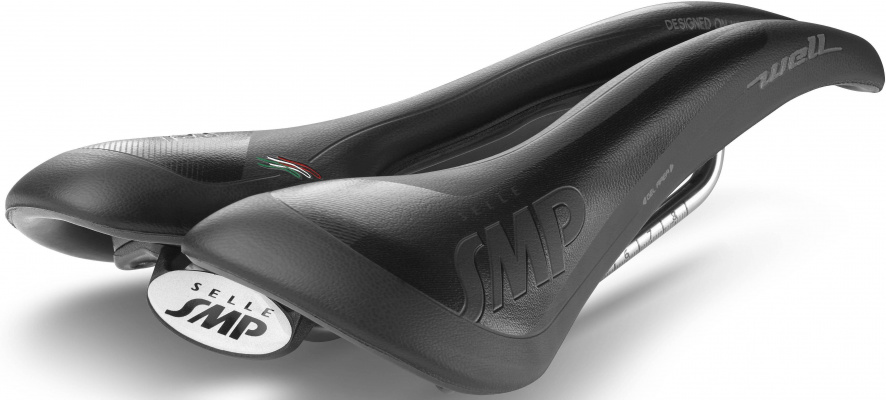
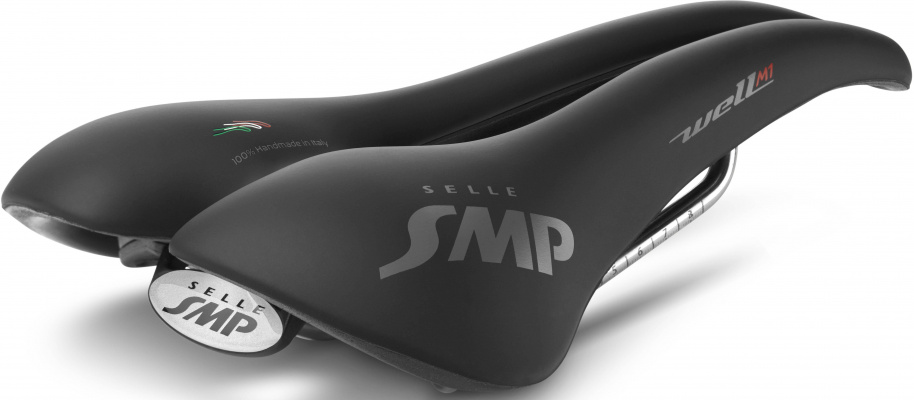
Selle SMP saddles are instantly recognisable - that swept-down eagle beak nose and full-length central cutout aren't styling choices, they're a mechanical answer to a problem that derails more riders than any puncture: perineal numbness and saddle sores. Developed alongside urologists, these Italian-made saddles are shaped to place your weight entirely through the ischial tuberosities - your sit bones - leaving soft tissue completely unloaded. That's the whole idea, and it works because the geometry enforces it rather than relying on you to find the right position by chance.
The range runs from race-weight carbon-railed options favoured by road riders chasing marginal comfort gains, through to generously padded touring and commuter saddles that make winter base miles on UK B-roads significantly more manageable. Bikepacking a multi-day route across the Cairngorms or grinding out daily commutes through Manchester - the discipline changes, but the core ergonomic logic stays consistent across the whole family. Width, padding density, and rail material are the three variables you're choosing between, and we've laid out the full range below so you can match the right saddle to how you actually ride. Use our price comparison to find the best UK deal on the exact model and width you need.
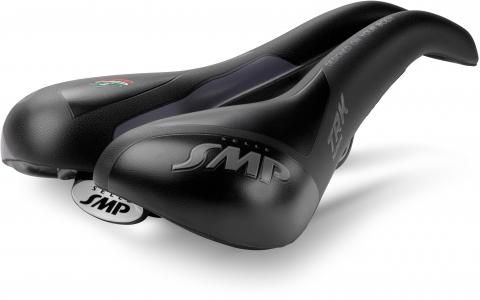
Prices and availability can change quickly. Delivery charges are not always included in listed prices.
Final price, stock status and delivery terms are set by retailer. We may receive a commission on purchases made.
Getting the Setup Right Before You Ride
Fitting a Selle SMP saddle isn't the same as bolting on a conventional one and eyeballing it level. The shape demands a specific approach, and skipping it is why some riders try one and wonder what the fuss is about. Start by placing a spirit level across the two highest points - the rear pad and the raised section just behind the nose tip - to establish your baseline. From there, tilt the nose down by two to five degrees. The exact amount depends on your hip flexibility and how aggressive your position is; riders with tighter hamstrings or a more upright stack typically need less drop.
Rail standards matter here too. Most Selle SMP models run 7x7mm AISI 304 stainless steel rails, which slot into any standard seatpost clamp without fuss - nothing exotic required. Step up to the CRB models and you're into 7x9mm oval carbon fibre rails, which demand a seatpost with a compatible top-clamp or a specific side-clamp adapter designed for oval profiles. Don't assume your current post will work; check the spec first. And if you're fitting CRB carbon rails, keep your torque wrench handy - eight newton metres is the ceiling, and going beyond it risks crushing the rail oval. It's the kind of thing worth double-checking a week after initial fitting too, since the unique leverage geometry of an SMP on a seatpost clamp during hard seated climbing can encourage bolts to settle.
Making Sense of the Model Range
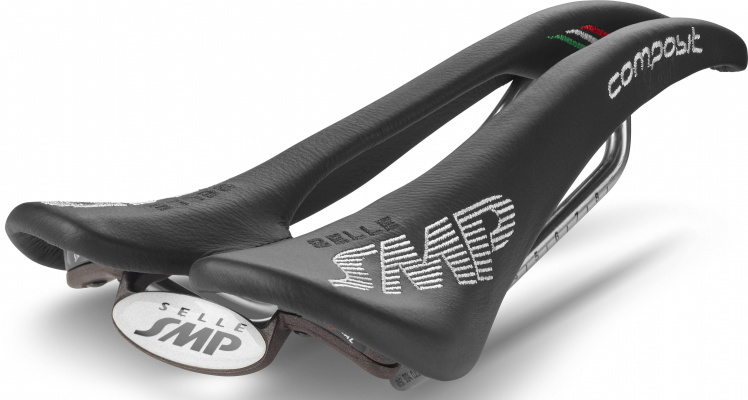
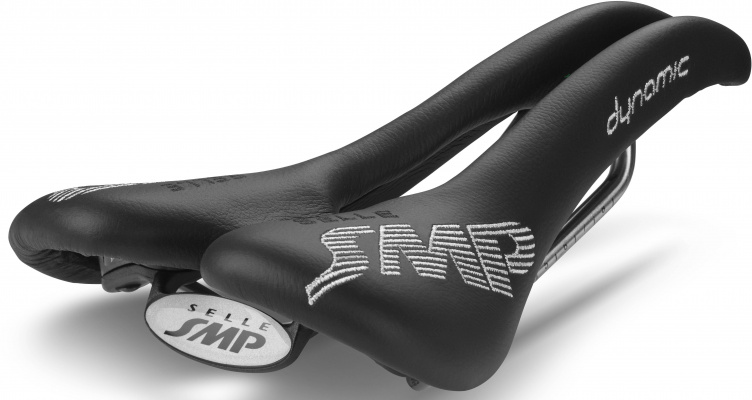
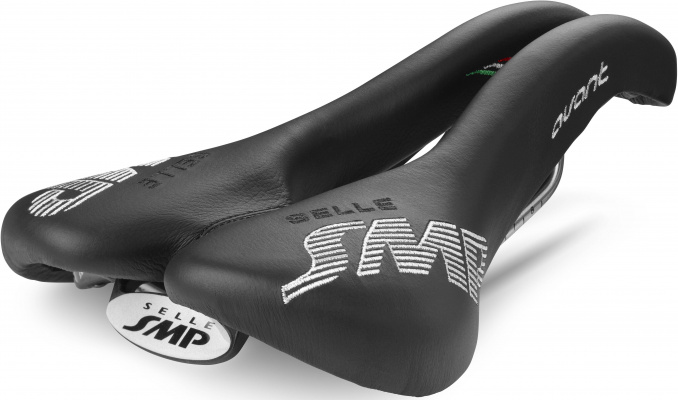
Selle SMP splits broadly into two families, and knowing which side of the line you fall on saves a lot of head-scratching. The Professional line - covering models like the Composit, Evolution, Dynamic, and Avant - is aimed at road racing, sportive riding, and XC where weight and precision matter. Padding is minimal elastomer, covers are leather or microfibre, and the shapes are cut for riders who spend hours in an aggressive, forward position. The Composit is the narrowest and lightest of the family; the Avant widens things out for riders with broader sit bone width without adding unnecessary bulk.
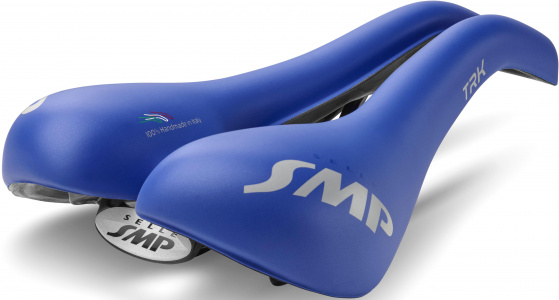
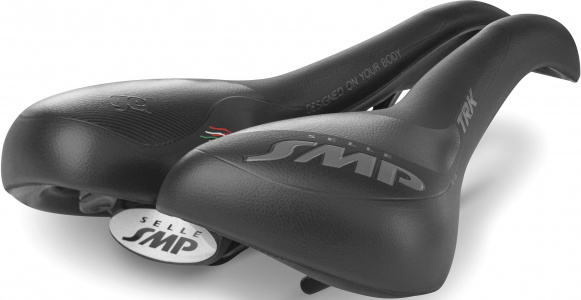
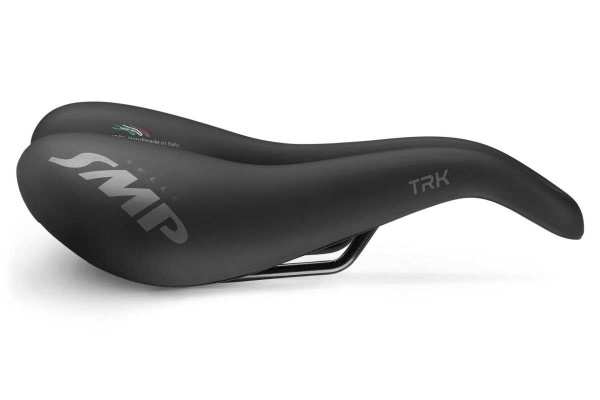
The Tourism and Well line takes a different approach. Models like the TRK, Well, and VT30C use polyurethane padding and SVT (SMP Vacuum Tech) covers - a bonding process that applies the cover material without adhesives or traditional stitching. The result is a saddle that's notably more forgiving underfoot, better suited to e-bike riders, commuters, and gravel cyclists who want the perineal relief of the SMP design without the unpadded firmness of the race range. The VT30C in particular sits at a useful crossover point: enough structure for longer efforts, enough cushioning that you're not wincing on the first cobbled section out of town.
If you're weighing up alternatives, ISM saddles take a similarly pressure-relieving philosophy with a split-nose design, while Ergon saddles lean harder into sit-bone-specific shaping with a more conventional silhouette. Fizik saddles offer a wider range of flex profiles if you're coming from a more traditional road background and want to transition gradually. None of them use quite the same aggressive beak geometry as SMP, so the ride feel is genuinely different rather than just a branding distinction.
The best Selle SMP saddle for road cycling is rarely the widest or most padded option - it's the one that matches your sit bone width and position. A narrow saddle on wide sit bones means you're back to loading soft tissue regardless of the cutout.
UK Conditions and Long-Term Care
British riding throws a fairly consistent mix of grit, rain, and mud at your saddle, and it's worth knowing how SMP handles that before you commit. The SVT vacuum-bonded covers on the TRK and VT-series are completely waterproof and have no stitching seams to trap road salt or let grit work its way inside. That matters on winter rides where the rear wheel is consistently throwing up abrasive paste - traditional stitched covers can degrade surprisingly quickly under that kind of sustained assault. The SVT construction sidesteps that failure mode entirely.
The completely open central channel that gives SMP its signature perineal relief does collect mud on gravel and trail rides - it's a channel, so physics applies. A quick rinse with a hose after a muddy Peak District loop will clear it without any special technique; just don't jet-wash directly into the rail clamp area. The rear depression moulded into the back of the saddle, designed to protect the coccyx from impact, can also gather grit if you're riding loose stuff regularly. Wipe it out before grime has a chance to dry and harden.
Check your rail clamp torque every few weeks if you're doing a lot of sustained climbing in the saddle. The angular shape of an SMP creates slightly different leverage on the clamp compared to a flat saddle, particularly when you're grinding a long seated ascent like something out of the Yorkshire Dales. It doesn't mean the saddle is poorly designed - it just means the physics are different, and a periodic check costs nothing. If you're running Brooks saddles on another bike and used to a set-and-forget approach, this is one area where SMP asks a little more attention.
The eagle beak tip can look vulnerable if you're locking up next to a wall or stacking the bike in a van, but in practice the curved nose is more robust than it looks. It's not something that needs padding or protection under normal transport conditions.
Selle SMP Saddles FAQs
How do I choose the right Selle SMP saddle size?
Measure your sit bone width first - press down onto a piece of corrugated cardboard and measure the two indentations left by your ischial tuberosities. Selle SMP maps their saddle widths to those measurements, ranging from narrow options like the Composit through to wider models like the Avant or TRK Large. Get the width wrong and the central cutout can't do its job, because your soft tissue ends up loaded regardless.
Why do Selle SMP saddles point down at the nose?
The dropped eagle beak nose is there to stop any contact with the urogenital area when you roll your pelvis forward - whether that's into an aero tuck or a hard climbing position. A flat nose would press into soft tissue the moment your position shifts forward. The beak clears that zone entirely, and it also gives your inner thighs a stable surface to brace against during hard efforts without creating friction.
How do you set up and level a Selle SMP saddle?
Don't use the underside of the shell as your reference point - it's curved and will mislead you. Place a spirit level across the two highest points of the saddle surface, then tilt the nose down two to five degrees from that baseline. Riders with more flexibility or a lower, more aggressive position can get away with less drop; if you're upright or have tight hips, start closer to five degrees and dial back from there.