
Scott Time Trial & Triathlon Bikes
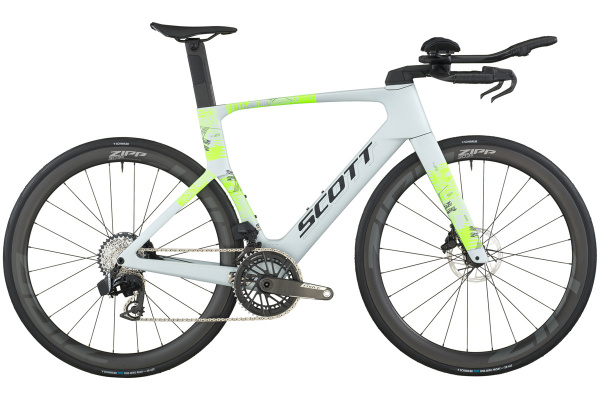
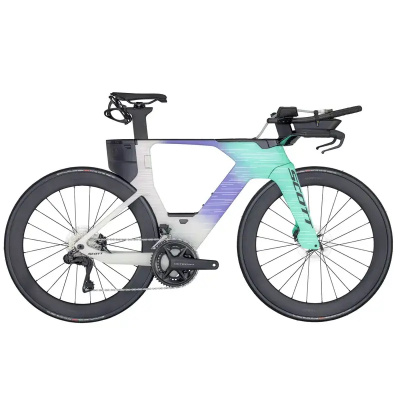
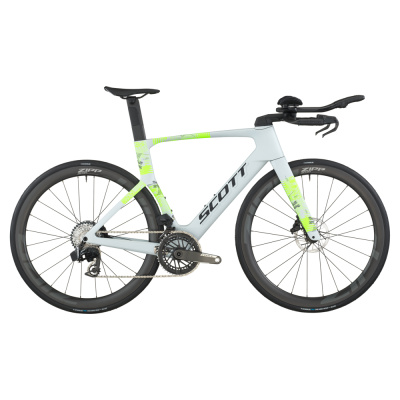
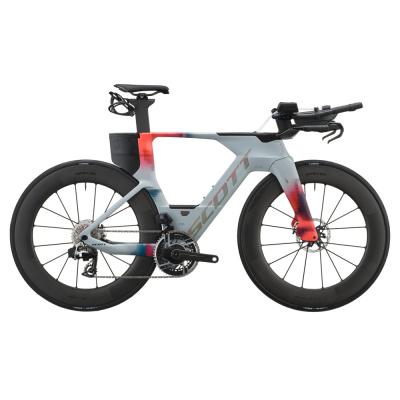
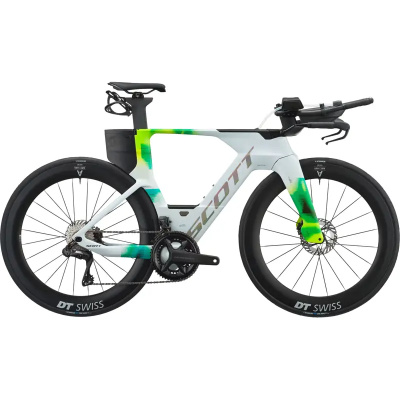
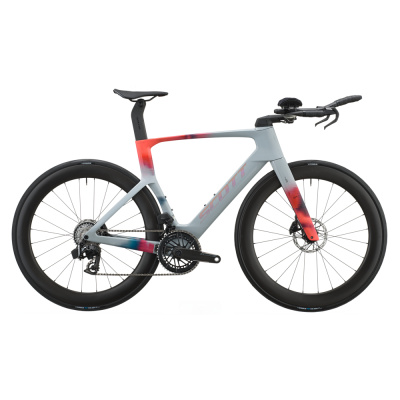
Scott Time Trial and Triathlon bikes are built around a single purpose: getting you to the finish line faster by making the air work against you as little as possible. The Plasma series sits at the heart of that mission, and it splits cleanly into two distinct tools for two distinct jobs. The Plasma RC TT is the UCI-legal race weapon - stripped back, rules-compliant, and built for domestic CTT events and UCI-sanctioned time trials where every gram and every millimetre of tube profile is scrutinised. The Plasma 6 takes a different approach entirely: freed from the UCI rulebook, it wraps integrated hydration and nutrition storage directly into the frame's aero shell, making it a purpose-built triathlon rig for Ironman-distance racing where self-sufficiency matters as much as raw speed.
Both bikes share Scott's HMX carbon layup technology and the Syncros Creston iC TT integrated cockpit, giving you a wide range of positional adjustability without bolting on a tangle of aftermarket kit. Whether you're chasing a 10-mile PB on a blustery A-road or stacking miles on a long-course triathlon, the geometry adjustability here means you can dial in a sustainable aero tuck rather than simply surviving one.
Prices and availability can change quickly. Delivery charges are not always included in listed prices.
Final price, stock status and delivery terms are set by retailer. We may receive a commission on purchases made.
Decoding the Scott TT and Triathlon Lineup
The naming logic is straightforward once you know it. RC stands for Racing Concept - Scott's shorthand for their top-tier construction using HMX carbon fibre, which is approximately 20 per cent stiffer than their HMF layup at the same weight. That stiffness matters on a TT bike because power transfer is non-negotiable; any frame flex between your legs and the rear wheel is wasted effort. The Plasma RC TT is built entirely around this philosophy, with a UCI legal TT frame geometry and tube profiles that conform to the 3:1 aspect ratio rules. It's the bike you reach for at your club's evening 10 or a national championship. If you're also considering what rivals bring to the start line, Cervélo time trial and triathlon bikes and Trek time trial and triathlon bikes occupy a similar premium bracket, though Scott's integrated storage solution on the Plasma 6 sets it apart in the triathlon-specific conversation.
The Plasma 6 is a different proposition. Because triathlon doesn't fall under UCI race rules, Scott's engineers could go further - integrating large hydration and nutrition storage boxes directly into the down tube and behind the head tube. This isn't just convenient; it's aerodynamically deliberate. The fairings are shaped so the bike is actually more slippery through the air with the bottles in place than without them. Remove the bottles and you disrupt the intended airflow. It's a small but telling detail about how thoroughly Scott has thought through the design. For riders who want Scott's broader carbon expertise applied to road cycling, their Scott road bikes range shows the same material rigour across more traditional geometries.
The F01 Aero Profile and What It Means in Practice
Scott's F01 aerodynamic profile is the tube-shaping system that runs through the Plasma family. The key point is that it's optimised for real-world yaw angles - the angles at which wind actually hits the bike when you're riding on an exposed A-road, not just in a straight-on wind tunnel test. On UK courses, where crosswinds on dual carriageways are a fact of life rather than an edge case, that matters. A frame tuned purely for zero-yaw looks impressive on a spec sheet but can feel nervous the moment the wind swings sideways. The F01 profiles are designed to remain stable and generate drag reduction across a wider range of conditions.
The Syncros Creston iC TT integrated cockpit deserves specific attention because fit is where most riders leave time on the road. The cockpit offers a substantial range of adjustability - reach, stack, and arm pad width can all be tuned - so you're not locked into a single position. For long-distance triathlon, where holding an aero tuck for six or seven hours is the actual challenge, that adjustability is the difference between a position you can sustain and one you abandon by the halfway mark. The integration also keeps the front end clean from an aero standpoint; there are no stray cables or clamps to disturb airflow. Pairing the cockpit with a Scott computer mount keeps your head unit within the existing aero profile rather than sticking a bracket into the wind.
Running a Scott Plasma on UK Roads and Race Days
The deeper tube sections on both Plasma models demand a degree of rider confidence on exposed stretches. On a sheltered criterium circuit it's a non-issue, but on a typical UK time trial course - think an out-and-back on a dual carriageway with open fields either side - crosswind gusts require active steering input. That's not a criticism unique to Scott; it's the physics of deep-section aero frames. The disc brake specification on current Plasma builds helps here: reliable modulation on damp UK tarmac means you're not caught out when a gust pushes you toward a verge and you need to scrub speed quickly.
Travelling to overseas Ironman events is a reality for many UK triathletes, and the Syncros cockpit is designed with this in mind. The front end can be partially disassembled for packing without requiring you to bleed the hydraulic disc brakes - a genuinely useful feature when you're working in an airport hotel room the night before a flight. That said, the Plasma 6's integrated carbon fairings need proper protection in transit. A well-fitted bike box is not optional kit here. We'd point you towards Scott bike flight bags and boxes as the logical starting point - sized and padded to suit the Plasma's profile. If you're doing your own pre-race setup, having the right Scott tools to hand for torque-sensitive carbon components means you're not improvising with whatever the hotel concierge can find.
Related searches:
Scott Time Trial & Triathlon Bikes FAQs
Is the Scott Plasma UCI legal?
The Plasma RC TT is fully UCI legal and built specifically for sanctioned time trials and CTT events. The Plasma 6, by contrast, is designed for triathlon and Ironman racing - its integrated hydration fairings and storage boxes don't comply with UCI rules, so it's not a frame you'd line up on at a national championship TT.
What is the difference between HMF and HMX carbon on Scott bikes?
HMX is Scott's premium carbon layup - roughly 20 per cent stiffer than HMF at the same weight. It's reserved for RC-badged models where power transfer and frame rigidity are the priority. HMF gives a marginally more compliant feel, which some long-distance triathletes actually prefer over an Ironman-distance effort where road buzz accumulates over hours.
How easy is it to travel with a Scott Plasma?
More straightforward than you might expect. The Syncros integrated cockpit is designed to be partially dismantled for packing without needing to bleed the hydraulic brakes - a real time-saver at the airport. The carbon fairings on the Plasma 6 are the vulnerable point, so investing in a proper bike flight box rather than a soft bag is the sensible call.