
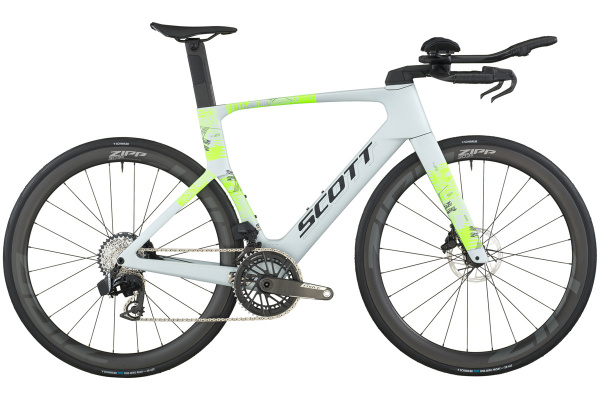
Scott Foil RC TRI
Slice through sprint triathlons and flat time trials with aero speed that doesn't punish you over distance.
- HMX carbon frame: 915g stiffness meets aero speed
- ZIPP VUKA extensions with wireless eTap AXS blips
- ZIPP 303S carbon wheels: tubeless-ready, 28mm tyres
- Tyre clearance to 30mm for comfort tuning
- SRAM Force AXS: crisp wireless shifting under load
- Syncros Duncan aero seatpost balances speed and compliance
Scott Foil RC TRI Deals

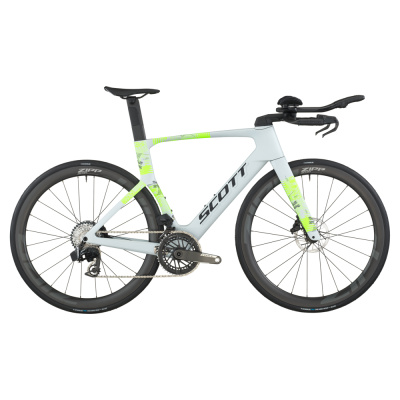
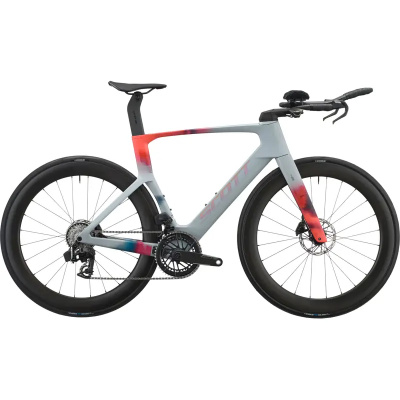
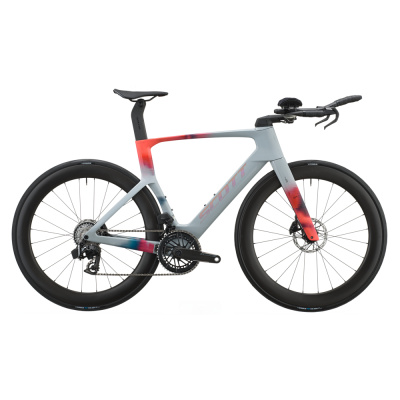
Prices and availability can change quickly. Delivery charges are not always included in listed prices.
Final price, stock status and delivery terms are set by retailer. We may receive a commission on purchases made.
Bikesy's Verdict
The Scott Foil RC TRI is a focused, fast machine for short-course triathlons and time trials where aerodynamic advantage compounds quickly. It's light enough to climb without penalty, stiff enough to deliver power efficiently, and surprisingly comfortable for a bike shaped by the wind tunnel. The SRAM Force AXS wireless shifting and ZIPP VUKA extensions are well integrated, and the overall package feels cohesive rather than cobbled together.
If your calendar mixes sprint and Olympic-distance triathlons with the odd flat road race or time trial, this bike offers genuine versatility without the compromises of a full-on TT rig. It's not the tool for long-distance Ironman events or mountainous terrain, but for shorter, faster efforts on smooth tarmac, it's a scalpel. Worth serious consideration if you're chasing seconds in the wind and want a bike that's both race-sharp and rideable.
Pros
- Exceptional aero speed without punishing weight penalty
- Wireless SRAM Force AXS with blips: shift in the tuck
- Sharp, predictable handling suits fast racing and tight packs
- Surprisingly comfortable for an aero bike; 30mm tyre clearance helps
- ZIPP 303S carbon wheels and quality Syncros finishing kit
Cons
- Aggressive position less suited to long-distance triathlons or all-day comfort
- Integrated aero cockpit limits fit adjustability if your proportions are unusual
- No power meter included; budget extra if you train to watts
About the Scott Foil RC TRI
The Scott Foil RC TRI takes the brand's fastest aero road platform and reconfigures it for multi-discipline racing. You're looking at HMX carbon shaped for slippery speed, a ZIPP VUKA cockpit that puts you in the tuck, and SRAM Force AXS wireless shifting controlled by blips mounted exactly where your thumbs want them. It's built for short-course triathlons, time trials, and any event where seconds leak away in the wind.
Scott's third-generation Foil philosophy - aero, lightweight, comfort - translates into a frame that's both wind-cheating and surprisingly liveable. The sculpted seat tube hugs the rear wheel, dropped seatstays add a degree of vertical give, and internal cable routing keeps the profile clean. At 915g for a size 54 frame, it's light enough to hold speed on rolling roads without feeling like a brick when the gradient kicks up. The TRI spec swaps a traditional road cockpit for extensions and blips, but the underlying chassis remains the same proven platform that's earned respect in road racing and fast sportives alike.
This isn't a dedicated superbike for Ironman-distance slogs; it's a scalpel for shorter, faster efforts where aerodynamic advantage compounds quickly. If your calendar mixes sprint triathlons, local time trials, and the odd fast road race, the Foil RC TRI offers genuine versatility without the compromises of a full-on TT rig.
Scott Foil RC TRI geometry
The Foil RC TRI shares its geometry with the standard Foil RC road bikes, which means a 72-degree head angle across the size run and a relatively short 410mm chainstay. That head angle sits in traditional road territory - stable enough for confidence at speed, sharp enough to respond crisply when you need to adjust your line. The short rear end keeps the bike feeling taut and responsive rather than stretched and sluggish, which matters when you're accelerating out of corners or reacting to surges in a pack.
Reach grows modestly as you step up through the sizes, but stack climbs more noticeably, so taller riders aren't forced into an overly aggressive position. The ZIPP VUKA extensions and Syncros aero stem let you dial in your tuck, but the underlying frame geometry doesn't lock you into an extreme position. You'll sit lower and further forward than on a traditional road setup, but the frame itself isn't as radical as a dedicated TT bike. That balance means you can hold an aero position for the duration of a sprint triathlon without your lower back staging a revolt, yet still sit up and ride comfortably when you're not racing.
The 70mm bottom bracket drop is standard for modern road bikes, offering a low centre of gravity for stability without dragging pedals through corners. Combined with the short chainstays, the bike pivots neatly and holds its line predictably, whether you're carving through a fast descent or threading through traffic in a criterium.
Component choices & upgrades
The stock build is already well sorted. SRAM Force AXS delivers wireless shifting that's both reliable and intuitive, with the eTap blips positioned on the extensions for thumb-actuated gear changes without breaking your aero tuck. The 48/35T crankset paired with a 10-36T cassette offers a wide enough range for rolling courses and the occasional punchy climb, though you're not buying this bike for Alpine epics. ZIPP 303S carbon wheels are tubeless-ready, reasonably light, and aerodynamically competent, wrapped in 28mm Schwalbe Pro One tyres that balance speed with a bit of cushion.
If you're chasing marginal gains, the wheels are the obvious first target. Deeper-section carbon hoops - ZIPP 404 or 454 NSW, for instance - will shave watts in steady crosswinds and boost straight-line speed, though they'll add weight and cost. The 303S wheels are sensible all-rounders; only upgrade if your race calendar justifies the expense and you're confident handling deeper rims in gusty conditions.
Tyres offer a cheaper route to performance tuning. The stock 28mm Schwalbes are fast and comfortable, but if your courses are glass-smooth and you're willing to sacrifice a bit of compliance, dropping to 25mm rubber will reduce rolling resistance and frontal area. Conversely, if comfort is limiting your ability to hold power, the frame officially clears 30mm tyres - some riders report fitting 32mm - so there's room to experiment.
The Syncros Belcarra saddle is a decent starting point, but saddles are intensely personal. If you're spending hours in the aero position, invest time finding one that supports you properly. A power meter isn't included on this build, so if you're training with structured intervals or racing to power targets, budget for a crankset or pedal-based unit. Beyond that, the SRAM S900 hydraulic disc brakes offer ample stopping power, and the Syncros Duncan aero seatpost does its job without fuss. Don't chase upgrades for the sake of it; ride the bike as specced, identify what's actually holding you back, then spend accordingly.
Where the Scott Foil RC TRI excels
This bike is outstanding at short-distance triathlons and time trials on flat to rolling terrain. The aerodynamic frame, extended cockpit, and efficient drivetrain combine to deliver sustained high speeds with less effort, and the relatively low weight means you won't haemorrhage time when the road tilts upward. It's a weapon for sprint and Olympic-distance events where every watt saved in the wind translates directly into faster splits.
It also handles fast road races and criteriums surprisingly well. The sharp steering and short rear end make it nimble in tight packs, and the aero advantage doesn't disappear just because you're riding in a bunch. If your local race scene mixes flat crits with the odd time trial, the Foil RC TRI can do double duty without feeling compromised in either discipline.
Where it's less ideal: long-distance triathlons and mountainous terrain. The aggressive position and aero-focused geometry are optimised for shorter, faster efforts, not all-day comfort over 180km. If you're targeting half or full Ironman distances, a dedicated long-course TT bike with more relaxed geometry and integrated hydration will serve you better. Similarly, if your races feature sustained climbs, a lightweight climbing bike will be more efficient and more enjoyable. The Foil RC TRI climbs competently for an aero bike, but it's not a hill-climber's tool.
It's also not the bike for rough roads or gravel detours. The 30mm tyre clearance offers some scope for comfort tuning, but the frame is built for smooth tarmac, and the aero cockpit limits your ability to manoeuvre over technical terrain. Stick to well-surfaced roads and race courses, and the Foil RC TRI will reward you with speed and efficiency.
Scott Foil RC TRI FAQs
What is the tyre clearance on the Scott Foil RC TRI?
Scott officially states clearance up to 30mm, though some riders have successfully fitted 32mm tyres. That's enough room to run slightly wider rubber for added comfort or rough-road capability without sacrificing too much speed. If you're racing on less-than-perfect tarmac, experimenting with 30mm tyres could improve compliance and traction.
Is the Scott Foil RC TRI suitable for long-distance triathlons?
Not really. The aggressive aero position and race-focused geometry are optimised for shorter, faster efforts - sprint and Olympic-distance events where aerodynamic advantage matters most. For half or full Ironman distances, you'd be better served by a dedicated long-course TT bike with more relaxed geometry, integrated hydration, and a position that's sustainable over many hours.
What are the key aerodynamic features of the Scott Foil RC TRI?
Deep tube profiles, a sculpted seat tube that closely follows the rear wheel, dropped seatstays, internal cable routing, and an integrated aero cockpit all contribute to slippery airflow. The ZIPP VUKA extensions and Syncros aero stem further reduce frontal area and drag. Every element is shaped to cheat the wind, and the cumulative effect is measurable speed at threshold power.
How does the Scott Foil RC TRI compare to other aero road bikes for triathlon?
It sits between a pure road race aero bike and a dedicated TT machine. Compared to the Specialized Tarmac SL7 or Cervélo S5, the Foil RC TRI adds triathlon-specific extensions and blips but retains road-bike handling and versatility. Against full TT bikes like the Cervélo P5 or Orbea Ordu, it's lighter, more nimble, and better suited to mixed-use racing, but less optimised for long, flat time trials.
What is the weight of the Scott Foil RC TRI?
The complete bike typically weighs between 7.4 and 8.0kg, depending on build specification and size. That's competitive for an aero road bike with a triathlon cockpit, light enough to climb without penalty yet stiff enough to deliver power efficiently. The HMX carbon frame alone weighs 915g in a size 54.
What groupset does the Scott Foil RC TRI come with?
SRAM Force AXS, a 24-speed electronic wireless system with a 48/35T crankset and 10-36T cassette. Shifting is controlled via eTap blips mounted on the ZIPP VUKA extensions, so you can change gear without leaving the aero position. It's reliable, intuitive, and performs consistently under load.
Is the Scott Foil RC TRI comfortable for extended riding?
For an aero bike, yes - surprisingly so. The dropped seatstays, HMX carbon layup, and Syncros Duncan aero seatpost all contribute to vertical compliance, and the ability to run 30mm tyres adds further cushioning. That said, the aggressive aero position and race-focused geometry are optimised for shorter, faster efforts. You can ride it for several hours without suffering, but it's not a long-distance endurance machine.
What are the main advantages of the HMX carbon frame on the Scott Foil RC TRI?
HMX carbon is Scott's high-performance layup, balancing stiffness, low weight, and aerodynamic shaping. The frame weighs just 915g in a size 54, yet it's stiff enough to transfer power efficiently and shaped to slice through the wind. The material also allows for tuned compliance in key areas - dropped seatstays, for instance - so the bike doesn't beat you up over rough tarmac.
Key Features & Benefits
- HMX carbon frame (915g, size 54): Delivers aero speed without the weight penalty, so you climb competently and accelerate sharply
- SRAM Force AXS with wireless eTap blips: Shift gears without breaking your aero tuck; reliable, intuitive, and clean installation
- ZIPP VUKA extensions and Syncros aero cockpit: Optimised aero position for sustained high speeds in triathlons and time trials
- ZIPP 303S carbon tubeless wheels with 28mm Schwalbe Pro One tyres: Fast, light, and comfortable; tubeless-ready for lower pressures and fewer punctures
- Dropped seatstays and 30mm tyre clearance: Adds vertical compliance and comfort tuning options without sacrificing aero efficiency
Scott Foil RC TRI 2024 and 2023 differences
The 2025 Scott Foil RC TRI represents the current iteration of Scott's third-generation Foil platform, which debuted around 2022. The core HMX carbon frame, aerodynamic tube shaping, dropped seatstays, and internal cable routing have remained consistent across the 2023, 2024, and 2025 model years, with only minor specification updates distinguishing each year's build.
The 2024 model featured a similar SRAM Force AXS groupset and ZIPP 303S carbon wheels, though exact component specifications - cassette ratios, tyre widths, and finishing kit - may have varied slightly depending on regional availability and supply-chain considerations. The 2023 model shared the same fundamental platform but occasionally shipped with different wheelsets or slightly older SRAM Force eTap AXS components before the full AXS ecosystem became standard.
Geometry has remained unchanged across these model years, so ride characteristics, handling, and fit are consistent whether you're looking at a 2023, 2024, or 2025 Foil RC TRI. The primary differences lie in component specification and availability rather than frame design or performance. If you're considering a prior-year model, focus on the groupset, wheels, and finishing kit rather than expecting meaningful frame-level changes.
Alternatives to Consider
Within Scott's own range, the standard Scott Foil RC Pro shares the same HMX carbon frame and aero pedigree but swaps the triathlon extensions for a traditional road cockpit, making it more versatile for road racing, sportives, and fast group rides. If you want the same speed but prefer drop bars and don't need the aero extensions, the RC Pro is the logical choice. Step up to the Scott Foil RC Ultimate and you'll gain SRAM RED eTap AXS, lighter wheels, and a power meter, though the price climbs steeply. For a lighter, climbing-focused alternative within the brand, the Scott Addict RC Pro sheds aero bulk in favour of low weight and all-day comfort, better suited to hilly sportives and Alpine adventures.
Cross-brand, the Specialized S-Works Tarmac SL7 offers similar aero efficiency with a more balanced geometry that suits both racing and long rides, though it's specced with a road cockpit rather than tri extensions. The Cervélo S5 is a pure aero road weapon with deeper tube profiles and a stiffer ride, ideal if you prioritise outright speed over comfort. For dedicated triathlon use, the Cervélo P3 and Orbea Ordu M20 are purpose-built TT bikes with more aggressive geometry, integrated hydration, and optimised aerodynamics for long, flat time trials - though they sacrifice the Foil RC TRI's versatility and handling. The Trek Madone SLR 7 Gen 8 blends aero speed with adjustable compliance via IsoSpeed, offering a middle ground between race sharpness and endurance comfort, though again it's a road bike rather than a tri-specific build.
Reviews
Sharp handling and aerodynamic efficiency define the ride. Steering responds crisply without feeling twitchy, and the short rear end keeps the bike feeling taut through corners and accelerations. At speed, the frame holds its line predictably, inspiring confidence when you're tucked low and pushing hard. The aero profile is tangible - less effort required to maintain threshold pace on flat roads, and the bike feels like it's being pulled forward rather than fighting the wind.
Comfort surprises for a machine this focused on speed. Dropped seatstays and the Syncros Duncan aero seatpost add a degree of vertical compliance, and the ability to run 30mm tyres lets you tune ride quality to suit the road surface. It's not plush, but it doesn't punish you over rough tarmac the way older aero bikes did. When you're holding an aggressive position for an hour or more, that compliance matters.
Climbing performance is competitive for an aero bike. The 915g frame and relatively low overall weight mean you don't haemorrhage speed on rolling terrain or shorter climbs. It's not a dedicated hill-climber - the aero tubes and race position aren't optimised for long Alpine ascents - but it holds its own on undulating courses where aerodynamic advantage still counts. SRAM Force AXS shifts cleanly under load, and the 10-36T cassette offers enough range for most non-mountainous racing.
Because the geometry mirrors the standard Foil RC road bikes, the TRI version retains genuine versatility. You can race a sprint triathlon on Saturday, pin a number on for a flat criterium on Sunday, and the bike performs capably in both disciplines. The ZIPP VUKA extensions and wireless blips are intuitive once you've dialled in your position, and the aero advantage is measurable without requiring extreme flexibility or discomfort.
Full Specification
| Spec | Value |
|---|---|
| Frame | Scott Foil RC TRI |
| Frame Material | FOIL RC HMX Carbon Fiber |
| Frame Features | Internal cable routing, dropped seatstays, flat-mount disc brakes, replaceable derailleur hanger |
| Tyre Clearance | 30mm (official); 32mm reported |
| Bottom Bracket | BB86/BB92 Press Fit |
| Rear Axle | 142x12mm Thru-axle |
| Fork | FOIL RC HMX Carbon |
| Fork Steerer | 1 inch eccentric carbon |
| Shifters | SRAM eTap AXS Wireless Blips |
| Rear Derailleur | SRAM FORCE AXS |
| Front Derailleur | SRAM FORCE AXS |
| Crankset | SRAM FORCE, 48/35T |
| Bottom Bracket Standard | SRAM DUB PF ROAD 86.5 |
| Cassette | SRAM FORCE XG1270, 10-36T |
| Chain | SRAM FORCE |
| Brakes | Hydraulic Disc |
| Brake Levers | SRAM S900 HRD flat mount |
| Brake Calipers | SRAM S900 HRD flat mount |
| Rotors (Front) | 160mm SRAM Paceline |
| Rotors (Rear) | 140mm SRAM Paceline |
| Rims | ZIPP 303S Carbon tubeless, 21 - 23mm internal width |
| Spokes | 24 front and rear, bladed carbon fiber |
| Hubs (Front) | Syncros SL Axle |
| Hubs (Rear) | Syncros SL Axle |
| Tyres (Front) | Schwalbe PRO ONE Aero TL-Easy Fold, 700x28C |
| Tyres (Rear) | Schwalbe PRO ONE Aero TL-Easy Fold, 700x28C |
| Tubeless Ready | Yes |
| Handlebar | ZIPP VUKA Bull with VUKA clip and carbon EVO extensions |
| Stem | Syncros Foil 1.5 Aero |
| Headset | Acros AIF-1138 |
| Seatpost | Syncros Duncan SL Aero CFT |
| Saddle | Syncros Belcarra V 2.0 NEO Cut Out |
| Weight (Approx) | 7.4 - 8.0 kg |
| Frame Weight (Size 54cm) | 915g |