
Scott Saddle Bags
Scott saddle bags - more precisely, the Syncros range that Scott develops in-house - are among the tidiest under-saddle storage solutions you'll find at any price point. Syncros has built a reputation for obsessing over integration, and their seat packs reflect that: low-profile shapes, secure attachment, and no annoying wobble mid-ride. Whether you're rolling out of a Surrey Hills car park on a road bike or loading up for a gravelly slog through the Peaks, the goal is the same - keep your spare tube, CO2, and multi-tool out of your jersey pockets and off your back without the bag looking bolted on as an afterthought.
The range splits into two clear camps. The Syncros Integrated Storage (iS) models are designed to bolt flush into compatible Syncros saddles for a genuinely clean finish, while the strap-on options give you flexibility across whatever saddle you're already running. Both approaches keep weight low and your silhouette honest. If you need significantly more capacity for bikepacking or loaded commuting, our Scott pannier bags and Scott hip packs are worth a look - but for an everyday ride essentials kit, saddle bags are where it starts.
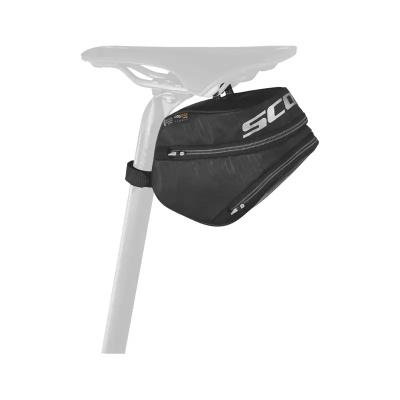
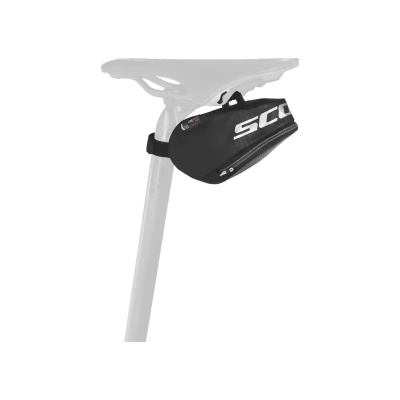
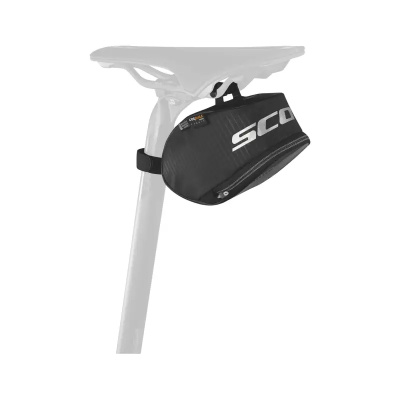
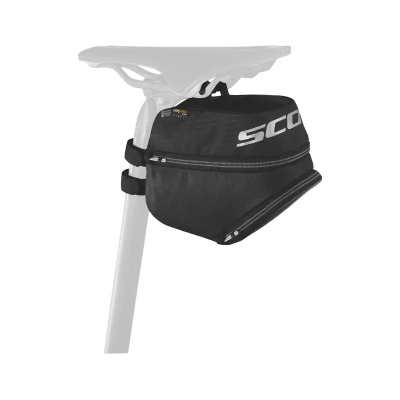
Prices and availability can change quickly. Delivery charges are not always included in listed prices.
Final price, stock status and delivery terms are set by retailer. We may receive a commission on purchases made.
Direct Mount or Strap-On: Getting the Fit Right First
Before you pick a size, you need to pick the right attachment system - and with Syncros, the distinction matters more than with most brands. The Syncros Direct Mount system bolts directly into threaded inserts built into the underside of compatible Syncros saddle shells. Two small hex bolts, no straps, no movement. The bag sits rigid against the saddle base and doesn't shift even on choppy gravel. Clean, rattle-free, genuinely aero. The catch? It only works with saddles designed for it. If you're running a Syncros saddle, check whether yours has the inserts - not all models do. If you're not sure, flip it over and look for the two recessed bolt holes in the shell.
For everyone else - anyone on a Scott saddle without the direct mount interface, or on a different brand altogether - the strap-on models are the practical choice. These use TPR grip straps over the saddle rails and a front strap around the seatpost. TPR (thermoplastic rubber) has enough friction to stop the bag creeping under load without chewing into carbon rails the way aggressive velcro can. Worth knowing: do the straps up tight and check them after your first bumpy descent. They bed in slightly.
MTB riders on dropper posts need one extra check. At full compression, some bags will buzz the rear tyre or foul the dropper's collar. Measure your seatpost drop and compare it against the bag's stated dimensions before you buy. A bag that clears everything on your home trail can catch you out on a bigger travel day out in the Highlands.
Sizing the Syncros Range to Your Riding
Syncros breaks the range down logically by volume, and each step up adds meaningful capacity rather than just a bit more room. The Micro and Small packs - typically sitting in the 0.25 - 0.4L bracket - are road and aero-focused. A lightweight TPU tube, a CO2 canister, an inflator head, and a compact card-style multi-tool fits without any stuffing. That's your puncture kit sorted, your pockets free, and the bag's profile stays narrow enough that it doesn't catch crosswinds on fast descents. If aero cleanliness matters to you, this is the size to go for.
Step up to Medium and Large packs and you're into gravel and MTB territory. A full butyl tube, tyre levers, a multi-tool, a CO2 or a small pump - it all goes in without the zip fighting you. The larger bags also tend to have internal organisation: a separate zipped pocket for small parts stops your valve core rattling around loose inside. For longer gravel days where you might be an hour from a bike shop, that extra capacity is reassuring rather than excessive. If the Syncros range doesn't quite hit your volume needs, Apidura saddle bags and Lezyne saddle bags both offer large-capacity options worth comparing.
The iS models add another layer. These come with an integrated tool - typically a compact multi-tool built into the bag's base or lid - so you're not carrying a separate tool that rolls around inside. Useful if you want a genuinely minimal kit and you're confident the integrated tool covers everything you need. Check the tool spec carefully; some are road-focused (small hex keys, no chain tool) and others include a chain breaker for trail use.
For a broader look at what Syncros makes beyond storage, the Scott tools range covers standalone multi-tools and workshop kit if you'd rather carry your preferred tool separately. And Bontrager saddle bags are another solid comparison point for road-specific sizing.
Keeping Syncros Bags Running Through a UK Winter
Saddle bags take more punishment than most riders realise. Sitting directly behind the rear wheel, they catch everything the tyre flings up - grit, road salt, wet mud, the lot. Most Syncros bags use rubberised or coated fabrics with water-resistant zippers, which handle a typical British drizzle without drama. But zippers that get caked in grit and then left damp will eventually jam or split, usually at the worst moment.
The fix is straightforward. After a muddy or salty ride, unzip the bag fully, rinse the zipper with clean water, and run a zip lubricant (a dry wax type, not an oil) along the teeth before storing it. Takes thirty seconds. The zipper will last years longer. For genuinely prolonged downpours - think a full day's riding in the Welsh mountains rather than a damp morning commute - wrap anything electronic in a small dry bag inside. The saddle bag is highly water-resistant, not submersible.
The dropper post warning bears repeating here because it's an expensive mistake. If you're using a strap-on bag on a mountain bike with a dropper post, the seatpost strap must sit above the dropper's collar, not around the stanchion itself. A strap rubbing against the sliding section of a dropper will wear through the anodizing in a few rides and can damage the post's seals over time. Position it right once and you won't think about it again. If the bag doesn't leave enough clearance when fitted above the collar, a direct mount bag on a compatible saddle - or switching to a frame bag - is the cleaner solution. EVOC saddle bags also offer trail-specific designs with dropper clearance built into the geometry, if that constraint rules out the Syncros strap-on options for your setup.
Scott Saddle Bags FAQs
How do you attach a Scott Syncros saddle bag?
Direct mount Syncros bags use two small hex bolts that thread into inserts built into the underside of compatible Syncros saddle shells - no straps needed. Strap-on models loop the top straps over the saddle rails and secure a front strap around the seatpost. Either way, do a quick wobble-check before you roll off; direct mount should feel completely solid, strap-on models should have zero lateral play once tightened.
Are Scott saddle bags waterproof?
Syncros bags are highly water-resistant - rubberised fabrics and sealed water-resistant zippers handle rear-wheel spray and typical UK rain without soaking your kit. For a full day in heavy rain or a proper mud bath, tuck anything sensitive inside a small dry bag. Keep the zippers clean and lubricated and they'll stay reliable through winter riding.
What size saddle bag do I need for a road bike?
A Micro or Small pack (roughly 0.25L to 0.4L) covers everything a road rider needs: a lightweight inner tube, a CO2 canister, an inflator head, and a compact multi-tool. That's your puncture kit sorted without the bag bulging or catching wind. Step up to Medium only if you're regularly riding far from support and want a full butyl tube and tyre levers as well.