
Bontrager Saddle Bags
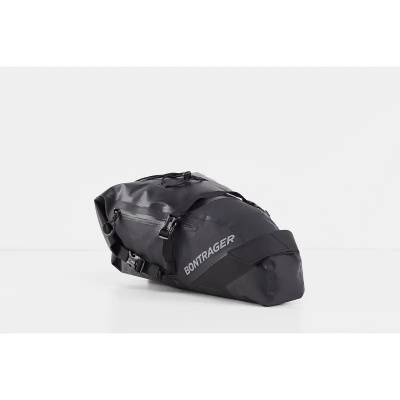
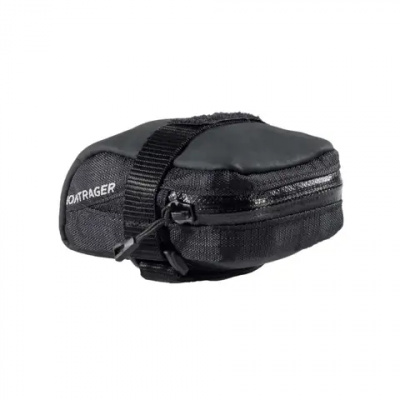
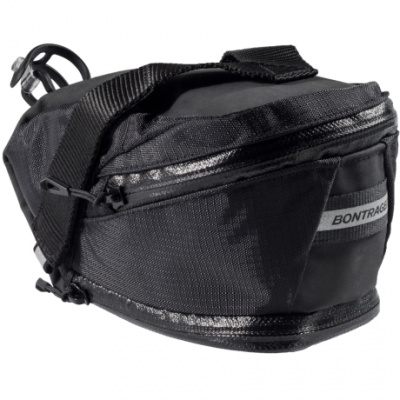
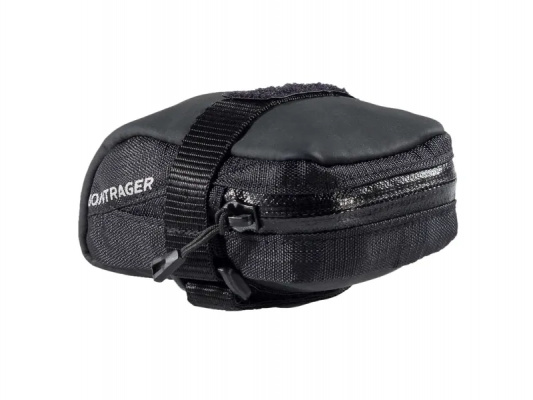
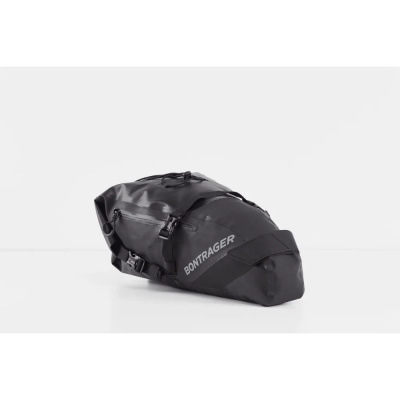
Bontrager saddle bags cover the full spectrum of on-bike storage, from a race-day micro pack holding little more than a folded tube and a couple of tyre levers, to a generously sized seat pack that'll swallow everything you need for a long day out in the Peaks. What ties the range together is sensible engineering: weather-resistant fabrics, reflective elements for visibility on dark UK commutes and winter rides, and the proprietary Quick Cleat twist-and-lock system on the Pro-tier bags that lets you pull the whole thing off in seconds when the bike goes on the turbo or into the car. There's a light loop built in across much of the range too, so your rear light clips on without the usual fumbling with rubber bands. Whether you're running a tight road setup where bag sag and bounce is genuinely annoying, or you need a rugged seat pack that'll cope with Welsh trail centre mud and road spray without the zip jamming by Christmas, there's a Bontrager option worth considering. Use Bikesy to compare UK prices across the Comp, Elite, and Pro lines and find the right capacity for your kit.
Prices and availability can change quickly. Delivery charges are not always included in listed prices.
Final price, stock status and delivery terms are set by retailer. We may receive a commission on purchases made.
Mounting Systems and What Works Where
Most Bontrager saddle bags attach via a hook-and-loop strap system: one strap threads through or over the saddle rails, a second wraps around the seatpost, and the bag cinches down firm. It takes about thirty seconds to fit and is genuinely secure on road and gravel when tightened properly. The Quick Cleat system, found on Pro-tier bags, works differently. You fit a small bracket to the saddle rails once - it stays there - and the bag itself clicks and twists on and off that bracket in one motion. No straps, no fuss, no rattle. If you swap your saddle bag on and off regularly, it's worth the initial setup time.
MTB riders need to think carefully here. Standard seatpost straps will damage a dropper post stanchion if the strap contacts it under load - the abrasion is gradual but real. The safer approach is a rail-only mounting system, or go small enough that a micro bag sits entirely above the post clamp contact point. Check the clearance between the underside of your saddle and the rear tyre too, particularly on smaller frame sizes where the geometry tucks the saddle closer to the wheel. A bag that clears fine on a large frame can rub the tyre on a small one. Carbon saddle rails in 7x9mm oval are compatible with the standard Bontrager strap systems, but wrap a strip of frame protection tape where any hard mount contacts the rail surface to avoid marking.
Comp, Elite, and Pro: Picking the Right Tier
The Bontrager Comp bags are straightforward: durable nylon construction, basic hook-and-loop mounting, no frills. They do the job for commuters and leisure riders who want a bag that survives being left on the bike through the week. If your main requirement is holding a tube and a multi-tool without spending more than you need to, Comp is where to start.
Step up to the Bontrager Elite seat pack and you get better internal organisation, weather-resistant zippers, and tougher materials throughout. The zip quality difference is noticeable - grit and road spray are the primary reasons saddle bag zippers fail prematurely in the UK, and the Elite's reinforced teeth hold up better over a winter of wet commuting. There are also internal pockets to keep small items from rattling loose, which matters more than it sounds when you're trying to locate a tyre lever at the roadside in the rain.
The Bontrager Pro Quick Cleat saddle bag is the road cyclist's option. The Quick Cleat hardware removes the strap entirely, which eliminates any contact with the seatpost and gives the bag a cleaner, lower-profile sit under the saddle. Bontrager's Aerolight profiles on the Pro-tier shapes are narrower and more tapered than the Comp or Elite equivalents - the aerodynamic gain is marginal in isolation, but if you're already running an aero seatpost and deep-section wheels, there's no reason to hang a barn door underneath your saddle.
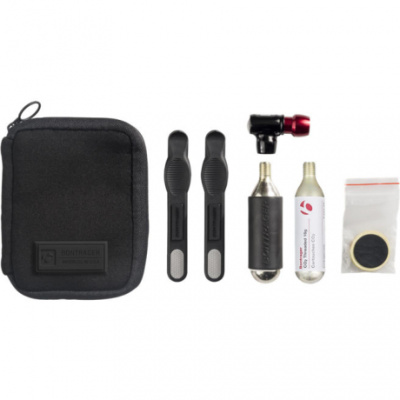
On capacity: a Micro (around 0.25 litres) fits one 700c road tube and a couple of tyre levers - nothing else. A Small adds room for a compact multi-tool. Medium and Large capacities (from around 0.75 litres upward) are where you move into gravel and MTB territory - bulkier 29er tubes, CO2 canisters, a patch kit, and a longer multi-tool all need that extra volume. Pair whichever size you choose with Bontrager inner tubes sized to your wheel, and check that a CO2 inflator fits in your chosen bag before you buy. It's an obvious check that's easy to skip.
If you're looking at alternatives, Apidura saddle bags are worth comparing for ultralight or bikepacking-focused setups, and Carradice saddle bags bring a traditional British take on long-distance carrying capacity. For something more compact and tool-focused, Lezyne saddle bags are a tidy option alongside their tool ecosystem.
Keeping UK Weather From Wrecking Your Kit
Most Bontrager bags are weather-resistant rather than fully waterproof - that distinction matters. Weather-resistant means the fabric repels light rain and road spray, and the zippers have some protection against water ingress. It does not mean you can submerge the bag or ride through standing water and expect the contents to stay dry. For most UK riding, weather-resistant is sufficient. For a sustained downpour on the Quantocks or a day when the road spray genuinely doesn't stop, wrap anything you can't afford to get wet - electronic car keys being the obvious one - in a small zip-lock bag inside the pack. It costs nothing and works perfectly.
Zipper maintenance is the single thing most riders neglect. Road grit works into the zipper teeth slowly, and by mid-winter the zip that opened smoothly in September is stiff and starting to skip. Every few weeks, brush the teeth clean with an old toothbrush and work in a small amount of dry wax lubricant. Avoid oil-based lubes - they attract more grit and make things worse over time. The same logic applies to the hook-and-loop straps: pull any debris from the velcro surface occasionally or it loses grip, and a bag that's worked loose mid-ride is both annoying and a potential wheel hazard.
The reflective elements on Bontrager bags are a genuine asset through the darker months. They're not a substitute for a rear light, but they add passive visibility at low cost, and the integrated light loop found across much of the range means your rear light mounts cleanly without improvised solutions. If you're building out a complete setup, a Bontrager mini pump and a compact multi-tool keep the kit consistent and are sized to fit the corresponding bag capacities. Worth cross-referencing before you buy. And if you're revisiting your whole contact point setup at the same time, the Bontrager saddle range is worth a look for Quick Cleat rail compatibility before you commit to a mounting system.
Bontrager Saddle Bags FAQs
How do you attach a Bontrager saddle bag?
Most Bontrager bags use hook-and-loop straps: one goes over the saddle rails, one wraps the seatpost. Tighten both firmly and the bag sits stable. Pro-tier bags use the Quick Cleat system instead - you fit a small bracket to the rails once, then the bag clicks and twists on and off that bracket with no straps required. It's a one-time install that makes daily removal genuinely quick.
Will a saddle bag scratch my carbon seatpost?
It can, over time. Grit trapped under the seatpost strap acts like sandpaper under load. Apply clear frame protection tape to the seatpost where the strap contacts it - a short strip is enough. For dropper posts, avoid strap contact with the stanchion entirely and use a rail-only mounting system or a micro bag that sits clear of the post mechanism.
What size saddle bag do I need for a spare tube and tools?
A Micro or Small (roughly 0.25 - 0.5 litres) fits one road tube, two tyre levers, and a compact multi-tool - that's your minimalist road setup. Go Medium or Large (0.75 litres and above) if you're carrying a bulkier MTB or 29er tube, CO2 canisters, a patch kit, or a longer multi-tool. When in doubt, size up - a half-full bag is easier to manage than one you can't close.