
Scott Rucksacks
Scott cycling rucksacks are designed around one core principle: keep the load locked to your back, not swinging off it. Whether you're threading through Manchester city traffic on a Tuesday or picking lines down a wet Peak District descent at the weekend, the bag needs to move with you rather than against you. Scott builds that stability into every pack through a combination of ripstop nylon shells, structured harness systems, and the brand's proprietary bVENT 3D mesh back panel - a raised, shaped foam channel that lifts the bag off your spine and lets air circulate where you need it most.
The range splits broadly into two camps: commuter-focused packs built around padded laptop sleeves, reflective detailing, and urban carry convenience, and dedicated trail bags engineered for helmet carrier compatibility, tool organisation, and all-day load management on the bike. Both families share the same attention to fit and DWR coating weather resistance that UK conditions demand.
Worth noting: if you're after a dedicated bladder-only racing setup, head over to our Scott Hydration Packs page. For stripped-back waist-mounted storage, our Scott Hip Packs page is where to look.
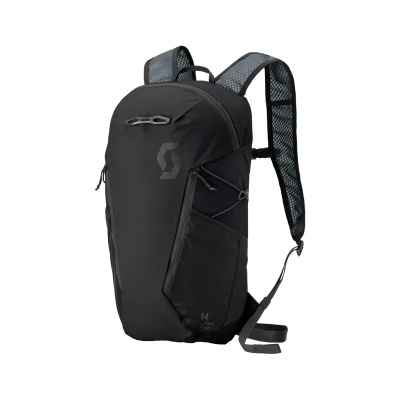
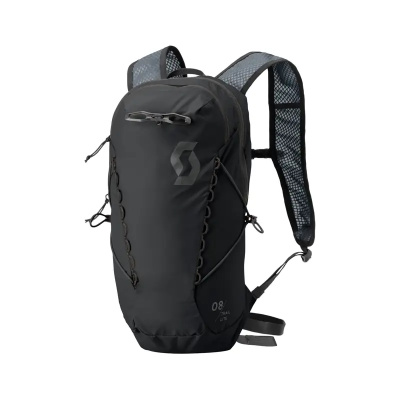
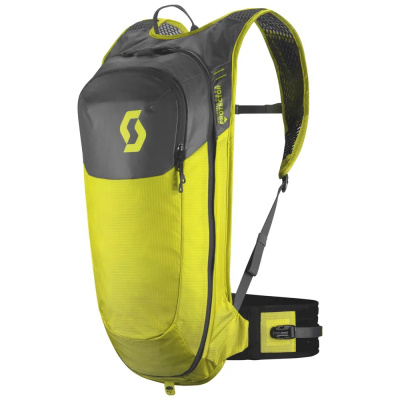
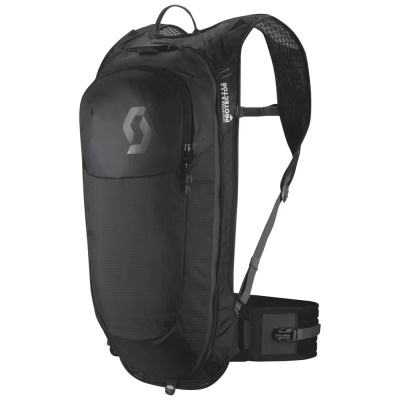
Prices and availability can change quickly. Delivery charges are not always included in listed prices.
Final price, stock status and delivery terms are set by retailer. We may receive a commission on purchases made.
Fit, Capacity and Harness Design
Get the harness wrong and no amount of clever panel design will save you. Scott's XC/Trail specific ergonomic harness systems use pre-curved shoulder straps and adjustable sternum straps to pull the load inward against your centre of gravity. On fast, rough descents that matters enormously - a bag that rocks side to side on a rutted bridleway will pull you off-line and knacker your shoulders before you're halfway through the ride. A snug sternum strap tightened across the chest eliminates most of that movement in seconds. Padded hip belts on the larger-volume models transfer weight off your shoulders on longer days, which your neck will thank you for on a three-hour gravel loop.
Volume in litres is the practical starting point when choosing. Scott's trail range typically spans from compact 10 - 12L packs - enough for a tool roll, a layer, and a snack - up to 30L commuter bags that swallow a laptop, work clothes, and a full repair kit without protest. A good rule: if you're riding to work and back in one bag, you want 15 - 20L minimum. Anything under that and you're playing Tetris with your lunch.
The bVENT 3D shaped moisture management back panel is Scott's most consistent differentiator across the range. Rather than pressing a flat foam sheet directly against your back, the bVENT system creates a structured air channel between the bag and your spine. Sweat still happens - this is British cycling, not a wind tunnel - but the panel reduces the clammy, soaked-through feeling that plagues cheaper packs on longer efforts. Clean the mesh periodically with a soft brush and lukewarm water; avoid machine washing, which compresses the foam and degrades the channel structure over time.
Scott Rucksack Range: Commute vs Trail
Scott's commuter-oriented packs prioritise urban practicality. Padded laptop sleeves - typically sized for 15-inch machines - sit in a dedicated rear compartment, keeping your device away from wet kit and tools. U-lock loops or external attachment straps handle the bulky stuff you can't fit inside. Reflective panelling and hits of high-vis material across the shoulders and base do useful work in low-light winter conditions, whether that's the 7am Waterloo Bridge commute or a dark November lane near Bristol. These bags don't shout about being cycling-specific, which suits riders who'd rather walk into an office than advertise they've just sweated through Bermondsey.
The trail-focused bags take a different approach. Integrated tool pockets keep a multi-tool, tyre levers, and a tube in a dedicated inner sleeve rather than rattling around loose against your laptop. Helmet attachment clips on the front or top allow you to carry a full-face lid hands-free when hiking a particularly grim push-up - useful at trail centres where the uplift queue means you're walking more than you'd like. Armour straps on some models secure knee and elbow pads outside the bag when the descent doesn't warrant wearing them on the climb.
If you're comparing across brands, EVOC rucksacks offer strong trail-specific competition, particularly for back-protector integration, while CamelBak rucksacks have a loyal following for hydration-forward designs. Deuter rucksacks are worth a look if fit adjustability across torso lengths is a priority. Scott sits comfortably in that company - particularly where harness stability and back ventilation are the deciding factors.
One clear signpost: Scott's trail rucksacks are general-purpose bags with hydration compatible sleeves and hose ports. If you want a pack built exclusively around a bladder for XC racing or endurance events, the Scott Hydration Packs range is purpose-built for that. Likewise, the Scott Hip Packs are a better call for shorter shuttle laps where minimal carry is the priority.
Handling UK Weather and Keeping the Bag in Good Shape
UK riding means you need a bag that can handle a soaking without drama. Scott's DWR coating treatment across the outer fabrics sheds light rain and road spray well enough for most commutes and dry-season trail rides. The ripstop nylon base resists the abrasive mud and grit that gets ground into fabric on Welsh trail centre runs or boggy moorland crossings in the North. That said, DWR isn't a permanent barrier - it's a coating that beads water away rather than sealing the fabric entirely, and it degrades with use and washing.
For genuinely heavy downpours, look specifically for Scott models that include a deployable integrated rain cover stored in a base pocket. That extra layer is the difference between a damp outer shell and a laptop-soaking disaster on a proper Scottish autumn day. If your model doesn't include one, a universal aftermarket cover sized to your volume is cheap insurance.
Zipper longevity is where neglect catches up with you. Winter grit works into the teeth of unprotected zips and gradually stiffens them to the point of failure. A quick rinse of exposed zips after muddy rides, followed by a wax-based zip lubricant once dry, adds years to their working life. For the 3D mesh back panel, the key is avoiding anything that compresses the foam structure: hand wash only, reshape while damp, and let it air dry flat. Never put it in a tumble dryer. The foam channels that make bVENT work rely on that structure staying intact - crush it and you lose most of the ventilation benefit.
Reflective detailing on Scott packs is functional rather than decorative. Check that seams, shoulder strap edges, or base panels carry adequate reflective material before riding unlit lanes in winter. If you're pairing the pack with a Scott jacket, the combined reflective coverage is noticeably better than either piece alone.
Scott Rucksacks FAQs
Are Scott cycling rucksacks fully waterproof?
Most Scott rucksacks use DWR coatings to shed light rain and road spray reliably. They're not fully waterproof in sustained heavy downpours, though. For that, look for models with an integrated deployable rain cover - it's the most practical way to keep electronics dry when a UK ride turns properly wet.
What size rucksack do I need for bike commuting?
For a daily commute carrying a laptop, a change of clothes, and basic repair kit, 15 - 20L is the practical range. Go below that and packing becomes a compromise. Make sure the model you choose has a padded laptop sleeve and some reflective detailing - both matter more than they sound on dark winter mornings.
Can I fit a hydration bladder in a standard Scott rucksack?
Yes - the majority of Scott's trail and commuter bags include a dedicated internal hydration sleeve and external hose routing ports, so a standard bladder drops straight in. That said, if you're only carrying water and a bare minimum of tools, a dedicated hydration pack will be lighter and sit tighter against your back.