
Scope Gravel Wheels
Scope gravel wheels sit in a sharp part of the market - carbon wheelsets that don't ask you to choose between low weight and real-world toughness. Scope, the Dutch brand that made its name building race wheels for WorldTour squads, brings the same engineering discipline to gravel: Local Reinforcement Technology (LRT) that places carbon exactly where the rim needs it most, and Algorithm Enhanced Aerodynamics (AEA) rim profiles shaped by computational fluid dynamics rather than gut feeling.
The Diamond Ratchet hub sits at the heart of every gravel wheelset - a fast-engaging, lightweight system that snaps into drive with a crispness you notice immediately on punchy fire-road climbs or technical singletrack accelerations. Pair that with custom SKF bearings and you've got a hub built to resist the deep winter grit and chalk-slicked descents that eat through lesser setups on UK bridleways.
All current Scope gravel wheels run tubeless-ready out of the box, with wide internal rim widths that support the lower pressures that make a genuine difference on flint-scattered South Downs tracks or loose Pennine gravel. Whether you're eyeing the flagship O2 series or the Sport lineup, compare the best UK prices below and find the wheelset that fits your riding and your budget.
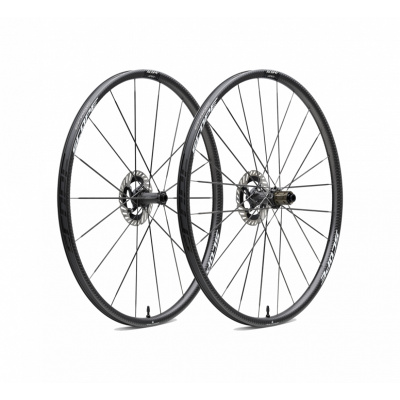
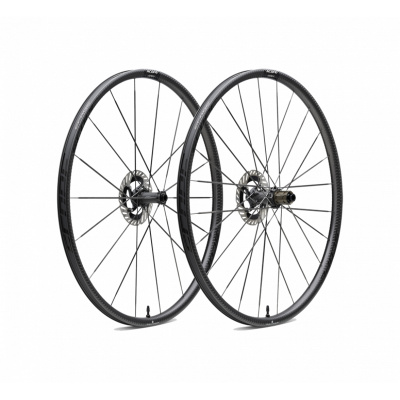
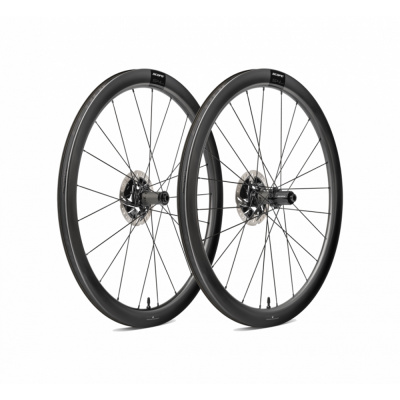
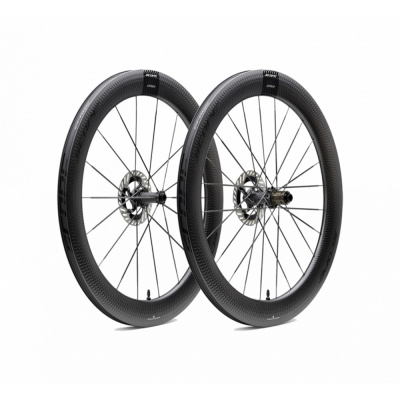
Prices and availability can change quickly. Delivery charges are not always included in listed prices.
Final price, stock status and delivery terms are set by retailer. We may receive a commission on purchases made.
Axle Standards, Rim Widths and Tyre Compatibility
Every Scope gravel wheel follows the standards you'd expect from a modern disc-specific build: 12x100mm thru-axle up front, 12x142mm thru-axle at the rear, and Centerlock disc rotor mounting throughout. That Centerlock interface suits the majority of current gravel groupsets - Shimano GRX, SRAM Rival and Force AXS all play nicely - and it makes rotor swaps genuinely straightforward in a cold car park rather than a faff with a spanner collection.
Internal rim widths on the O2 series run at 23mm or wider, which matters more than most rim specs because it directly controls tyre shape. A 40mm gravel tyre mounted on a narrow rim goes slightly square in cross-section, reducing the contact patch and making pressures harder to judge. On a wide hookless rim it opens into a rounder profile, giving you a bigger, more consistent footprint - useful when you're carrying speed into loose stuff or trying to hold a line on wet roots. The hookless bead design also caps recommended tyre pressure, so always check Scope's pressure guidance alongside your tyre manufacturer's limits; most quality gravel tyres are fully compatible, but it's worth a thirty-second check.
The O2's rim width handles tyres from 35mm through to 50mm without complaint, covering everything from fast-rolling semi-slicks to burlier 47mm mud-shedders. If you're changing drivetrain and need to move from Shimano HG to SRAM XDR or Campagnolo N3W, you'll need a specific replacement freehub body - the Diamond Ratchet hub is designed with interchangeable bodies to keep that straightforward.
O2 versus Sport: What the Step-Up Actually Gets You
Scope's gravel range splits cleanly into two tiers. The O2 is the flagship - a full carbon build using the highest-grade layup process, with LRT applied at every spoke hole to remove material where it isn't doing structural work and reinforce exactly where it is. The result is a rim that's noticeably light for its stiffness class. Combined with the custom SKF bearings in the hub, rotational weight is kept low enough that you feel it on long climbs and repeated accelerations rather than just on a kitchen scale.
The Sport series uses a slightly heavier carbon layup - the rim profiles are still shaped using AEA principles, so aerodynamics aren't dramatically compromised, but the overall wheel weight is higher. The hubs run quality sealed bearings rather than the custom SKF units, which perform well in normal conditions but may require more frequent attention after prolonged exposure to British winter riding. Hub engagement on the Sport uses the same Diamond Ratchet system, so the crisp pick-up under power is present across the range - that's not a feature Scope reserves for the top tier.
The honest trade-off is this: if you're racing or riding long mixed-surface events like the Dirty Reiver or racing the gravel calendar, the O2's weight advantage compounds over climbs and the bearing quality pays back over a full season. For riders who want capable carbon without the flagship outlay - sportive gravel, weekend bridleway loops, the occasional muddy audax - the Sport delivers the core experience at a more accessible entry point. DT Swiss gravel wheels and Parcours gravel wheels occupy broadly similar positions in the market if you want to compare across brands before deciding.
If you're also running a road bike and want to keep wheel costs consolidated, Scope's engineering approach carries through to their road wheelset range - the same LRT and AEA principles, built for tarmac.
Keeping Scope Wheels Alive Through a UK Winter
The custom SKF bearings in the O2 hubs are well-sealed by design, but grit and pressure washing are still the main culprits for premature wear in any wheel. After a muddy ride - the kind where Peak District peat has worked into every crevice - rinse the hubs with low-pressure water rather than a jet wash aimed directly at the bearing seals. Every few months, it's worth popping the bearings out, cleaning the races, and repacking with fresh grease. SKF bearings are replaceable, which matters for long-term ownership cost.
The Diamond Ratchet system is straightforward to service. After a full gravel season, or following a particularly filthy cyclocross campaign, disassemble the drive side, clean the ratchet faces with a dry cloth, and apply a thin layer of appropriate grease - Scope typically recommends a medium-viscosity grease rather than oil, which keeps the engagement crisp without attracting grit. The mechanism is designed to be pulled apart and reassembled without specialist tools, which is the kind of thing you appreciate when you're in a garage in February.
On the tubeless side, wide internal rims hold tape reliably but it's worth checking the tape condition annually, particularly if you've had a sealant failure or had to remove a tyre roadside. For 40-50mm gravel tyres running at lower pressures, sealant evaporates faster than on road setups - a top-up every two to three months through summer, and a fresh fill at the start of winter, keeps the system working as it should. Stan's NoTubes and Orange Seal both work well with hookless-compatible gravel tyres.
For wet chalk descents and flint-heavy bridleways - the kind of riding that defines a lot of southern English gravel - running slightly more sealant than the manufacturer minimum is cheap insurance. Flint cuts are sharp and fast, and a generous sealant volume plugs small punctures before you've noticed them. Hope gravel wheels are another option worth comparing if serviceability in-house is a priority for you, given their UK manufacturing and parts availability. For deeper carbon competition, ENVE gravel wheels and FFWD gravel wheels are both worth a look at the performance end of the market.
Scope Gravel Wheels FAQs
Are Scope gravel wheels tubeless ready?
Yes - all current Scope gravel wheels come tubeless-ready straight from the box. They arrive pre-taped with tubeless valves included, so you just need your tyres and a sealant of choice to get set up. No additional rim tape is required unless you've had reason to remove and refit it.
What is the maximum tyre width for Scope O2 gravel wheels?
The O2's wide internal rim width handles tyres from 35mm up to 50mm comfortably, covering the full range of modern gravel rubber. Always check your frame's tyre clearance before going to the wider end, and verify your chosen tyre is rated for use on hookless rims - most quality gravel tyres are, but it takes a moment to confirm.
How do I service the Scope Diamond Ratchet hub?
The Diamond Ratchet system is designed to be user-serviceable without specialist tools. Remove the drive-side end cap, pull the ratchet mechanism free, clean both ratchet faces with a dry cloth, and apply a thin layer of medium-viscosity grease before reassembly. Scope recommends grease rather than oil to keep the engagement clean and reduce grit attraction. An annual service or post-season clean is generally sufficient.