
Rocky Mountain Mountain Bikes
Rocky Mountain mountain bikes have been shaping how serious riders approach technical riding since the brand's early days on the gnarly, root-laced trails of British Columbia's North Shore - and that uncompromising pedigree runs through every frame they make. Whether you're threading tight, wet singletrack in the Tweed Valley or grinding out a big day in the Peak District, there's a Rocky Mountain built around exactly that kind of riding.
The core acoustic lineup splits across four families: the efficiency-led Element for downcountry and XC, the versatile Instinct for all-day trail riding, the enduro-focused Altitude for riders who want to go properly fast downhill, and the freeride-oriented Slayer for park laps and big-mountain days. Each one carries Rocky Mountain's proprietary Smoothlink suspension and the highly configurable RIDE-9 geometry system - tools that genuinely change how the bike behaves, not just marketing checkbox features.
This page covers the acoustic mountain bike range only. After a motor? Head to our Rocky Mountain E-Bikes page for the Powerplay lineup. Shopping for a younger rider? The Rocky Mountain Kids Bikes section has the Reaper and Growler Jr covered.
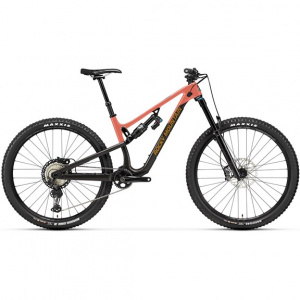
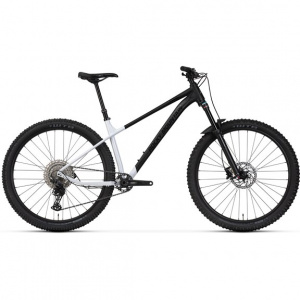
Prices and availability can change quickly. Delivery charges are not always included in listed prices.
Final price, stock status and delivery terms are set by retailer. We may receive a commission on purchases made.
Making Sense of the Lineup
Rocky Mountain keep their naming logical once you know the code. The letter prefix tells you the frame material: A means FORM alloy - their own heat-treated aluminium that's stiffer and lighter than standard 6061 - while C means Smoothwall Carbon, built using rigid internal moulds to produce a more consistent, stiffer layup than conventional carbon construction. After that, the number (30, 50, 70, 90) climbs with the component spec. Higher number, better parts. Simple.
The Element sits at the XC and downcountry end - short travel, aggressive geometry for its class, 100 - 120mm of rear travel depending on build. It rewards riders who want to cover ground quickly and climb hard without feeling like they're wrestling the bike. Think of it as the sharpest tool in the shed for days when the Strava segment matters as much as the descent.
Step up to the Instinct and you're in proper trail bike country. 140mm of rear travel, a 29-inch front wheel as standard (with mullet setup options on some builds), and geometry that sits comfortably between racy and composed. It's the model that suits the widest range of riders - strong climber, decent descender, happy all day. If you're unsure which Rocky Mountain suits you, the Instinct is usually where the conversation starts.
The Altitude is the enduro race bike. 160mm rear travel, slack enduro geometry, and a chassis built to absorb the kind of punishment that BikePark Wales dishes out on a wet Tuesday. It's heavier than the Instinct and less efficient on long climbs - that's the honest trade-off - but when the trail points down and gets rough, it's in a different league. Riders comparing the Ibis mountain bike range will find the Altitude competes closely with the Mojo and Mente at the sharper end of the market.
The Slayer occupies the freeride and park niche: long travel, burly construction, geometry that doesn't apologise for itself. Most UK riders won't need it for trail centre riding, but if you're booking uplift days rather than pedalling laps, it warrants a look.
The Tech That Actually Makes a Difference
Rocky Mountain's RIDE-9 adjustment system is the headline feature, and it's worth understanding before you buy. Nine interlocking flip-chip positions at the shock mount let you alter the head angle by up to a degree and shift the bottom bracket height and suspension progression independently. That might sound like marginal gains territory, but in practice it means one bike can feel meaningfully different between a tight, techy trail centre and an open enduro track. The related RIDE-4 system on some models offers a simplified four-position version of the same idea. Neither is a gimmick - they're genuinely useful if you ride varied ground or want to fine-tune for your weight.
The Smoothlink suspension kinematics deserve equal attention. Most suspension designs make a compromise between pedalling efficiency and braking sensitivity - Smoothlink's linkage geometry is designed to stay active under hard braking, which matters enormously on steep, rooty UK descents where you're often on the brakes and needing the rear wheel to track through the mess at the same time. It also provides meaningful anti-squat so pedalling strokes don't disappear into the suspension. On a long climb up slick, rooty ground - the kind you'd find heading into the Tweed Valley's upper trails - that traction difference is tangible.
Then there's Size Specific Tune. Rocky Mountain set the shock tune for each individual frame size rather than using one tune across the range. A lighter rider on a small frame gets a shock calibrated for their weight; a heavier rider on an XL gets something stiffer and more progressive. The result is that the trail kinematics feel consistent regardless of where you sit on the size chart - something that brands using a single shock tune across all sizes simply can't match. Riders looking at alternatives like Cannondale mountain bikes or Giant mountain bikes should check whether their chosen model offers anything comparable at the same price point.
Frame material matters here too. Smoothwall Carbon uses rigid internal moulds during the layup process, producing more consistent wall thickness and a stiffer, more predictable result than many competitors' carbon construction. It's not just lighter - it transfers power more cleanly and gives the front end a more precise, connected feel.
Owning One Through a British Winter
Rocky Mountain bikes accommodate 2.5-inch tyres across the range, which is plenty of room for the chunky rubber you'd want on a muddy Pennine day. That said, running a 2.4-inch tyre on the rear through winter is worth considering - it reduces the grinding paste effect on chainstays when caked in clay and gives you a touch more mud clearance at the back end. The tyre swap costs nothing and your frame will thank you come spring.
Pivot bearing longevity is the other thing to think about. Rocky Mountain use shielded bearings throughout the linkage, which are solid, but no bearing survives a direct jet wash repeatedly aimed at the pivot seals. Clean the linkages with a damp cloth and a brush instead; blast the frame all you like, but keep the pressure washer away from the pivot points. Do that and you'll get multiple seasons out of a set of bearings without drama.
The RIDE-9 chip settings are worth adjusting seasonally rather than leaving in the factory position. For trail centre days where you're pedalling most of the time - think Glentress or Cannock Chase - the Steep/High setting tightens up the geometry and sharpens the climbing feel. For uplift days where descending is everything, flipping to Slack/Low drops the front end, slackens the head angle, and lets the bike open up properly. It takes about ten minutes with a hex key in the car park and genuinely changes the character of the ride. Riders moving across from Cube mountain bikes will notice how much more granular the Rocky Mountain geometry adjustment is by comparison.
One practical note on the Rocky Mountain Element for sale UK searches: stock can move quickly on the carbon builds, particularly in mid-range sizes. If you're set on a specific spec, setting a price alert on Bikesy is the most reliable way to catch availability as it shifts. The same applies to Rocky Mountain trail bikes 29er configurations - the 29-inch builds at 140mm travel sell faster than the mullet alternatives in most UK regions.
Rocky Mountain Mountain Bikes FAQs
Are Rocky Mountain bikes good?
Rocky Mountain sit firmly in the premium bracket and earn it. Their frames - whether FORM alloy or Smoothwall Carbon - are engineered to a high standard, the Smoothlink suspension is genuinely well-designed rather than badge-engineered, and the RIDE-9 geometry system adds real adjustability. They're built for riders who want a bike that rewards attention and pays back over seasons, not just the first few rides.
What is the difference between the Rocky Mountain Instinct and Altitude?
The Instinct runs 140mm of rear travel and suits all-day trail riding - it climbs well, descends confidently, and works across a wide range of conditions. The Altitude is a dedicated enduro bike with 160mm of travel and slacker geometry aimed squarely at aggressive descending. If you're spending most of your time pedalling to the top, the Instinct is the better fit. If uplift days and rough descents are the priority, the Altitude is the right tool.
What does the Rocky Mountain RIDE-9 system do?
RIDE-9 uses interlocking flip chips at the shock mount to let you alter the bike's head angle by up to a degree, adjust bottom bracket height, and change suspension progression - all independently. Nine configurations in total. In plain terms, you can make the same bike feel noticeably slacker and more progressive for descending-heavy days, or tighten it up for pedal-heavy trail centre riding. It's a ten-minute hex-key job, not a workshop visit.