
Rocky Mountain E-Bikes
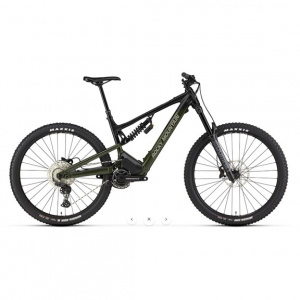
Rocky Mountain E-Bikes take a different approach to assisted riding - one that starts with handling and works backwards to the motor, not the other way around. The entire Powerplay lineup is built around the proprietary Dyname 4.0 drive system, which sits ahead of the bottom bracket rather than around it. That single decision means standard cranks, uncompromised geometry, and suspension kinematics that mirror their analogue siblings exactly. You get 108Nm of torque - class-leading figures - delivered at low RPM, so the rear wheel bites rather than spins on the kind of steep, loose climbs that make lesser e-MTBs founder.
Two families cover the range. The Altitude Powerplay is the enduro weapon: long-travel, aggressive, and built for riders who want to session big mountain lines with mechanical assistance. The Instinct Powerplay is the trail-focused all-rounder - still capable, but tuned for efficiency and longer days out. Both come in alloy and carbon builds, so there's a sensible entry point regardless of budget. If you'd rather ride without a motor, our full range of Rocky Mountain Mountain Bikes is worth a look too.
Prices and availability can change quickly. Delivery charges are not always included in listed prices.
Final price, stock status and delivery terms are set by retailer. We may receive a commission on purchases made.
Decoding the Rocky Mountain Powerplay Lineup
Rocky Mountain keep the naming logic clean once you know the code. Every assisted model carries the Powerplay suffix, and the prefix tells you the platform: Altitude for enduro aggression, Instinct for trail-focused riding. The Altitude Powerplay runs 170mm of front travel with 160mm at the rear - numbers that put it firmly in enduro company alongside bikes like the Cannondale e-MTB range. The Instinct Powerplay drops to 150/140mm front and rear, which translates to a more efficient pedalling platform without sacrificing the ability to handle rough, technical singletrack.
Frame material is flagged by a single letter. A means FORM Alloy - Rocky Mountain's own hydroformed aluminium, shaped to keep weight and wall thickness where they actually matter. C means Smoothwall Carbon, their in-house layup that eliminates internal moulding lines for a cleaner tube profile and a stiffer, lighter result. The number that follows - 30, 50, 70, or 90 - indicates where the build sits on the component spectrum. A 30-series gets you a solid, functional spec at a more accessible price point. A 90-series is a top-shelf build with flagship suspension, drivetrain, and brakes. Most riders land happily in the 50 or 70 bracket, where the componentry stops being the limiting factor on real trails.
The Tech That Makes Powerplay Bikes Different
The Dyname 4.0 drive system is the core reason Rocky Mountain electric mountain bikes feel the way they do. Most mid-drive motors integrate directly into the bottom bracket shell, which forces frame designers to compromise on chainstay length, bottom bracket height, or both. Rocky Mountain mount the Dyname unit ahead of the BB, using a secondary chain to drive a conventional bottom bracket spindle. Fussy? Slightly. But the pay-off is significant: you run standard cranks, the motor doesn't dictate frame geometry, and the whole power unit sits low and centralised.
That 108Nm torque figure matters most at low cadence - the kind of grinding, technical climbing you find on the steeper pitches of the Tweed Valley or the rocky ascents of the Brecon Beacons. High torque at low RPM means the system pushes you through the difficult section rather than spinning the rear tyre across it. It's a meaningful difference on wet slate and loose shale, not just a spec-sheet boast. Smoothlink suspension kinematics work alongside this - the linkage geometry is tuned to keep the rear end active under power, so the assisted climbing doesn't come at the cost of traction or feedback through the pedals.
Geometry is handled by the RIDE-4 adjustment system, a four-position chip that lets you alter head angle and bottom bracket height in combination. Set it steep for tighter, more technical riding where pedal strikes are a genuine concern on rooty, rutted UK singletrack. Drop it into the slacker, lower setting for open, fast descents where you want the front wheel further out in front of you. It's not a gimmick - on a bike this capable, the ability to dial geometry to your local trails and riding style is genuinely useful. Most riders will find two of the four settings suit them and stick there, but having the option costs nothing.
Where Rocky Mountain e-MTBs sit apart from Bosch or Shimano-powered alternatives like the Cube e-bike range or Bergamont e-bikes is in that proprietary motor philosophy. You won't find third-party Dyname compatibility, which means servicing goes back through Rocky Mountain's dealer network - worth bearing in mind before you buy.
Running a Rocky Mountain Powerplay in the UK
British winters are not kind to drivetrains. The Dyname system uses an idler pulley as part of its secondary chain routing, and that pulley is a mud magnet in gritty, wet conditions. Keep it clean and lubricate it regularly - more often than you think you need to. Leaving it to build up through a muddy Pennine winter will accelerate chain and pulley wear faster than any other single maintenance point on the bike. A quick spray and wipe after every ride in those conditions pays back quickly.
The low centre of gravity created by the forward-mounted motor is noticeable the first time you ride on steep, slick roots. The bike stays planted in a way that bikes with higher motor placements don't quite replicate - it's less about power and more about how the mass sits beneath you. On the kind of loose-over-hard trails common across much of Scotland and mid-Wales, that planted feel builds confidence quickly.
Sizing on Powerplay models follows Rocky Mountain's standard mountain bike sizing, so if you know your size on an analogue Rocky, you'll land in the right place here. Longer riders on the cusp between sizes might consider how they intend to use the RIDE-4 chip: the steeper, higher setting suits shorter riders or those prioritising technical climbing, while taller riders often prefer the slack-and-low position for stability. Either way, get the saddle height right first - the motor will mask a poor fit for a while, but it won't fix it.
Rocky also offer Rocky Mountain Kids Bikes if you're looking to bring younger riders along on days out, though those sit firmly in the analogue camp for now.
Rocky Mountain E-Bikes FAQs
Are Rocky Mountain e-bikes any good?
They're genuinely well-regarded, particularly for how naturally they ride. The Dyname motor's position ahead of the bottom bracket preserves standard geometry and suspension kinematics, so the bike handles much like its analogue equivalent. Riders who find other e-MTBs feel heavy or artificial in the corners tend to get on well with the Powerplay range.
What motor does Rocky Mountain use?
Rocky Mountain use their own proprietary Dyname 4.0 drive system rather than a third-party unit. It produces 108Nm of torque and operates at lower RPM than many competitors, which improves traction on loose, technical climbs. The trade-off is that servicing and support goes through Rocky Mountain's dealer network rather than a universal service chain.
How much does a Rocky Mountain Powerplay weigh?
Expect somewhere between 23kg and 25kg depending on frame material and build spec. Smoothwall Carbon models sit at the lighter end; FORM Alloy builds add a little more. The low motor placement keeps the centre of gravity centralised, which means the weight is less noticeable in corners and on technical sections than the raw figure might suggest.