
Rockrider Hybrid Bikes
Rockrider hybrid bikes sit in an interesting gap in the market - rugged enough to laugh off a potholed commute, capable enough for a weekend spin along a gravel towpath, yet trimmed-down and quick enough that you won't feel like you're pedalling a skip bin to work. Rockrider is Decathlon's MTB-focused brand, and that off-road experience shows in how these hybrids are built: sturdy 6061 alloy frames, front suspension to take the edge off broken tarmac, and mechanical disc brakes that don't give up the moment October arrives.
The geometry here leans toward an upright riding position - practical for scanning traffic and staying comfortable on longer commutes, without being so slack that the bike feels sluggish. Wheel choices typically run to 700c or fast-rolling 27.5-inch options depending on the model, and gearing is kept straightforward with 1x drivetrains that most riders can maintain without a workshop degree. If your week involves anything from potholed A-roads to weekend canal paths, these bikes are worth a serious look. We've pulled together the key things to know before you buy.
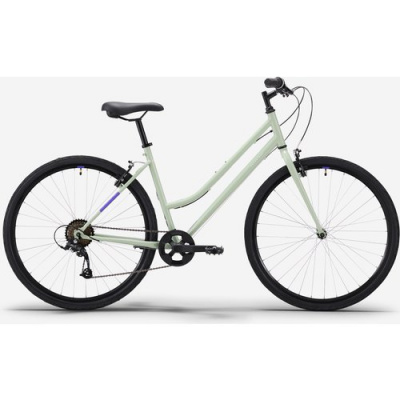
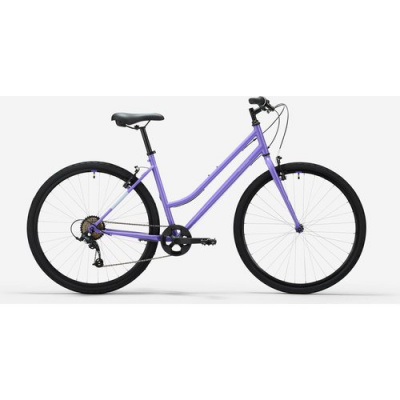
Prices and availability can change quickly. Delivery charges are not always included in listed prices.
Final price, stock status and delivery terms are set by retailer. We may receive a commission on purchases made.
Decoding the Rockrider Hybrid Lineup
Rockrider doesn't build hybrids the way a pure city-bike brand would. The geometry skews toward stability and control rather than outright speed - slacker head angles, a higher front end, and tyre clearances that give you room to run something with a bit of bite when the weather turns. Most models roll on 700c wheels, which keeps rolling resistance down on tarmac, though some of the burlier crossover models use 27.5-inch hoops for a bit more cushion on rougher tracks. That multi-terrain geometry is the defining trait here: you're not compromising on either end, just balancing them sensibly.
The range tends to split into lighter urban-leaning models - better suited to mostly paved routes with the odd gravel section - and chunkier crossover bikes that'll happily bump down a bridleway or through a muddy park. If you're thinking about proper singletrack, though, that's a different conversation. Rockrider's mountain bikes are the right tool for that job. Similarly, if you want battery assistance on your commute, the Rockrider e-bikes are worth comparing before you commit. Stick with the hybrid range if your use case is honest mixed-surface riding - it's where these bikes genuinely deliver.
Compared with something like a Carrera hybrid or a Boardman hybrid, Rockrider tends to offer more suspension travel and wider tyre clearances at similar price points. The trade-off is a slightly heavier bike that won't set any speed records on smooth tarmac. That's worth knowing upfront.
The Rockrider Tech Philosophy
Decathlon designs a lot of its own components in-house, and on these bikes that makes a tangible difference. The 6061 aluminium frame tubing is the foundation - it's a well-proven alloy grade that keeps weight manageable without being fragile. Rockrider tubes these frames with commuting and mixed-surface use in mind, so the weld quality and tube shaping prioritise durability over chasing grams.
The U-Fit suspension fork is one of the more interesting bits. It's a coil-sprung unit with adjustable preload, meaning you can dial the spring rate roughly to your body weight - a small thing, but it means a lighter rider isn't bouncing around on a fork set up for someone twice their size. It won't match a dedicated trail fork for sensitivity or travel, but for soaking up kerb drops, expansion joints, and the general misery of British road surfaces, it does the job without demanding much maintenance attention.
Shifting is handled by single-chainring 1x drivetrains - no front derailleur, no double-shifting faff, just one lever and a wide-range cassette. Practically speaking, that means less to go wrong, less to adjust, and a cleaner cockpit. For riders who don't want to think about gears beyond "easier" and "harder," it's a sensible setup. The cassette range is typically wide enough for loaded commuting and gradual inclines; steep climbs under load might have you spinning out, but for most UK riding it covers the ground.
Ergofit saddles are standard on most models - shaped specifically for the upright position these bikes encourage, with a wider profile than a road saddle. They're not the last word in comfort for longer days, but they're a significant step up from the plank-style seats that often ship on budget bikes. Pair the bike with a decent set of Rockrider pedals and you've got a solid daily-use package without needing to immediately swap components.
Living with a Rockrider in the UK
British riding conditions tend to sort out which bikes are genuinely practical and which are optimistic on paper. The good news here is that Rockrider hybrids are largely built for exactly this environment - wet winters, inconsistent surfaces, and the kind of canal towpaths that can go from packed gravel to ankle-deep mud in the space of fifty metres.
Tyre clearance is worth checking on your specific model, but most Rockrider hybrids will take a tyre wide enough to run at lower pressures through muddy bridleways without pinching. If you're regularly riding Welsh or Northern towpaths in winter, swapping to a file-tread or semi-slick with a bit more volume is straightforward on most models and makes a noticeable difference in grip. Check the maximum clearance printed on the fork and frame before buying replacement rubber.
The disc brakes - mechanical on entry-level models, occasionally hydraulic higher up the range - are the right call for UK riding. Rim brakes in persistent autumn drizzle are a liability; discs cut through grime and water consistently. After wet or muddy rides, rinse the rotor and pads down with clean water and let them dry before storing the bike - contaminated pads are a slow puncture for braking performance. The U-Fit coil fork needs minimal fuss: keep the stanchions clean and apply a small amount of suspension-appropriate grease to the lower seals a couple of times a year.
For commuting specifically, most Rockrider hybrid frames include standard eyelets on the seat stays and dropouts for fitting a rear pannier rack and mudguards. Check the model spec sheet before buying accessories - not every variant includes both sets of mounts. A set of Rockrider pannier bags sized to the rack are an obvious pairing, and adding a decent set of mudguards transforms these bikes for year-round use. If you're commuting in the dark months, budget for a separate light set too - the accessory mount points are usually there, but lights rarely come included. Throw a Rockrider helmet and a waterproof jacket in the bag and you're genuinely set for a British winter commute.
One comparison worth making: if you're weighing Rockrider against B'Twin hybrids - also from Decathlon's stable - the key difference is intent. B'Twin hybrids tend toward smoother urban use with rigid forks and narrower tyres; Rockrider leans harder into mixed-surface capability. Neither is wrong, just different priorities. If your route involves more tarmac than anything else, B'Twin may suit. If you're regularly crossing gravel paths, bridleways, or rough surfaces, Rockrider's extra capability earns its slight weight penalty. You can also cross-reference Rockrider's own touring bikes if longer loaded riding is on the agenda.
Rockrider Hybrid Bikes FAQs
Are Rockrider bikes good for commuting?
Yes, particularly on rough or mixed-surface commutes. The front suspension, disc brakes, and upright geometry make them well-suited to potholed urban roads and off-tarmac shortcuts. They're heavier than a dedicated city bike, but the added resilience is worth it on anything other than purely smooth tarmac.
Can I fit a pannier rack to a Rockrider hybrid?
Most Rockrider alloy hybrid frames include rear eyelet mounts on the seat stays and dropouts for standard pannier racks and mudguards. Check the specific model's geometry sheet before buying a rack, as eyelet placement varies between variants and not all models include a seat stay bridge mount.
What is the difference between Rockrider and B'Twin hybrids?
Rockrider hybrids prioritise mixed-surface capability - wider tyre clearances, suspension forks, and MTB-influenced geometry. B'Twin hybrids are more urban in focus, typically running rigid forks and narrower, faster-rolling tyres. If your riding stays mostly on tarmac, B'Twin suits; if you're regularly crossing gravel paths or bridleways, Rockrider makes more sense.