
Riverside Hybrid Bikes
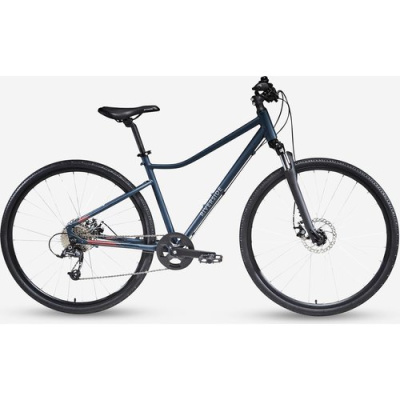
Riverside hybrid bikes are Decathlon's dedicated answer to practical, affordable cycling - and they've quietly become one of the most sensible choices for UK riders who want a single bike that handles Monday's commute and Saturday's canal towpath without drama. Where other brands pile on complexity, Riverside strips things back. The entire leisure range runs a 1x drivetrain - one chainring up front, no front derailleur, no dropped chains on wet mornings. That's a genuinely useful decision, not just a spec-sheet talking point.
The range spans from the rigid, no-fuss 100 and 120 models right up to the suspension-equipped, hydraulic-disc Riverside 900, with 700c wheels throughout and trekking geometry that keeps you upright and comfortable over longer distances. Both standard crossbar and low-step frames are available across key models, so fit isn't an afterthought. Every frame, fork, and handlebar carries Decathlon's lifetime warranty - reassuring when you're leaning the bike against a wet train platform every day. Rooted in B'Twin heritage but now sharply focused on trekking and leisure riding, Riverside has built a range that's refreshingly honest about what most riders actually need.
Prices and availability can change quickly. Delivery charges are not always included in listed prices.
Final price, stock status and delivery terms are set by retailer. We may receive a commission on purchases made.
Decoding the Riverside Hybrid Lineup
Riverside uses a straightforward numerical system, and once you understand the logic, picking the right model is fairly quick. The Riverside 120 sits at the entry point - rigid steel or alloy frame, V-brakes, and 700x38c tyres. It's uncomplicated in the best sense: light on maintenance, easy to live with, and perfectly matched to smooth cycle paths and quiet suburban roads. If your route is mostly tarmac and you're not hunting for anything ambitious, it does the job cleanly.
Step up to the Riverside 500 and the spec shifts meaningfully. You get a front suspension fork to take the edge off potholed canal towpaths, mechanical disc brakes for confident stopping in autumn drizzle, and a lighter aluminium frame. The 500 is where the range starts to feel genuinely capable rather than just adequate - it's the model most UK commuters land on when they want a bike that handles a bit of everything without costing a fortune. The Riverside 900 pushes further still: a suspension fork with lockout (handy when you hit a long tarmac stretch and want a stiffer feel), hydraulic disc brakes, and a 10-speed drivetrain. It's aimed at riders covering longer mixed-surface distances or anyone who simply wants the sharper, more responsive end of the range.
Both crossbar and low-step (step-through) frame options are available on key models - the low-step geometry isn't just about accessibility, it's also genuinely practical for riders who stop frequently in traffic. If you're comparing Riverside against alternatives, Carrera hybrid bikes and Boardman hybrid bikes sit in a similar price bracket, though Riverside's standardised 1x setup gives it a maintenance edge day-to-day. Looking for drop bars or multi-continent expedition rigs? Check out our dedicated Riverside gravel bikes and Riverside touring bikes pages.
The Tech Behind the Range
Riverside's engineering decisions are driven by practicality rather than chasing specs. The most consequential is the universal 1x drivetrain across the leisure range. Removing the front derailleur means fewer cables to adjust, no left-hand shifter to learn, and - critically for winter commuters - a drivetrain that's far easier to clean when it comes back caked in road grit. The Microshift and B'Twin-branded rear mechs used across the range are workmanlike components: not flashy, but consistent and easy to index if you need to tweak cable tension yourself.
The Ergofit Trekking saddle geometry is worth a mention because it's often overlooked in spec comparisons. It's shaped around an upright, roughly 60-degree back angle - the position you're actually in on a hybrid, rather than the aggressive forward lean a road saddle assumes. Get the saddle height right and it makes a real difference on longer rides; a lot of entry-level bikes fit a saddle designed for a position the rider never actually adopts. The Ergofit is a small but considered detail. Then there's the lifetime warranty on the frame, fork, and handlebars - Decathlon's confidence in the chassis is genuine, and it matters when you're buying a bike that'll face daily British winters.
If you're pairing a Riverside with storage, the pannier rack mounts are present across the range, and Riverside frame bags are designed to integrate cleanly with the geometry. Worth picking up at the same time if you're commuting.
Running a Riverside Through a British Winter
Most Riverside models ship with 700x38c trekking tyres - a sensible width that rolls efficiently on tarmac but gives you enough cushion and grip on loose cinder tracks, wet bridleways, and the kind of half-tarmac, half-mud surfaces you find on Thames Path or the Kennet and Avon. If you're riding something rougher regularly, check the clearance on your specific model; several will accept up to 42c without issue, and swapping to a slightly knobblier tyre for winter is a straightforward upgrade.
Mudguard eyelets are standard across the range - not a given on every hybrid at this price - and fitting a full-length mudguard set is one of the first things you should do before the nights draw in. Keeps you dry, keeps the drivetrain cleaner, keeps the rider behind you from hating you. The mechanical disc brakes on the 500 are reliable in wet weather but do need occasional attention: as the pads wear and cables stretch in gritty conditions, you'll feel the lever travel creep. A barrel adjuster tweak every few weeks through winter keeps them sharp. It's not a flaw, just the nature of mechanical discs - and it's a five-minute job once you know what you're doing.
If you're after a comparison point at a similar price, B'Twin hybrid bikes represent the older generation of Decathlon's hybrid thinking - solid, but without the focused trekking geometry and standardised 1x setup that define the current Riverside range. Keeping your tyres in good condition through winter is equally worth the attention - a worn tread on wet leaves is a bad day waiting to happen.
Riverside Hybrid Bikes FAQs
Are Riverside bikes made by Decathlon?
Yes. Riverside is Decathlon's own in-house brand, focused specifically on hybrid and trekking riding. It replaced the older B'Twin hybrid models, which were more general-purpose - Riverside sharpens that focus onto leisure, commuting, and light off-road use.
Is the Riverside 500 a good bike for commuting?
It's one of the more practical choices at its price point. The front suspension fork handles potholed roads and canal towpaths without battering your wrists, the mechanical disc brakes give consistent stopping in wet weather, and the 9-speed 1x drivetrain keeps maintenance straightforward. Mudguard mounts are included - fit a set before winter.
What is the difference between the Riverside 120 and 500?
The Riverside 120 is a rigid bike with V-brakes - clean, simple, and well-suited to smooth paths and tighter budgets. The Riverside 500 steps up to a front suspension fork, mechanical disc brakes, and a lighter aluminium frame. If your route includes any rougher surfaces or you want more confident wet-weather braking, the 500 is the more capable tool.