
Riverside Gravel Bikes
Riverside gravel bikes are Decathlon's dedicated dirt-focused lineup - and they're properly built for it, not just road bikes with wider tyres bolted on. Riverside sits apart from Decathlon's road-oriented Triban range: every frame in the gravel lineup starts with off-road geometry, generous tyre clearance, and a mounting ecosystem designed around carrying kit. Whether you're planning a loaded Scottish border crossing or just want something that won't flinch on a chalk bridleway after rain, there's a Riverside for it.
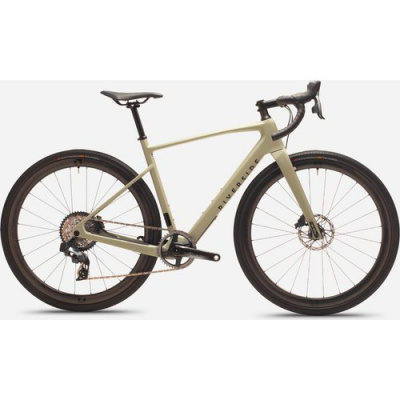
The range splits into two clear families. The GRVL series - alloy and titanium models spanning the 120, 520, and 900 - prioritises adventure, comfort, and bikepacking practicality. The GCR (Gravel Carbon Riverside) line is race-tuned, lighter, and built for riders chasing speed on mixed surfaces. Both families share Riverside's confidence-inspiring geometry: slack head angles, longer wheelbases, and flared handlebars that give you real purchase when the trail gets loose. Tyre clearance is generous across the board, and most models are tubeless ready from the off. For UK riders dealing with gritty lanes, clay bridleways, and winters that test everything, that spec sheet matters more than any marketing copy.
Prices and availability can change quickly. Delivery charges are not always included in listed prices.
Final price, stock status and delivery terms are set by retailer. We may receive a commission on purchases made.
Decoding the Riverside Gravel Lineup
The numbering logic is straightforward once you know it: higher numbers mean better groupsets and componentry. The entry-level Riverside GRVL 120 runs a simple 1x drivetrain and hydraulic disc brakes - enough for most weekend riders getting into gravel for the first time. Step up to the Riverside GRVL 520 and you're into Shimano GRX territory, with more refined shifting and a frame that's genuinely happy loaded with bikepacking kit. At the top of the alloy GRVL stack sits the 900, where the spec becomes properly serious. Then there's the titanium GRVL variant - fewer models, but if you want a frame that laughs off grit and lasts decades, it's worth the conversation.
The GCR family is a different animal. GCR (Gravel Carbon Riverside) frames use race-tuned carbon layups optimised for stiffness where it counts and compliance where you need it on long days out. These aren't adventure tourers - they're built for pace, and the geometry reflects that. Think competitive gravel events, fast mixed-surface sportives, or riders who want to put time into the bike rather than onto it. SRAM Apex and SRAM Rival feature across the GCR range depending on spec level, giving you a wide gear spread without unnecessary weight.
If you're leaning towards a loaded GRVL build, the alloy frames pair naturally with Riverside frame bags and bar bags - the mounting points are clearly designed with this in mind, not retrofitted as an afterthought. For riders who want to explore beyond gravel, Riverside's touring bikes and hybrid bikes round out the stable if your riding mixes more tarmac in.
The Tech That Sets Riverside Apart
The geometry gap between Riverside and Triban is bigger than it might look on paper. Triban bikes are endurance road frames adapted for light gravel use - fine on smooth lanes, less convincing when the surface deteriorates. Riverside frames are designed around slacker head angles and longer wheelbases from the start. That translates to a bike that feels planted and predictable on loose descents rather than nervous and twitchy. It's the difference between white-knuckling a Peak District descent and actually enjoying it.
Riverside's proprietary flared handlebars deserve a specific mention. The flare - wider at the drops than at the hoods - gives you a more stable, braced position when you're picking a line on rough ground. It's not gimmicky; it genuinely changes how the bike handles off-road, and it's standard fitment across the GRVL range rather than an upgrade you have to hunt for.
One of the more practical bits of engineering is Decathlon's integrated multi-mount fork system. The fork on GRVL models carries multiple attachment points for cages, luggage, and accessories - useful when you're trying to balance weight distribution on a long trip. It's a tidy solution that avoids the cobbled-together look of aftermarket bolt-ons.
Then there's the 650b wheel compatibility. Most GRVL models will accept both standard 700c wheels and shorter, higher-volume 650b setups. Swap to 650b and you can run significantly wider tyres within the same frame clearance - handy when conditions demand more grip and cushion over pace. It's a meaningful option for UK winters, where chalk and clay trails can go from firm to treacherous between Tuesday and Thursday.
Compared to similarly priced bikes from Boardman or Genesis, Riverside holds its own on spec-per-pound, particularly on tyre clearance and frame mounts. Where some rivals prioritise road-biased geometry to appeal to a wider audience, Riverside commits more firmly to off-road capability.
Living with a Riverside on UK Rides
UK bridleways in autumn and winter are a proper test of any gravel bike. The GRVL frames offer 42 - 45mm tyre clearance in real-world use, which is adequate for most conditions - but if you ride heavy clay regularly, you'll want to be near the top of that range. Mud packs fast against the frame on the chunky stuff, and a little extra clearance buys you a lot of forgiveness. Running tubeless with a decent sealant helps too; puncture risk on flint-strewn Hampshire lanes or Lincolnshire gravel tracks drops noticeably once you ditch the inner tubes.
Sizing is worth thinking about carefully. Decathlon bikes have historically run slightly short in reach, and some riders find themselves between sizes. If that's you, err towards the larger frame and adjust the stem rather than cramping your position on a smaller one. A longer stem also suits the more upright, relaxed posture that works well for all-day bikepacking riding.
Winter maintenance comes down to two areas: the bottom bracket and the headset. Both are exposed to grit and road salt on UK lanes, and both are easy to neglect. After muddy rides, rinse and dry the bottom bracket shell area and check the headset for play every few weeks through winter. Riverside uses reasonably accessible bearing standards on the GRVL range, so sourcing replacements isn't the headache it can be with some boutique brands. Hydraulic disc brakes are standard across the range - wet-weather braking reliability on a fast descent is not somewhere you want to compromise, and rim brakes in UK winters are a miserable proposition anyway.
The GRVL 120's beginner-friendly geometry and stable handling also make it a solid starting point for riders new to riding off-road - more on that in the FAQ below. And if you're wondering whether your GRVL will double as a commuter, the eyelets for full mudguards and a rear rack on the alloy models make it a realistic option without much faff.
Riverside Gravel Bikes FAQs
Are Riverside gravel bikes good for beginners?
Yes. The Riverside GRVL 120 is a solid first gravel bike - relaxed geometry, a simple 1x drivetrain, hydraulic disc brakes, and flared bars that feel reassuring when the surface gets loose. It's stable rather than skittish, which matters when you're still learning to read gravel. Good value for the spec, and not so precious that you'll worry about getting it muddy.
What is the difference between Riverside and Triban gravel bikes?
Triban gravel bikes are modified endurance road frames - quick on tarmac, less convincing when conditions deteriorate. Riverside frames are designed specifically for off-road riding: slacker head angles, longer wheelbases, wider tyre clearance, and proper luggage mounts throughout. If most of your riding is on smooth lanes, Triban works fine. If you're heading onto bridleways and rougher ground, Riverside is the right tool.
Can I fit mudguards and a pannier rack to a Riverside gravel bike?
On the alloy GRVL models, yes - standard eyelets for full-length mudguards and a rear rack are present, making them practical for commuting or touring. The carbon GCR models are race-focused and don't have traditional rack mounts, so you'd use strap-on bikepacking bags instead. Check the specific model's spec sheet, as fitment varies across the range.