
Ritchey Gravel Wheels
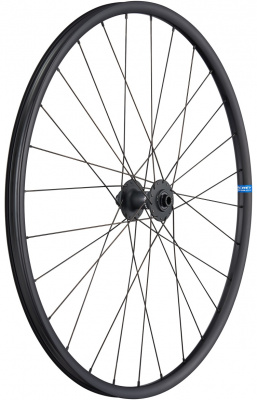
Ritchey gravel wheels have been shaped by decades of off-road riding that predates the gravel category itself - Tom Ritchey was building wheels for rough stuff long before anyone called it gravel. The Zeta GX lineup sits at the heart of what Ritchey does best: reliable, well-engineered alloy wheelsets that don't chase trends but do handle punishment. Wide internal rim profiles - 25mm on the Zeta GX - mean you're running modern 30mm to 50mm tyres at the lower pressures that actually find grip on wet chalk bridleways or loose Pennine gravel. That's not a minor detail on a wet British Sunday.
The structural backbone here is Ritchey's OCR (Off Center Rim) technology, which offsets the rim bed to balance spoke tension across the drive and non-drive sides. The result is a stronger, stiffer wheel that's less prone to fatigue over rough surfaces. Tubeless-ready rim profiles come as standard across the range, so you're not retrofitting anything. Whether you're building up a new gravel rig or replacing a set that's finally given up after too many winter rides, these wheels are designed to be serviceable, durable, and genuinely fit for UK conditions.
Prices and availability can change quickly. Delivery charges are not always included in listed prices.
Final price, stock status and delivery terms are set by retailer. We may receive a commission on purchases made.
Axle Standards, Rotor Mounts, and What Fits What
Getting compatibility right before you buy saves a frustrating trip back to the garage. Ritchey Zeta GX wheels run 12x100mm thru-axle front and 12x142mm thru-axle rear - both of which are the current standard on modern gravel frames, so fitment is straightforward on anything built in the last several years. Rotor mounting is Centerlock disc only, so if your frame uses six-bolt rotors, you'll need a Centerlock-to-six-bolt adaptor before you start. Worth checking that before anything else.
The 25mm internal rim width of the Zeta GX is wide enough to properly support tyres from 30mm upward, giving the tyre casing the foundation it needs to hold its shape at lower pressures. Go narrower than 30mm and you're working against the rim geometry; go wider than 50mm and you'll want to verify your fork and frame clearances carefully - especially on older geometry. For tubeless conversion components and valve extenders to suit these rims, our Ritchey frames page has build compatibility notes, and you'll find specific tubeless supplies - rim tape, valves, and sealant - listed across our rim tape and valve extender pages. Freehub body replacements and spares are covered separately on our freehub bodies and spares pages.
WCS vs. Comp: Which Tier Is Actually Right for You
Ritchey runs two distinct wheel tiers, and the gap between them is real rather than cosmetic. WCS (World Championship Series) sits at the top: lighter alloy rims, refined hub internals with multi-point engagement, and lower rotational weight overall. You feel that engagement difference when you're accelerating out of a slow corner on loose gravel - there's less dead travel before the drivetrain bites. If you're riding competitively or just want the most responsive setup the brand offers, WCS is the one.
Comp uses the same proven OCR rim profile and tubeless-ready construction as WCS, but the alloy is heavier-grade and the hub internals are more standard in spec. The trade-off is straightforward: more weight, more robustness, lower outlay. For a dedicated winter training wheelset or a workhorse build that's going to see grit, mud, and the occasional unplanned dismount, Comp makes a strong case. It's not a compromise in terms of structure - the rim design is the same - it's a compromise in terms of rotational weight and engagement speed. If you're also comparing outside the Ritchey range, Mavic gravel wheels and DT Swiss gravel wheels occupy similar pricing tiers and are worth stacking up on spec before committing.
Both tiers are available in 700c as the primary option. The 700c sizing suits most UK gravel routes well - it rolls efficiently on road connectors and holds momentum on hardpack. 650b builds are worth considering if you're prioritising maximum tyre volume on rougher off-road sections, though frame clearance becomes an even more critical check. For riders who want a single wheelset that handles both 700c and 650b tyre options, verify your frame's stated compatibility first - not all gravel frames are genuinely dual-size friendly in practice.
Keeping Ritchey Wheels Running Through a UK Winter
British winters are grinding in the most literal sense - high grit content in runoff, constant wet, and the kind of chalk mud that works into every bearing surface it can find. The sealed cartridge bearings in Ritchey hubs are your first line of defence, but sealed doesn't mean invincible. After particularly muddy rides - think North Downs in February, or anywhere in the Trough of Bowland after rain - spin the axles by hand with the wheel off the bike. Any roughness or grinding means moisture has started to compromise the bearing race. Catching it early is the difference between a bearing swap and a hub rebuild.
Spoke tension is worth checking after the first 100 miles on a new set. Alloy wheels bed in as nipples and rim eyelets settle, and a slight detension after initial use is normal. The OCR rim design helps here - because spoke tension is more evenly distributed across both flanges, you're less likely to see isolated loose spokes on the drive side, which is where conventional symmetric rims tend to fail first on rough surfaces. A spoke key and a few minutes at the workbench every few months is genuinely enough maintenance to keep a Ritchey wheel straight for years.
If you're running tubeless - which, on UK gravel, you should be - top up your sealant every three to four months. It dries out faster in cold weather and a dry rim is a flat waiting to happen on a remote bridleway. Hope gravel wheels are another UK-focused option with similarly robust hub servicing if you're comparing on longevity, though Hope's hub rebuild process differs from Ritchey's cartridge approach. To complete the contact points on a Ritchey build, Ritchey handlebars, Ritchey seatposts, and Ritchey stems are worth browsing if you're speccing a full build - the brand's component integration is tighter than people give it credit for.
Ritchey Gravel Wheels FAQs
Are Ritchey Zeta GX gravel wheels tubeless ready?
Yes. Every current Zeta GX wheel ships with a tubeless-ready rim profile as standard. You'll need to add compatible rim tape, valves, and sealant to complete the setup - none of that is included in the box - but the rim itself is already shaped and sealed for tubeless use without any modification.
What is the difference between Ritchey WCS and Comp gravel wheels?
WCS uses lighter alloy and premium hub internals with faster multi-point engagement - it's the performance-focused tier. Comp shares the same OCR rim profile and tubeless-ready construction but uses heavier-grade alloy and standard hub internals. The rim design and durability are comparable; the weight and engagement speed are where WCS pulls ahead.
What tyre sizes fit Ritchey gravel wheels?
The 25mm internal rim width on Zeta GX wheels is optimised for tyres between 30mm and 50mm. That covers most gravel tyre choices comfortably. Going wider than 50mm is possible in principle, but you'll need to confirm your specific frame and fork have the clearance - don't assume, measure.