
Ridley Road Bikes
Ridley road bikes are born from one of cycling's toughest proving grounds - Flanders, where spring classics chew through riders and equipment alike. That background shapes everything: the stiffness targets, the geometry decisions, the obsession with aerodynamic efficiency. These are bikes designed where bad weather is the default and cobbles are considered a reasonable road surface.
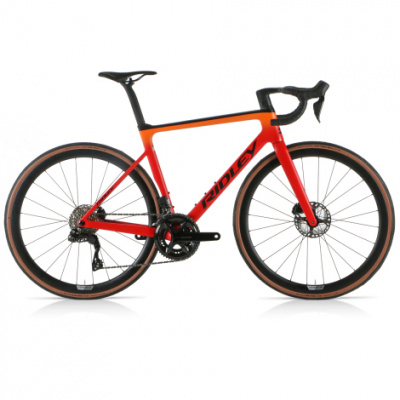
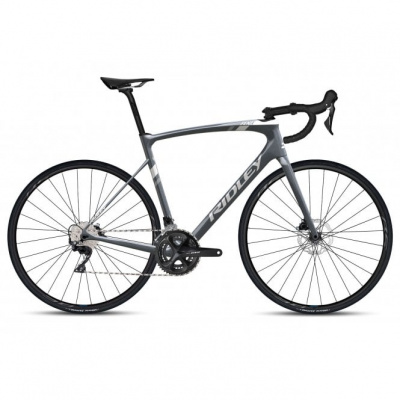
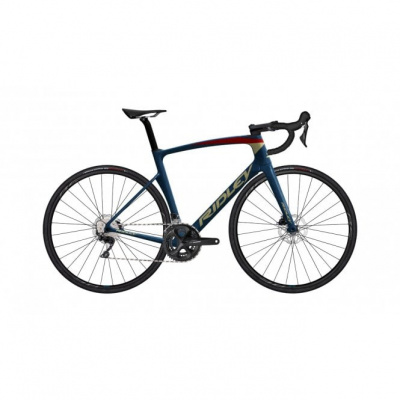
The range breaks into three clear characters. The Noah is Ridley's aero weapon - flat roads, fast bunch rides, anything where speed matters more than saving grams. The Helium strips weight ruthlessly, built around a high stiffness-to-weight ratio for riders who live for climbs and want every watt to count. The Fenix takes a different line entirely: an endurance geometry that soaks up the kind of sustained punishment that UK B-roads dish out on a daily basis.
Across the lineup, Ridley lean on their own carbon technologies and aerodynamic research rather than borrowing ideas from the peloton. Whether you're chasing Strava segments, grinding out winter base miles, or building towards a sportive, there's a model engineered for exactly that. Compare the full range below and find the best UK prices across every spec.
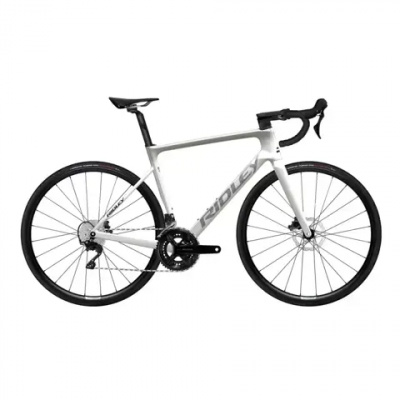
Prices and availability can change quickly. Delivery charges are not always included in listed prices.
Final price, stock status and delivery terms are set by retailer. We may receive a commission on purchases made.
Decoding the Ridley Road Lineup
Ridley organise their road bikes around purpose, and it's worth understanding that before you start comparing specs. The Noah sits at the aero end - droplet-shaped tubes, integrated cockpit, every detail tuned for outright speed. If your typical Saturday ride involves a bunch sprint or a flat 100km where rolling resistance and drag are the enemy, this is your bike. The Helium goes the other way, using Elite Series carbon - an ultra-high modulus layup that delivers pro-level stiffness at a weight that makes long climbs feel noticeably more honest. It's the bike you reach for when the route profile looks like a heartbeat monitor.
Then there's the Fenix. Where the Noah and Helium are specialists, the Fenix is the one most UK riders will actually get the most from day to day. Endurance geometry means a taller front end, a longer wheelbase, and a ride position that doesn't punish you on hour four. It's not a compromise - it's a deliberate choice for riders who want to cover serious miles without arriving home wrecked.
Within each family, Ridley split the range into Elite Series and Essential Series builds. Elite Series frames use that higher-modulus carbon layup - lighter, stiffer, closer to what you'd see at WorldTour level. Essential Series frames use a slightly heavier layup that brings the entry price down meaningfully, without fundamentally changing the ride character. If weight isn't your primary obsession and budget matters, Essential Series is a rational choice. If you're chasing every gram, Elite Series is where to look.
Looking to take your Ridley off-road? Head over to our Ridley Gravel Bikes page. Or, if you're building a custom spec from the ground up, check out our Ridley Frames.
The Ridley Tech Philosophy
Ridley's engineering vocabulary is worth knowing, because it explains why their bikes behave the way they do rather than just sounding impressive on a spec sheet. Start with F-Tubing - the droplet-shaped tube profiles found across the Noah range. Rather than a standard round or oval cross-section, each tube is shaped to manage airflow more precisely, reducing drag where it matters most without adding significant weight. It's the same principle that makes a wing profile more efficient than a flat plate.
Complementing that is F-Surface Plus, a textured surface application on the Noah Fast. The texture works by tripping the boundary layer of air across the frame, keeping it attached to the surface for longer before it separates. Less turbulent separation means less drag. It's a small gain, but at race pace those small gains stack up - and it's the kind of detail that separates a brand doing genuine aerodynamic development from one applying shapes cosmetically.
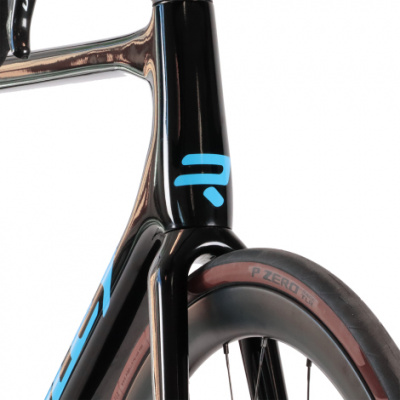
The F-Steerer is the other piece of the puzzle worth understanding. It's a D-shaped steerer tube design that allows for fully internal cable routing - hydraulic hoses and electronic wiring routed clean through the fork and bar, with nothing exposed to catch air or collect road grime. Crucially, the half-moon cross-section maintains steering stiffness even with the material removed for cable passage. Paired with Shimano Ultegra Di2 on several builds, the result is a cockpit that looks as though cables are optional and handles with no flex you'd notice on the road.
If you want to see how Ridley's aero approach compares to another brand with serious wind-tunnel credentials, Cervélo road bikes offer a useful benchmark - a different philosophy, but similarly uncompromising. BMC road bikes are worth a look too, particularly if you're weighing up Swiss precision against Belgian grit.
Living with a Ridley on UK Roads
Here's the practical reality: most UK riding involves roads that the highway maintenance budget forgot. Cracked surfaces, sunken drains, loose chippings on country lanes - the Fenix was essentially designed with this in mind, even if Ridley were thinking of Flemish farm tracks rather than the A-roads off the M25. The diamond-shaped down tube delivers real bottom bracket stiffness - your power goes where it should - while the thin, compliant seat stays take the edge off the constant chatter from rough tarmac. It's a meaningful difference over three hours.
Modern disc-equipped Fenix models typically clear 30mm to 32mm tyres, which opens up options. Fit a 30mm tyre with some volume and you can run lower pressures without the pinch flat paranoia, which does more for comfort on rough roads than any amount of carbon compliance. It's the first swap worth making if you buy one.
Winter riding on any carbon bike asks something of the bearings and the frame finish. Grit and road salt work their way into everything. Fitting a set of mudguards - even clip-on SKS types - keeps the worst of the spray off the bottom bracket and head tube, and your back stays drier too. The disc brake clearance on current Ridley models is generous enough that full-length guards are usually achievable without tyre rub, which isn't always a given on older road disc designs.
If the Fenix's endurance focus isn't quite what you need and you're weighing up alternatives with a similar all-day brief, Canyon road bikes are worth comparing - strong value, similar geometry thinking, different carbon character. But if Ridley's Belgian-engineered build quality and the specific handling properties of the Fenix appeal, the comparison tends to resolve itself fairly quickly once you've looked at the details side by side.
Ridley Road Bikes FAQs
Are Ridley road bikes good?
Ridley have genuine credibility - their bikes have been raced and tested on the cobbled classics of Flanders, which is about as demanding a proving ground as road cycling offers. The frames are stiff, the handling is precise, and the build quality holds up over hard mileage. They're not a fashion brand; the engineering focus is real and consistent across the range.
What is the difference between the Ridley Noah and Helium?
The Noah is Ridley's aero road bike - F-Tubing, integrated cables, shaped for outright speed on flat and rolling roads. The Helium prioritises weight, using Elite Series carbon to hit a high stiffness-to-weight ratio that makes it the better choice for climbing. Pick the Noah if speed on the flat is the goal; pick the Helium if the route goes uphill.
Where are Ridley bikes made?
Ridley design, engineer, and paint their bikes at their headquarters in Hasselt, Belgium. The carbon frames are manufactured in Taiwan - standard practice for premium carbon production across the industry, including brands at significantly higher price points. The Belgian side covers geometry development, paint, and final quality control.