
Ridley Mountain Bikes
Ridley mountain bikes come from the same Belgian racing obsession that shaped some of the sharpest cyclocross machines in the peloton - and that efficiency-first mindset transfers directly to the dirt. The range is tight and purposeful: a couple of carbon hardtails and a full-suspension XC platform, each built around the idea that grams saved and watts transferred win races. There's no padding out the lineup with bikes Ridley can't do better than anyone else. What you get instead are frames engineered for cross-country racing, with Elite Series carbon layup dialled for stiffness where it matters and compliance where it doesn't. The geometry has moved with the times too - longer reaches, slacker head angles - so these aren't the nervous, head-down race bikes of ten years ago. They handle modern technical courses and undulating UK trail centres with real confidence. Whether you're targeting a local XC race in the Chilterns or working on your fitness across fast, rolling singletrack, there's a Ridley that fits the brief. Compare the latest UK prices across the range below.
Prices and availability can change quickly. Delivery charges are not always included in listed prices.
Final price, stock status and delivery terms are set by retailer. We may receive a commission on purchases made.
Decoding the Ridley Mountain Bike Lineup
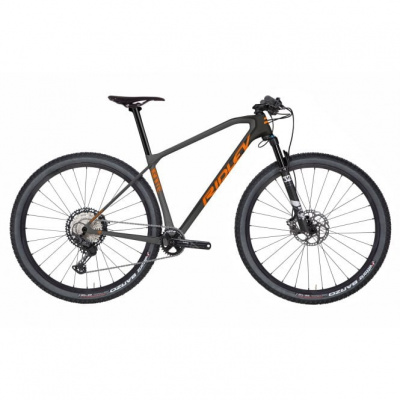
Three models do most of the work. The Ridley Ignite is the traditional corner of the range - an ultra-light carbon hardtail aimed squarely at marathon and XC racing where every gram is a conversation. It's built for riders who want maximum efficiency on long climbs and fast, flowing courses where the trail isn't trying to unseat you. Think smooth loop racing rather than gnarly descents.
The Ridley Probe RS is where the range gets more interesting for British conditions. Progressive geometry - longer reach, slacker head angle - means it handles the kind of rooty, punchy descents you find across Welsh trail centres and Scottish singletrack without the rear wheel trying to swap ends beneath you. It's still a hardtail, still snappy and direct, but it won't punish you for charging into technical sections. Trim levels vary; the SLX builds keep weight down without pushing into top-tier pricing, while carbon spec options give you a frame that genuinely competes with BMC's XC hardtails at the sharper end of the market.
Then there's the Ridley Raft. Full suspension, but not in the way that adds two kilograms and turns everything into a trail bike. This is a downcountry-leaning XC platform - rear travel is modest, geometry is fast, and the whole thing is built around the idea that you want rear wheel traction on technical descents without sacrificing the climbing efficiency that wins cross-country races. It blurs the line between pure XC race rig and something you'd genuinely enjoy riding at Afan or Glentress on a weekend. If you're eyeing a Cannondale Scalpel or similar, the Raft belongs in that conversation.
The Tech Behind the Frames
Ridley's Elite Series Carbon Layup is the foundation everything else is built on. Rather than using carbon as a single-property material, the layup is optimised section by section - stiffer around the bottom bracket for power transfer, more forgiving through the seatstays to take the edge off trail chatter. The result is a frame that feels lively and connected rather than dead and compliant, which matters when you're trying to read the trail at pace.
The Advanced Tubing Shape brings aero-influenced tube profiles into the XC space. On flat or rolling XC courses, aerodynamic drag is a genuine factor, and Ridley have applied the same thinking they use on their road bikes to the MTB frames. It's a marginal gain, but in cross-country racing, marginal gains are the whole game.
The Raft's flex-stay suspension kinematics deserve a proper explanation because they work differently from almost everything else in the category. There's no traditional rear pivot. Instead, the carbon seatstays are engineered to flex in a controlled, predictable arc under load. That flex is the suspension. What you lose in adjustability, you gain in simplicity - no bearings to service, no pivot to creak on a wet ride, and the lateral stiffness you'd expect from a hardtail because the stays aren't articulating around a joint. It's a clever solution for a bike that needs to be light and low-maintenance above all else.
The Progressive XC Geometry on the Probe RS reflects how cross-country racing has changed. Courses are more technical now - World Cup XC looks nothing like it did fifteen years ago - and a 69 - 70 degree head angle handles steep, loose descents in a way that older race geometry simply doesn't. Reach has grown too, so you're not folded over the front wheel. It's still a fast, aggressive position, but it's one that gives you control rather than just speed.
Running a Ridley Through a British Winter
Carbon hardtails and UK winters aren't natural enemies, but there are a few things worth knowing before your first muddy November ride. Mud clearance around the bottom bracket and chainstays on the Probe RS is workable with a 2.4-inch tyre, but you'll notice it packing up faster in the deep stuff than a bike with more generous clearances. A set of aggressive mud spikes - something narrow and self-clearing - will serve you better than trying to run a wide fast-roller through the kind of clay you get on Surrey Hills bridleways in January. Pair that with a dropper post routed through the internal cable channels (both models support internal dropper routing) and you're set up properly for technical British riding.
The Raft's flex-stay design is actually a genuine advantage in wet, gritty conditions. Fewer pivot bearings means fewer entry points for the kind of fine, abrasive grit that turns bearing seats into a maintenance nightmare after a day at Coed-y-Brenin. That said, give the frame a proper rinse after muddy rides - fine grit sitting in pivot-free stays still works its way into cable ports and bottom bracket shells over time. A good blast with a low-pressure hose and a re-lube of cables every few weeks keeps everything shifting cleanly. If you're riding regularly through winter, it's worth looking at Ridley mudguards to keep the worst off your drivetrain, and a quality seat clamp that won't corrode shut when you finally want to adjust your saddle height in March.
For riders who want to explore Ridley's broader range - the brand's XC philosophy transfers directly across to their gravel bikes, which share a lot of the same frame DNA - and if you're building up a Probe RS or Raft from scratch, bare frames are available separately. Worth knowing if you already have a groupset you want to carry over. Compared to something like a Cube Reaction or a Giant Anthem, Ridley's range is narrower but more focused - you're not buying a bike designed by committee to cover every base.
Ridley Mountain Bikes FAQs
Are Ridley mountain bikes good for UK trails?
For fast trail centres and cross-country routes, yes. The Probe RS handles rooty, technical British singletrack well thanks to its progressive geometry, and the Raft's flex-stay suspension adds rear traction without killing climbing efficiency. They're not enduro bikes - but on XC-oriented UK trails, they're genuinely well-suited.
What is the difference between the Ridley Probe RS and Ignite?
The Ignite is built for pure efficiency - ultra-light, traditional geometry, ideal for marathon racing and smooth XC courses. The Probe RS has a slacker head angle and longer reach, making it notably more capable on steep, technical descents. If your rides involve rooty drops or loose corners, the Probe RS is the more practical choice.
How does the Ridley Raft suspension work?
The Raft uses flex-stay suspension - the engineered flex of the carbon seatstays acts as the suspension rather than a traditional rear pivot. This keeps weight down, removes bearings from the equation, and maintains the lateral stiffness you'd expect from a hardtail. Less to service, less to go wrong in wet conditions.