
Reynolds Road Wheels
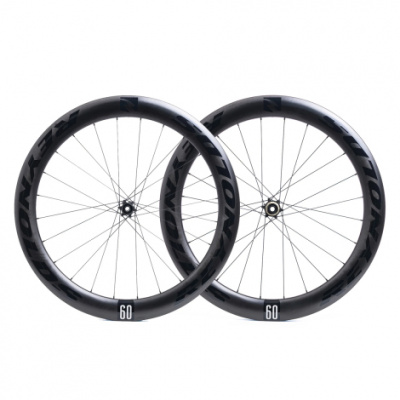
Reynolds road wheels have been shaping what carbon fibre can do on the road for decades, and the current range makes a strong case for why they're still worth serious attention. Whether you're chasing fast times on exposed moorland roads where crosswinds are a constant nuisance, or grinding through a grim winter club run on cracked B-roads, there's a Reynolds wheelset built with those conditions in mind.
The headline technology is the DET (Dispersive Effect Termination) aero rim profile, which manages crosswind pressure rather than fighting it - useful when the wind picks up halfway through a sportive and you'd rather not wrestle the bars. Carbon layup quality is high across the range, and Reynolds back that confidence with a lifetime warranty to the original owner. That's not a common offer at this level.
The range splits into clear tiers - AR, ARx, and the flagship Blacklabel - so there's a logical upgrade path depending on how much weight and hub engagement matter to you. Disc and rim brake versions are both available, covering most modern road bikes. If you're riding mixed surfaces or want a wider internal profile for something rougher, our Reynolds gravel wheels page covers the off-tarmac options separately.
Prices and availability can change quickly. Delivery charges are not always included in listed prices.
Final price, stock status and delivery terms are set by retailer. We may receive a commission on purchases made.
Will They Fit Your Bike? Axle Standards, Rotors and Freehubs
Get the compatibility sorted before anything else - it's the bit that trips people up. Reynolds disc brake road wheels use 12x100mm front and 12x142mm rear thru-axle spacing, which covers the vast majority of disc road frames sold in the last five or six years. Rim brake models run standard quick-release, so if you're on an older aluminium frame or a classic steel build, those are your wheels.
Rotor mounting is worth checking too. Reynolds disc models use Centerlock as standard, which requires a Centerlock-compatible hub or an adapter if your rotor is 6-bolt. It's a minor faff but easy to resolve with the right lockring tool - just factor it in before ordering. On the drivetrain side, most Reynolds wheels ship with a Shimano HG 11/12-speed freehub body as standard. Running SRAM AXS or a 12-speed Eagle-style cassette? You'll need the XDR freehub body variant, which Reynolds offer - but check the listing carefully. If you need to swap standards after purchase, it's worth looking at Reynolds freehub bodies and spares to keep everything in the family and avoid compatibility headaches.
One thing to flag: the internal rim widths across the Reynolds road range sit in the 21 - 23mm zone depending on the model, which pairs well with 25 - 32mm tyres. Run anything narrower than 25mm and you're leaving performance on the table with these rims.
AR, ARx and Blacklabel: What You're Actually Paying For
Reynolds structure their road wheel range in a way that's genuinely logical once you understand what changes between tiers - and crucially, what doesn't. The AR series uses the same carbon rim shapes as the more expensive options. Same DET aero profile, same depth options, same tubeless-ready hookless bead. What differs is the build spec: standard Reynolds hubs and heavier round spokes. Solid wheels, but the rotating weight is higher and hub engagement is slower.
Step up to the ARx series and the rim stays identical, but the build tightens up considerably. Sapim CX-Sprint bladed spokes replace the round ones - they're stiffer laterally and cut drag slightly - paired with lighter machined hubs and alloy nipples. The result is a noticeably crisper feel under load, and the weight drop is real. For most road riders who want proper performance without the flagship price, ARx is the level where it starts to feel genuinely quick.
The Aero Blacklabel models sit at the top of the pile and bring in Industry Nine hubs - known in the trade for near-instant engagement (690 points of engagement on the i9 Hydra hub, if you want the number) and bearing longevity that laughs at long mileage. If you've ridden wheels with sluggish hub engagement on a fast climb, you'll notice the difference immediately. The CR3 and PR3 carbon layup technologies Reynolds use across the range are worth understanding too: both prioritise strength-to-weight through directional fibre placement, but PR3 layers in additional impact resistance - relevant if UK road surfaces are part of your regular diet. Compared to similarly priced options from ENVE or DT Swiss, Reynolds sit in competitive territory on build quality; the i9 hub inclusion on Blacklabel models is a genuine differentiator at the price.
Keeping Reynolds Wheels Rolling Through a UK Winter
British roads are hard on wheels. Potholes that appear overnight, wet grit that works into every bearing surface, and the kind of sharp-edged debris that makes you wince mid-descent. Reynolds' carbon layup holds up well to impact - the rim construction is designed to distribute load rather than concentrate it at a single point, which matters on the sort of cracked tarmac you find on exposed moorland B-roads or Lancashire back lanes. That said, no carbon rim is indestructible, and riding into deep potholes at speed is a risk regardless of brand.
For rim brake users, the CTg (Cryogenic Glass Transition) brake track is the key technology to understand. Reynolds treat the braking surface at cryogenic temperatures during manufacturing to raise the glass transition point of the resin - in plain terms, it means the rim handles heat from prolonged braking far better than untreated carbon. Descending a long Welsh valley in the wet, sustained braking can build serious heat in a rim; CTg is Reynolds' answer to that. Critically, you need to run Reynolds-specific brake pads with these rims - using standard cork or SwissStop Black Prince pads risks both braking performance and your warranty. Don't skip this.
On the tubeless front, keep an eye on tape condition if you're running sealant through winter. Grit and repeated tyre removal can compromise the tape seal over time - inspect it at the start of each season and replace it if there's any sign of lifting at the valve hole. Hub bearings deserve attention too. After a hard winter block, it's worth pulling the freehub, cleaning out any grit ingress, and checking bearing play. Reynolds use quality sealed cartridge bearings across the range, but no bearing survives neglect in British conditions. A quick service every couple of months of heavy riding keeps things spinning cleanly. If you're comparing maintenance demands, Mavic and Campagnolo take similar approaches to bearing serviceability at this level - none of them are truly set-and-forget in year-round UK use.
Reynolds Road Wheels FAQs
Are Reynolds carbon wheels good?
Reynolds are genuinely well regarded - they've been making carbon wheels long enough to get the layup process right, and it shows in build consistency and durability. The DET aero profiles handle crosswinds more predictably than many rivals, and a lifetime warranty to the original owner isn't something every brand offers at this level. Mechanics tend to rate them for build quality and repairability.
What is the difference between Reynolds AR and ARx?
The carbon rim is identical between the two - same depth, same DET aero profile, same tubeless-ready construction. What changes is the build spec. ARx wheels use Sapim CX-Sprint bladed spokes rather than round ones, lighter machined hubs, and alloy nipples. The result is a lighter, laterally stiffer wheelset that feels more responsive under load without changing the rim shape at all.
Do Reynolds wheels have a lifetime warranty?
Yes. Reynolds cover their carbon rims with a lifetime warranty to the original purchaser against manufacturing defects and structural failures under normal riding use. For rim brake models, the warranty is contingent on using Reynolds-approved brake pads - running third-party compounds can void the brake track coverage, so it's worth sticking to the recommended pads.