
Reserve Wheels MTB Wheels
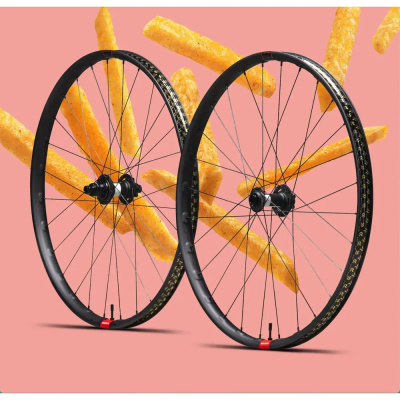
Reserve MTB Wheels sit in a rare pocket of the carbon wheel market: genuinely tough, perceptibly compliant, and backed by a no-fault lifetime warranty that actually means something. Developed alongside Santa Cruz Bicycles, Reserve built their reputation on carbon rims that track confidently over wet roots and loose chop rather than deflecting off them - a trait that matters every time you drop into a greasy Welsh or Lake District trail. That ride feel comes from an optimised carbon layup tuned for radial compliance, which takes the sharp edge off rock strikes and chattery ground without going vague on you.
The warranty deserves its own sentence: crash damage, rim failure, no questions asked - Reserve replaces it free. For UK riders who regularly find themselves in the kind of rock gardens that would write off a lesser hoop, that's not a marketing line, it's a genuine long-term cost argument. Internally reinforced spoke holes resist pull-through under load, and asymmetrical rim profiles balance spoke tension across the wheel, keeping everything truer for longer. Choose your hub flavour - DT Swiss or Industry Nine Hydra - and you've got a wheel that's as easy to service in a damp garage as it is to ride hard in the Highlands.
Prices and availability can change quickly. Delivery charges are not always included in listed prices.
Final price, stock status and delivery terms are set by retailer. We may receive a commission on purchases made.
Axle Standards, Freehub Bodies, and Wheel Sizes
Getting the fitment right before you buy saves a lot of grief. Reserve MTB wheels cover the main modern axle standards: Boost (15x110mm front, 12x148mm rear) for trail and enduro builds, and SuperBoost (12x157mm rear) for longer-travel bikes where the wider flange spacing adds a meaningful stiffness gain. Check your frame's dropout spec before ordering - most current full-suspension bikes run Boost, but SuperBoost is common on heavier-hitting enduro platforms.
Freehub body compatibility splits three ways: SRAM XD for 10-tooth cassette spiders, Shimano MicroSpline for 12-speed Shimano drivetrains, and the older HG spline for 11-speed Shimano setups. It's worth double-checking your cassette before you order - swapping a freehub body later is straightforward on DT Swiss hubs, but it's still an extra step you'd rather avoid. For brake rotors, Reserve offers both 6-bolt and Centerlock mounts depending on the build; Centerlock plays nicely with Shimano rotors and torques up quickly, while 6-bolt gives you more rotor choice across brands.
Wheel size options run across 29er, 27.5, and mixed-wheel (Mullet) configurations - a 29-inch front paired with a 27.5 rear. The Mullet setup has picked up serious traction in enduro circles for the way it combines the rollover of a big front wheel with the snappier feel of a smaller rear, and Reserve's sizing covers that combination properly.
The SL, HD, and DH Range Explained
Reserve structures their MTB line into three rim tiers, and the differences are practical rather than just cosmetic. The SL (Super Light) rims target XC and trail riding where saving rotational weight pays off on longer climbs and faster-rolling singletrack. They're stiff enough for committed trail riding but aren't designed to absorb the repeated big hits of a full enduro season.
Step up to the HD (Heavy Duty) and you've got the workhorse of the range - the wheel most UK enduro and aggressive trail riders will land on. The HD uses a beefier carbon layup that handles repeated rock strikes, the kind you get threading through the boulderfields of the Scottish Highlands or the sharp limestone of the Peak District, without flexing out or cracking. It's noticeably heavier than the SL, but the trade-off is a wheel you can trust on a proper descent rather than one you're nursing.
The DH rim is built specifically for bike park and gravity racing use - wide internal width, maximum wall thickness, and tuned for running higher tyre pressures and absorbing the kind of flat landings that would destroy a trail-orientated rim. If your riding is primarily lift-assisted or race-focused, it's the obvious choice. For everything else, the HD is the more versatile option.
Hub choice is where things get interesting. The entry point across most Reserve builds is the DT Swiss 350 - a reliable, widely serviced hub with a star ratchet system and sensible engagement. Upgrading to the DT Swiss 240 drops meaningful weight and moves you to a finer-tooth ratchet for quicker pick-up, which you'll feel in tight switchbacks where a fraction of a pedal stroke matters. Both hubs use the same star ratchet mechanism, so spare parts and servicing are identical - a genuine advantage over proprietary systems. The Industry Nine Hydra sits at the top of the hub options with 0.52-degree engagement, effectively instant power transfer. The Hydra's six-pawl, six-spring design is also robust under load, and I9's freehub bodies are interchangeable without specialist tools. It adds weight compared to the DT 240, but for riders who find slow engagement frustrating on technical climbs, it's a compelling upgrade. Compared to something like ENVE MTB wheels at a similar price point, Reserve's hub choice flexibility is broader out of the box, and the warranty coverage is more straightforward. Hope MTB wheels offer comparable UK-serviced reliability at a different price bracket, while DT Swiss MTB wheels built on their own hubs are worth comparing if you want the Swiss-engineered system end to end.
Keeping Reserve Wheels Running Through a UK Winter
British riding eats wheels. Abrasive grit, clay mud that packs into every gap, and the kind of relentless damp that accelerates bearing wear - it's a specific challenge that Reserve's engineering addresses well, but maintenance still matters. One of the more quietly useful features of Reserve's build approach is that they use standard J-bend spokes and external nipples. That means if a spoke needs replacing or the wheel needs a true after a rock strike, your local mechanic can handle it with tools they already own. No need to strip tubeless tape or source proprietary parts. Compared to some carbon wheel systems where truing means a trip to the brand's service centre, that's a real-world convenience.
For DT Swiss star ratchet hubs, a strip and re-grease once a season - or after a particularly brutal wet winter - keeps the engagement crisp and prevents grit from accelerating ratchet wear. The ratchet rings are inexpensive and widely available. Industry Nine Hydra hubs use a pawl-and-spring system that benefits from the same seasonal service; I9's own lightweight grease is the recommended lubricant, and the design means you can service the freehub without removing the wheel from the bike. Both systems are genuinely field-serviceable, which matters when you're 20 miles into the Cairngorms.
On the tubeless setup side, Reserve rims are tubeless ready with a well-formed bead seat that seats reliably with a track pump in most cases. To keep sealant ports clear and prevent the dried-sealant blockage that ruins a trailhead inflation attempt, it's worth pairing your build with quality tubeless valves - Reserve's own Fillmore valves use a removable core and a design that resists sealant clogging, which is a practical match for the rims. Check your sealant level every six to eight weeks in UK conditions; the damp accelerates evaporation more than riders expect. If you're comparing broader wheel options at a similar spec level, Industry Nine MTB wheels built on Hydra hubs are a natural point of reference for engagement feel and serviceability.
Reserve Wheels MTB Wheels FAQs
Are Reserve MTB wheels worth the money?
For most riders, yes. The carbon layup genuinely reduces trail harshness rather than just claiming to, and the no-fault lifetime warranty means a cracked rim on a rock strike doesn't mean buying a new wheel. Over several years of riding, that warranty alone shifts the value calculation considerably in Reserve's favour.
What hubs come on Reserve mountain bike wheels?
Reserve builds on DT Swiss or Industry Nine Hydra hubs depending on the spec. DT Swiss 350 is the baseline - solid and easy to service. The DT 240 saves weight and sharpens engagement. The I9 Hydra sits at the top with 0.52-degree engagement and a six-pawl design. All three are serviceable with standard tools and widely available parts.
Do Reserve wheels have a rider weight limit?
No. Reserve carbon mountain bike wheels carry no published rider weight limit. The internally reinforced spoke holes and robust carbon construction are designed to handle aggressive riding and heavier riders without compromise - the lifetime warranty applies regardless.