
Raskullz Kids Helmets
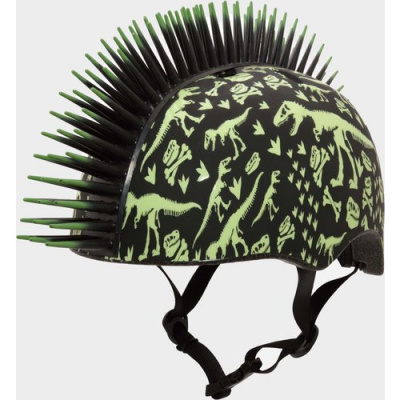
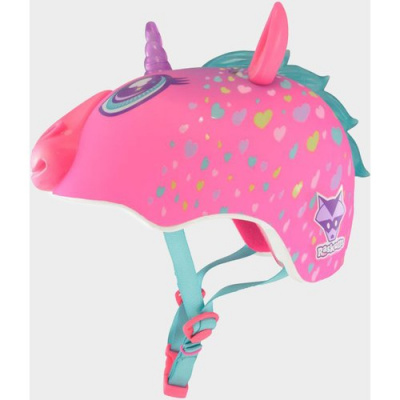
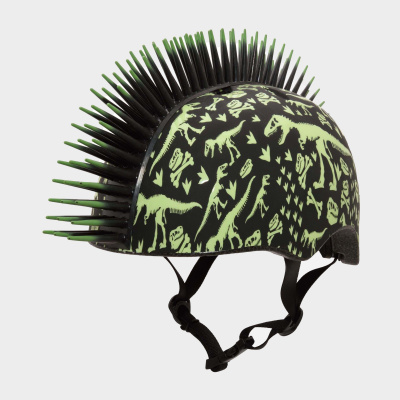
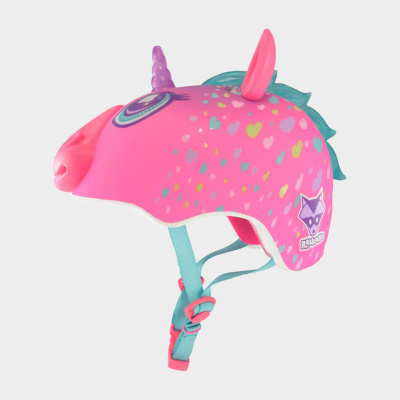
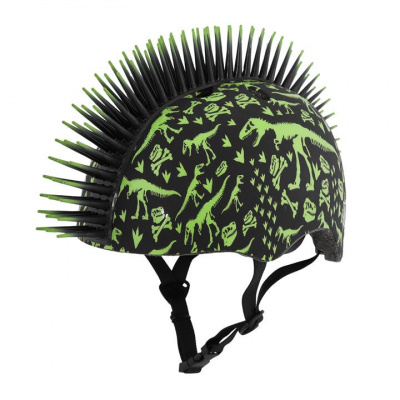
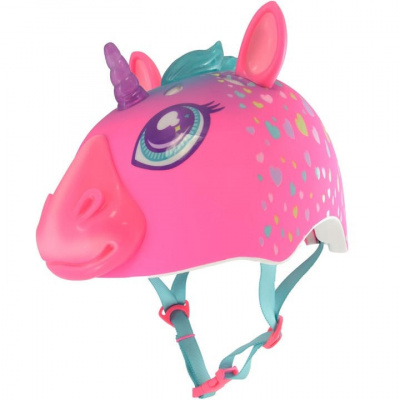
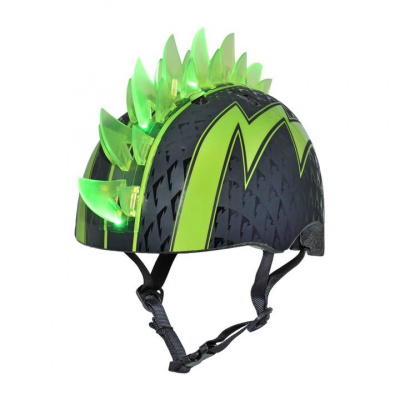
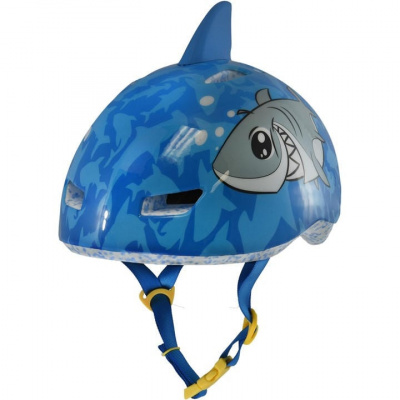
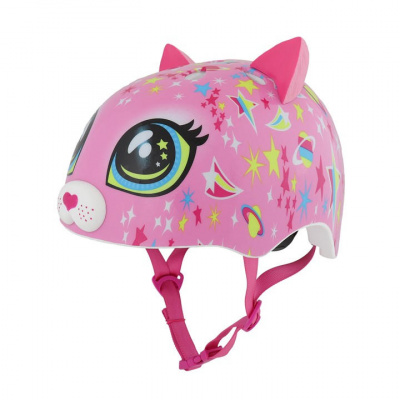
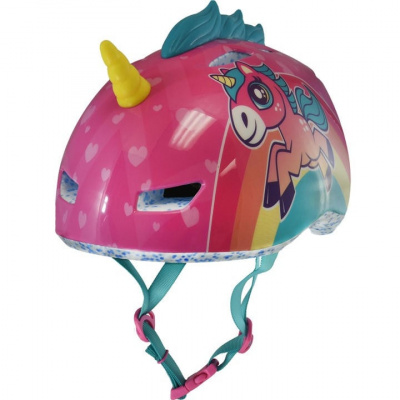
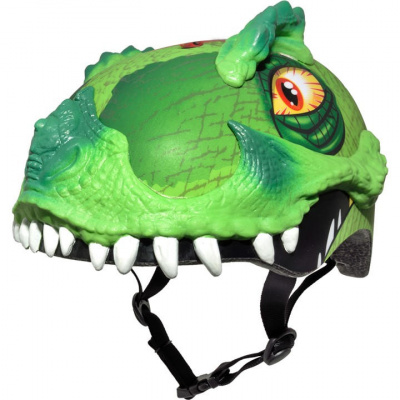
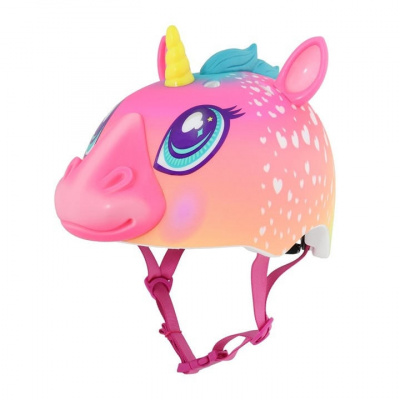
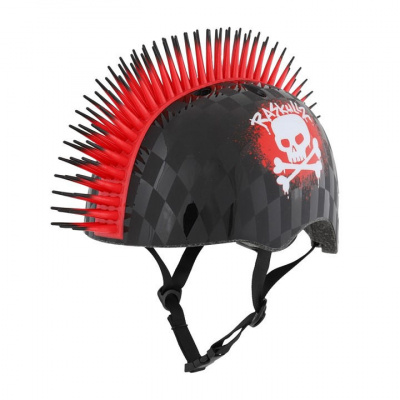
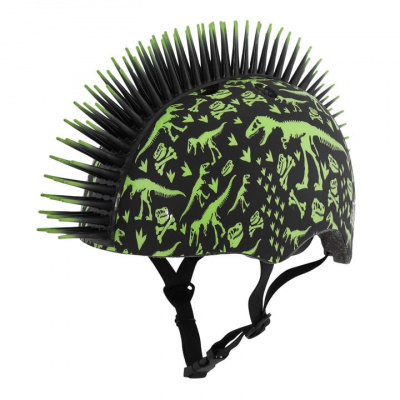
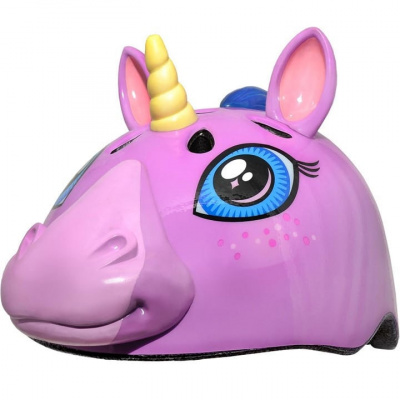
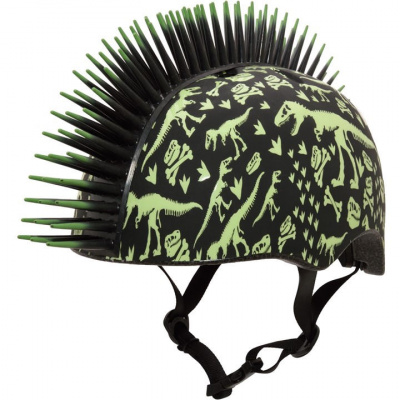
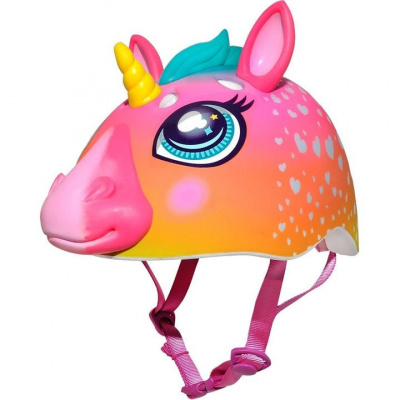
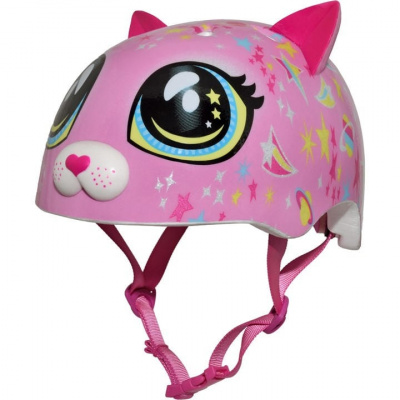
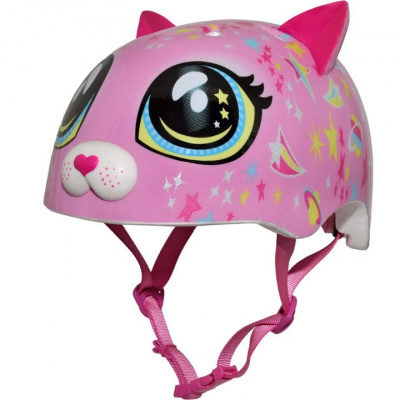
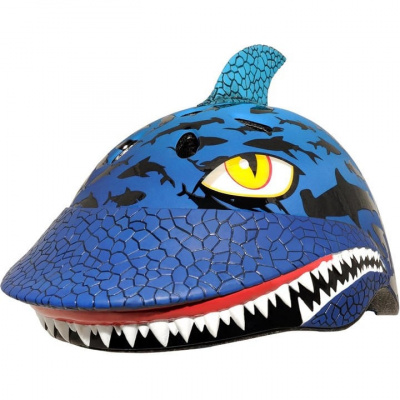
Getting a child to wear a helmet without a negotiation session is half the battle - and Raskullz kids helmets largely win it before you've even left the house. The brand's signature move is turning protection into something kids actively want to put on: think full 3D T-Rex heads, shark fins, unicorn horns, and kitten ears sitting proud on top of a properly constructed shell. These aren't novelty dress-up pieces. Beneath the eye-catching thermoplastic rubber features sits a shock-absorbing EPS inner shell that meets CE EN 1078 certified safety standards - the same benchmark applied to adult cycling helmets across the UK and Europe.
The 3D sculpted elements are made from thermoplastic rubber specifically so they compress and break away cleanly on impact, rather than snagging or transmitting rotational force. That detail matters more than it sounds. Raskullz cover toddler and youth sizing, making them relevant from first balance bike through to junior trail riding. Whether it's laps of the park, the school run, or a Sunday spin around a trail centre, they're built to meet the standard - and to get worn consistently, which is ultimately the whole point.
Prices and availability can change quickly. Delivery charges are not always included in listed prices.
Final price, stock status and delivery terms are set by retailer. We may receive a commission on purchases made.
What's Actually Going on Inside the Shell
Strip away the dinosaur and you've got a helmet that takes the engineering seriously. The outer shell is a hard thermoplastic housing, and the 3D decorative features - horns, fins, ears, spines - are moulded from thermoplastic rubber (TPR). TPR is deliberately chosen here because it deforms and detaches under load rather than staying rigid. In a real-world tumble, that means the feature breaks away cleanly instead of catching on the ground and twisting the helmet sideways on your child's head. It's a considered safety call, not just a production shortcut.
Inside, the shock-absorbing EPS inner shell does the heavy work. Expanded polystyrene is the same material used in helmets across the price spectrum - from entry-level commuter lids to race-day road helmets - because it's genuinely effective at absorbing and dissipating impact energy. Raskullz keep the EPS liner consistent across the range, so the protection doesn't drop off just because one colourway has a bigger unicorn horn than another.
The aerodynamic cooling vents are worth flagging too, particularly for UK summers which tend to be humid rather than simply warm. Kids generate heat fast, and a sweaty, uncomfortable head is one of the quickest routes to a helmet that gets quietly left behind. The vent channels pull air through the shell during movement, keeping temperature regulation in check during faster rides. Come autumn, the overall shell coverage is substantial enough to retain some warmth - which matters when you're doing a Sunday morning loop of the local trail and the temperature has dropped ten degrees from last weekend.
Working Out the Right Size
Raskullz split into two primary size bands. Toddler helmets typically cover 48 - 52cm head circumference; youth sizes run 50 - 54cm. There's an overlap in the middle, and that's where it's easy to guess wrong - so measure rather than assume.
Use a soft tape measure and wrap it around the head roughly 2.5cm above the eyebrows, keeping it level all the way round. That single number tells you more than age ever will - kids' head sizes vary enormously at the same age, and buying by age bracket is how you end up with a helmet that rocks around or sits too high. If your child is right on the border between toddler and youth sizing, it's generally worth going with the smaller shell if the strap system can accommodate the head comfortably - a correctly sized shell with adjusted straps will always fit more securely than an oversized one cinched tight.
Compared to some alternatives - Bell kids helmets and Giro kids helmets both use dial-fit retention systems that add micro-adjustability - Raskullz keep the fit system simpler, relying on the strap adjustment to do most of the tailoring. That's a trade-off worth knowing about: less mechanical complexity, but you need to spend a minute getting the straps properly set rather than just spinning a dial. For most toddler and junior riders, it's not a problem once it's set up correctly.
Strap Setup, Winter Layering, and Keeping It Clean
The adjustable nylon chin strap with side sliders is your main fitting tool. Place the helmet level on your child's head - front edge two finger-widths above the eyebrows - then slide the side adjusters so the strap forms a shallow V-shape just below each ear. Once that's set, fasten the chin buckle and tighten until you can fit two fingers, comfortably but not loosely, between the strap and the chin. The helmet shouldn't rock forward, backward, or side to side. If it does, go back to the side sliders.
For winter riding - and in the UK that can mean November through to March with a cold snap either side - thin thermal skull caps and beanies worn under helmets are common. The nylon straps have enough range to accommodate a slim layer underneath without needing to reset the whole system. If your child is wearing a thicker beanie, you may need to re-run the fitting process from scratch. It takes two minutes and it's worth doing rather than assuming the previous setting still works.
Cleaning is straightforward but there's one thing to avoid: don't use solvent-based cleaners or anything abrasive on the EPS inner liner. Mild soap and warm water on a soft cloth is all you need. The TPR 3D elements can handle the same treatment - useful after a muddy puddle session, which in the UK is basically guaranteed from September onwards. Let the helmet air dry naturally rather than leaving it near a radiator, which can degrade the foam over time. If the helmet takes a significant knock - a proper fall, not just dropping it on the kitchen floor - replace it. EPS is a single-use material; it compresses to absorb impact once and that's it.
If you're looking at alternatives, Krash kids helmets take a similar graphic-led approach with comparable safety construction, and Lazer kids helmets bring a more performance-oriented fit system if your child is getting more serious about riding. For Raskullz's core audience - young kids who need convincing to wear a helmet at all - the 3D character designs do work that no dial-fit system can.
Raskullz Kids Helmets FAQs
How do I know what size Raskullz helmet my child needs?
Measure around your child's head roughly 2.5cm above the eyebrows using a soft tape measure - that's your head circumference. Raskullz toddler helmets generally fit 48 - 52cm and youth sizes cover 50 - 54cm. Go by the measurement rather than age; kids' head sizes vary too much at the same age for guessing to work reliably.
Are Raskullz helmets safe for cycling?
Yes. The toy-like look is backed by genuine construction: a shock-absorbing EPS inner shell and CE EN 1078 certification - the required safety standard for cycling helmets in the UK and Europe. The 3D TPR features are specifically designed to break away cleanly on impact rather than snagging, which is a deliberate safety consideration rather than a styling detail.
How do you adjust a Raskullz helmet for a secure fit?
Set the helmet level on your child's head, two finger-widths above the eyebrows. Use the side sliders to position the straps in a V-shape just beneath each ear, then fasten and tighten the chin strap until you can fit two fingers - snugly, not loosely - between strap and chin. The helmet should sit still and not rock in any direction.