
Raleigh Kids Bikes
Raleigh kids bikes have come a long way from the chunky steel machines your parents remember propping against a garden wall. Today's range - particularly the Pop series - is built around one idea: making it easier for children to actually ride. Lighter frames, proportional geometry, and controls sized for small hands mean less frustration and more confidence, faster.
The lineup covers 12-inch to 24-inch wheels, so there's a bike for toddlers finding their feet and pre-teens ready for something more capable. Raleigh splits neatly into two camps: the modern, performance-minded Pop range with its aluminium frame construction, and the heritage Molli and Sherwood models that lean on classic steel styling with mudguards and baskets included. Both camps have their place - it just depends on what your child actually needs the bike for.
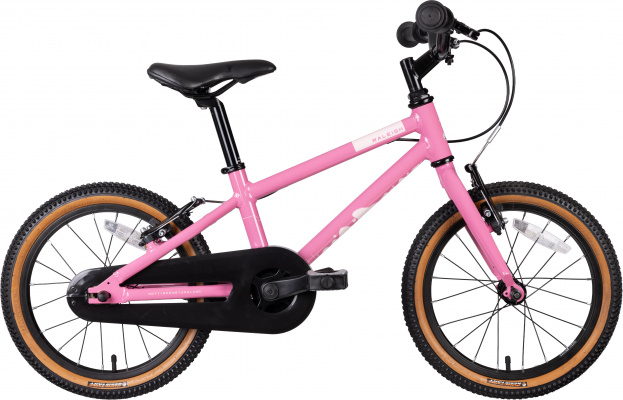
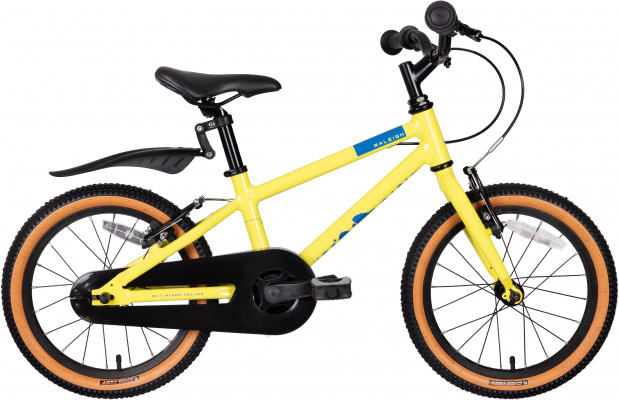
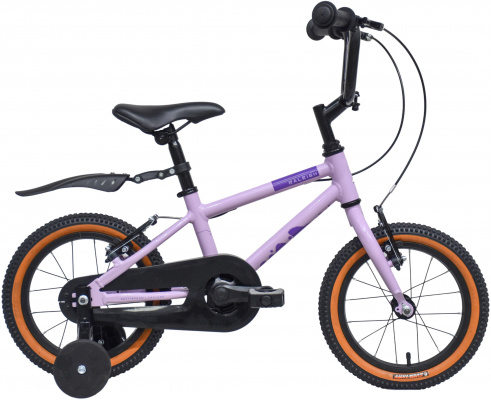
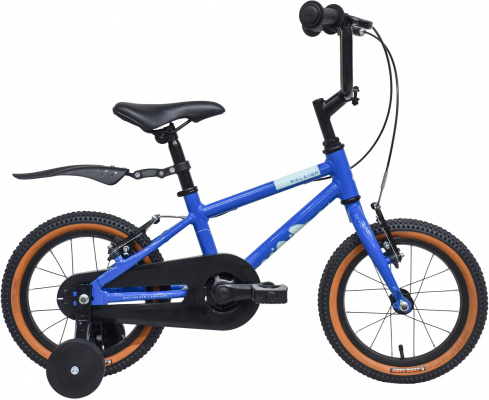
The Pop range is where Raleigh has done the most interesting work. Child-specific geometry, a narrow Q-factor to suit little hips, and short-reach brake levers that small fingers can actually pull make a genuine difference to how a young rider handles a bike. If your child is struggling to stop or steer, the bike is often the problem - not them. Getting the right fit from the start changes everything.
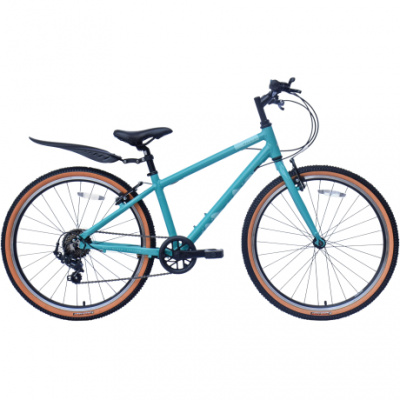
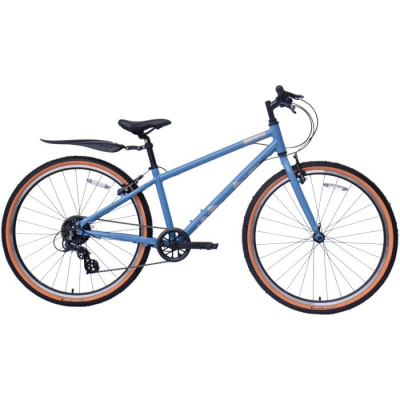
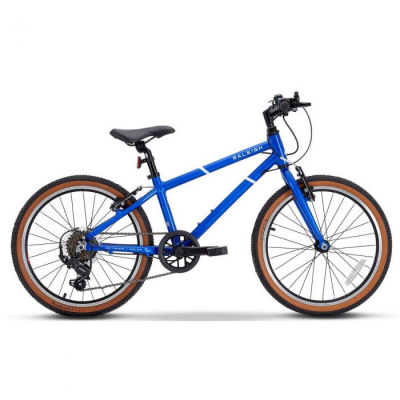
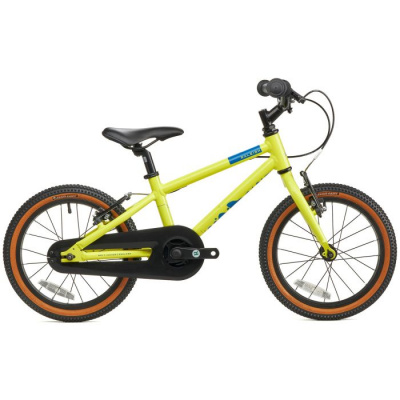
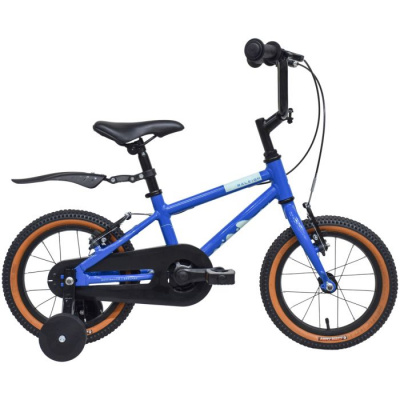
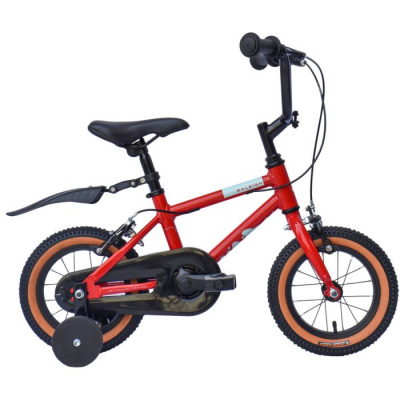
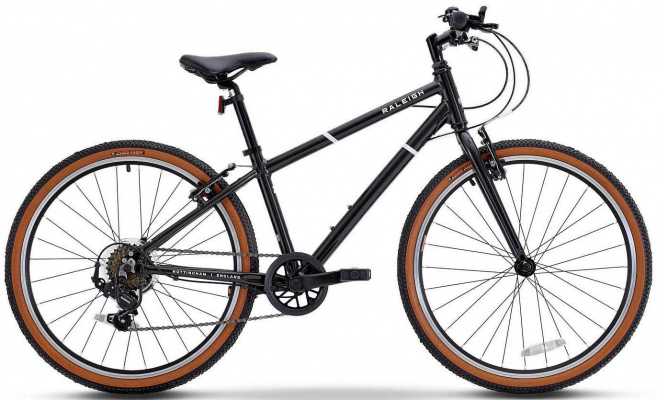
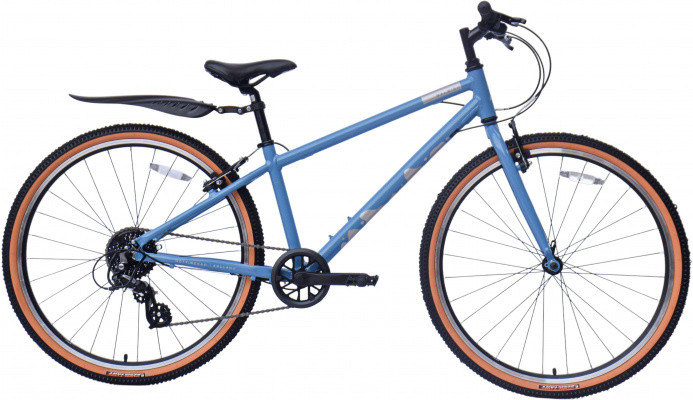
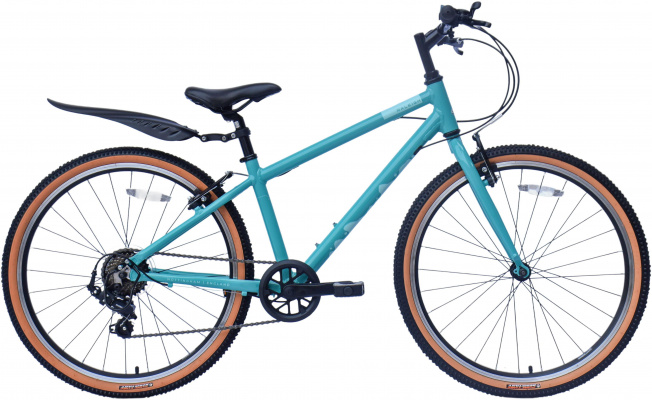
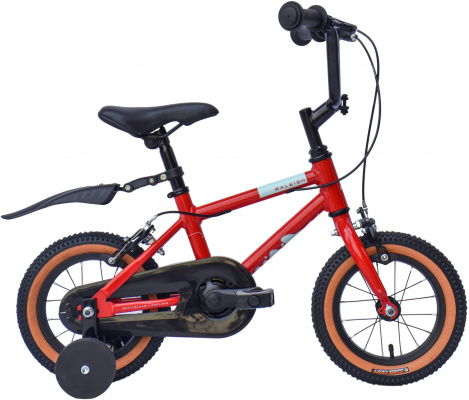
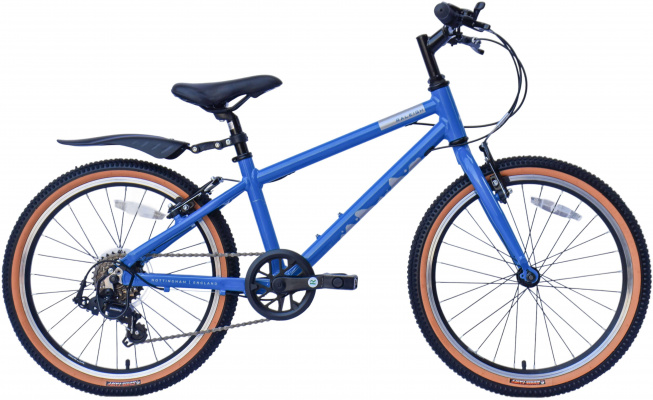
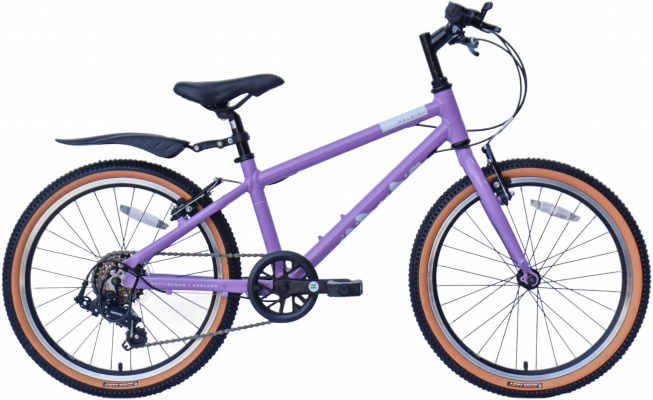
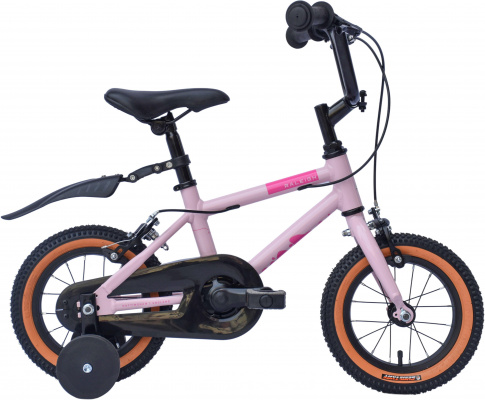
Prices and availability can change quickly. Delivery charges are not always included in listed prices.
Final price, stock status and delivery terms are set by retailer. We may receive a commission on purchases made.
Mapping the Raleigh Kids Range
Raleigh sizes bikes by wheel diameter, running from 12-inch wheels for the youngest riders up to 24-inch for older children approaching full-size territory. That convention makes it straightforward to narrow down options - though wheel size alone doesn't tell the whole story, which we'll get to.
The Pop range is the modern core of the lineup. Aluminium frames keep the weight down, which matters more than most people think when a child is wrestling their bike out of a boot or picking it up after a tumble. Geometry is dialled for smaller bodies - shorter reach to the bars, lower standover height, proportional crank length. The result is a bike that doesn't fight the rider. Geared Pop models use Shimano Revoshift twist shifters, which are intuitive for children who haven't yet got the muscle memory for trigger shifters.
Then there's the Molli - the basket-and-bell end of the spectrum. Steel frame, classic looks, heavier than the Pop but packed with practical touches that make it popular for younger children. The Sherwood follows a similar ethos. These aren't performance bikes, and they're not trying to be. They're solid, cheerful, and built to take a knock. If your child wants a bike that looks like a proper little bicycle rather than a scaled-down racer, the Molli fits that brief well.
Want to see how Raleigh's approach compares across the market? Frog Bikes are arguably the benchmark for lightweight kids bikes in the UK, while Dawes kids bikes offer a similarly broad range worth comparing.
What Raleigh Actually Gets Right on the Pop Range
Weight is the obvious headline. The Pop range uses lightweight aluminium tubing throughout, and the difference between a 6kg aluminium bike and a 9kg steel one is enormous when you're four years old. A child who can lift and manoeuvre their own bike builds confidence faster. Simple as that.
Less talked about - but just as important - is Q-factor, which refers to the spacing between the pedals. Adult bikes have a wider Q-factor suited to adult hips. Raleigh's child-specific Q-factor on the Pop range narrows that spacing to match a child's narrower hip width, which means a more natural pedalling motion and less lateral wobble. You probably won't notice it written on a spec sheet, but you'll notice the difference in how smoothly your child pedals.
The short-reach brake levers are another detail that separates purpose-built children's bikes from bikes that are merely small. Standard levers require a stretch that small hands simply can't manage reliably. Short-reach levers mean children can brake with one finger, which translates directly to stopping distance and confidence on anything other than flat tarmac. On premium Pop models, internal cable routing tidies everything away and reduces the chance of cables snagging on clothing or getting caught in the wheel - practical rather than cosmetic.
A quick note on balance bikes and stabilisers: if you're at the very beginning of the journey - a toddler who hasn't yet got to grips with balance - it's worth looking at dedicated balance bikes and our stabilisers category before committing to a pedal bike. Getting that foundation right first makes the transition to pedalling much smoother.
Cube kids bikes and Carrera kids bikes are worth a look if you want to compare geometry and component spec across a similar price bracket.
Keeping It Running Through a British Winter
The school run is where most children's bikes earn their keep - and where they take the most punishment. Wet leaves, potholed paths, the odd kerb hop. Tyre pressure matters more than people realise here: 12-inch to 24-inch wheel tyres at the lower end of their pressure range roll over rough surfaces far better than rock-hard rubber, and give better grip on wet park paths.
The Molli's steel frame makes it slightly more vulnerable to rust if it's left damp in a shed all winter. A wipe-down after wet rides and a light spray of lubricant on the chain goes a long way. V-brake cables on any Raleigh model should be checked seasonally - UK winters work them hard, and a stiff cable is a slower stop. Pop models with aluminium frames are less of a rust concern, but the drivetrain still needs the same basic attention.
On the mudguard question: the Molli comes ready for wet roads. The Pop range is lighter partly because it skips the mudguards - but that's an easy fix. A set of bolt-on mudguards sorts it quickly, and adding a kickstand means the bike doesn't spend its life lying on the ground outside the school gates. A bell is legally required on bikes sold in the UK, and most Raleigh models include one - but if yours doesn't, it's a ten-second fix.
One thing worth doing before any first ride: check the saddle height properly. Children's bikes often arrive with saddles set conservatively low. Your child should have a slight bend in the knee at the bottom of the pedal stroke - not a fully extended leg, and definitely not knees coming up to the bars. Five minutes with an Allen key makes a bigger difference to their riding than almost any component upgrade.
Related searches:
Raleigh Kids Bikes FAQs
What size Raleigh bike does my child need?
Raleigh uses wheel diameter as its sizing guide, from 12-inch wheels for toddlers up to 26-inch for young teens. Wheel size gives you a rough starting point, but always measure your child's inside leg and check the standover height - that's the real test of whether a bike fits safely.
Are Raleigh kids bikes heavy?
The Pop range uses lightweight aluminium frames that are genuinely well-suited to a child's strength-to-weight ratio - these aren't heavy bikes. Heritage models like the Molli use steel frames and carry a bit more weight as a result, partly because of the included mudguards and accessories. For active riding, the Pop is the better choice.
Do Raleigh kids bikes come with stabilisers?
Most 12-inch, 14-inch, and 16-inch Raleigh models include removable stabilisers to help younger riders build confidence from day one. If you need replacements or want to explore other balancing aids, check our dedicated stabilisers section for compatible options.