
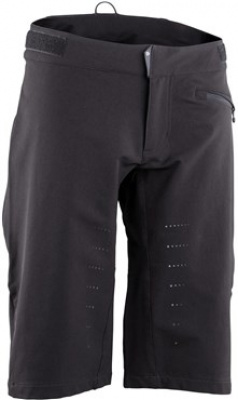
Race Face Regular Shorts
Race Face regular shorts are built for riders who want a clean, non-bib setup without sacrificing the technical fabric work that makes long days in the saddle bearable. No shoulder straps, no fuss - just a streamlined short that moves with you from the car park to the summit and back down again.
The range covers liner shorts and lightly fitted trail shorts, so whether you're layering under a baggy outer or going minimal on a dry summer spin, there's a cut that fits the brief. Race Face leans on 4-way stretch woven fabric throughout, which means the material follows your pedal stroke rather than fighting it - no saddle snagging, no pulling across the thigh on steep climbs.
For UK riders, the DWR coating is worth paying attention to. British trails spray, drip, and soak without warning, and a solid Durable Water Repellent finish buys you real protection against light showers and puddle blowback. Pair that with laser-cut venting panels and you've got a short that handles muggy Welsh trail centre climbs as well as drier Peak District days. Flatlock seams and a seamless crotch gusset keep chafing out of the picture on longer efforts, and the internal waist adjustment means fit stays dialled even as layers change through the ride.
Prices and availability can change quickly. Delivery charges are not always included in listed prices.
Final price, stock status and delivery terms are set by retailer. We may receive a commission on purchases made.
Fabric Tech and Weather Performance
The 4-way stretch construction is the foundation of what Race Face does with these shorts. It's not just about comfort - stretch fabric that works in all directions stops the short from riding up or binding when you're weighting a pedal through a tight switchback. You get full range of motion without the short doing anything unexpected.
The DWR (Durable Water Repellent) finish sits on top of that stretch shell and handles the wet-weather reality of riding in Britain. It won't keep you dry in a proper downpour - that's what a Race Face jacket is for - but it sheds trail spray, light drizzle, and the kind of persistent damp that follows you around the Scottish Borders from October to April. Worth noting: DWR degrades with washing, so how you care for these shorts directly affects how long that protection lasts (more on that below).
Laser-cut venting adds another layer of climate control. Instead of mesh panels that catch grit and hold moisture, laser-cut perforations open up airflow exactly where heat builds - typically the inner thigh and rear - without weakening the fabric structure. On a steep, humid climb in the Brecon Beacons in July, that difference is tangible. The shorts breathe rather than trap, and moisture-wicking properties pull sweat away before it pools.
Flatlock seams lie flat against the skin rather than sitting proud, which removes the friction points that cause hot spots on longer rides. The seamless crotch gusset does similar work in the most abrasion-prone area - it's a construction detail that separates technical cycling shorts from general activewear, and Race Face applies it consistently across the range.
Understanding the Race Face Fit and Range
Race Face regular shorts run to an athletic, tailored fit - closer to the body than a baggy enduro short, with enough room to move freely but not so much fabric that it flaps at speed. The cut suits XC riding and lighter trail use well. If you're after a relaxed, gravity-oriented fit with reinforced panels for repeated chairlift laps, that's a different product category entirely.
The inseam length varies across the range, and it's worth checking before you buy - shorter inseams suit riders who want the short to sit above knee pad tops, while longer cuts offer more coverage and warmth on cooler days. Getting this right matters practically: too short and you'll get a gap between the short hem and your knee pad that fills with grit and cold air on descents.
The internal waist adjustment system is a genuine quality-of-life feature. It means you're not locked into a rigid waistband size, and you can fine-tune the fit over a base layer or after a big lunch stop without reaching for a different size. Waistband adjustment is often overlooked when comparing shorts, but on a long day it makes the difference between something that stays put and something you're constantly pulling up.
Race Face non-bib shorts sit at the more performance-oriented end of the regular short spectrum. If you're comparing them to something like Fox regular shorts or Endura regular shorts, the key differences usually come down to fit preference and fabric hand-feel rather than any fundamental technical gap - all three brands bring solid construction to similar price points.
Looking for heavy-duty gravity or enduro fits? Check out our Race Face MTB Baggy Shorts. Prefer the locked-in feel of shoulder straps? Head over to our Race Face Bib Shorts collection.
Layering and Care for UK Riding
Most Race Face trail shorts are designed to be worn as a standalone short or over a liner, depending on the model. If your short doesn't include a built-in chamois pad, pairing it with a dedicated liner short adds saddle comfort without changing the outer fit. Check the specific product listing - some include a removable liner, others are shell-only.
For knee pad compatibility, measure your inseam length against the top edge of your pads before committing to a size. A gap between the pad top and the short hem looks sloppy and lets cold air in on descents - most riders find that a mid-length inseam sits cleanly over D30 or similar soft-insert pads. Stiffer, hard-shell pads tend to sit slightly higher, so account for that if you're running something more substantial.
Layering over a thermal base layer in winter works well with the athletic fit - there's enough room without excess bulk. Team the shorts with a Race Face jersey and you've got a consistent fit language across the kit, which matters when you're moving and don't want jersey fabric bunching under a waistband. Don't forget Race Face gloves to complete the setup - cold hands on damp autumn descents are a fast way to ruin an otherwise solid ride.
Wash care is straightforward but non-negotiable if you want the DWR coating to last. Wash at 30 degrees, use a technical apparel cleaner, and keep fabric softener well away - it clogs the DWR coating and kills breathability fast. Tumble drying on a low heat actually helps reactivate the DWR after washing, so that's worth doing periodically. Turn the shorts inside out before washing to protect the outer finish, and don't leave them sitting wet in a bag after a muddy ride - the grit works into the fabric weave and accelerates wear.
Race Face Regular Shorts FAQs
Do Race Face shorts come with a chamois liner?
It depends on the model. Some Race Face regular shorts include a removable chamois liner built in, while others are sold as a shell only, intended to be worn over your own liner short. Always check the individual product description on Bikesy before buying - it'll be clearly listed in the spec.
How do Race Face cycling shorts fit?
Race Face regular shorts run to an athletic, tailored fit - closer-cut than a baggy trail short but with enough stretch to move freely on the bike. They're designed for XC and lighter trail riding. If you're between sizes, most riders find Race Face fits true to size, though the internal waist adjustment gives you a bit of room to fine-tune.
Are Race Face shorts waterproof?
They're water-resistant rather than waterproof. The DWR (Durable Water Repellent) finish handles trail spray and light rain well, but won't stand up to sustained downpours. To keep that protection working, wash at 30 degrees with a technical cleaner, skip the fabric softener, and tumble dry on low periodically to reactivate the coating.