
Profile Design Road Wheels
Profile Design road wheels have been shaping fast riding since the brand's earliest days in triathlon and time-trial racing - and that focus on aerodynamic efficiency runs through every rim profile they produce today. Whether you're bolting a new wheelset onto a dedicated TT machine or looking to put proper speed under a road bike for club runs and sportives, these wheels are built around one clear idea: drag is the enemy, and every design decision fights it.
Profile Design uses CFD (Computational Fluid Dynamics) to shape each rim, so the aerodynamic gains aren't just wind-tunnel marketing - they're optimised across a realistic spread of yaw angles, which matters a great deal on exposed UK roads where crosswinds rarely arrive head-on. Carbon fibre construction keeps weight in check while allowing the stiffness needed to translate power cleanly into speed.
The range covers multiple rim depths and braking standards, so there's a sensible fit for most riders - from those chasing podiums on flat circuits to anyone who wants a meaningful upgrade over stock alloy hoops. Disc brake and rim brake options sit alongside tubeless-ready builds, covering the bases for modern bike compatibility. Browse the selection below and use the guidance here to match the right wheelset to your riding.
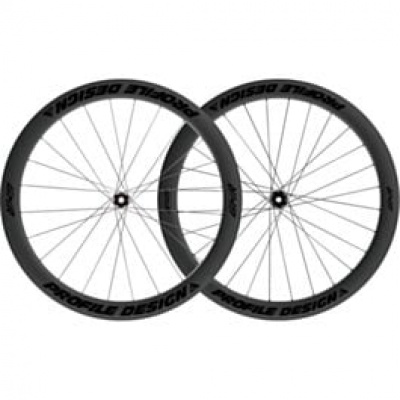
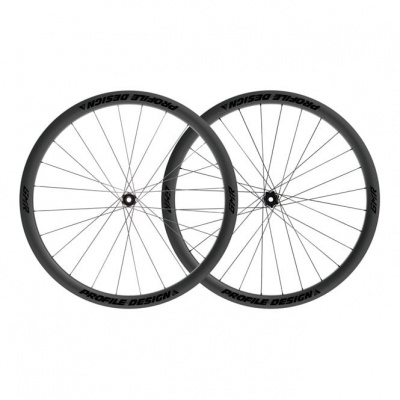
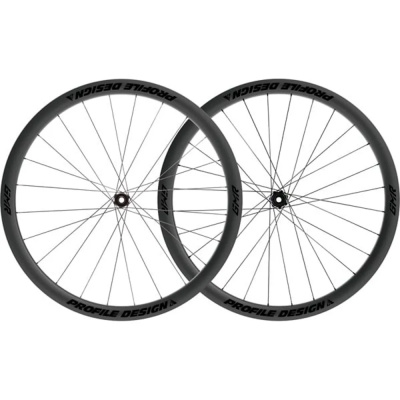
Prices and availability can change quickly. Delivery charges are not always included in listed prices.
Final price, stock status and delivery terms are set by retailer. We may receive a commission on purchases made.
Axle Standards, Braking, and Getting the Fit Right
Before anything else, check your frame and fork spec. Profile Design disc brake wheelsets run 12x100mm thru-axle at the front and 12x142mm at the rear - standard across most modern disc road bikes and all current triathlon framesets designed for disc. Rim brake models use traditional quick-release spacing (100mm front, 130mm rear), so they slot straight into older aluminium and carbon frames without adapters.
Rotor mounting on disc models uses the Centerlock standard. If your callipers or rotor collection is 6-bolt, you'll need a Centerlock-to-6-bolt adapter - a cheap fix, but worth sorting before the wheels arrive. Tyre clearance is generous enough on most Profile Design carbon rims to run 28mm rubber comfortably, which is the sensible choice for British roads. Pushing to 30mm is possible on some models depending on your frame's clearance. If you need to swap your drivetrain standard or service your hub internals, visit our Wheel Bags page for storage and travel options, and check the relevant spares sections for freehub and bearing parts.
Rim Depths Explained: Choosing the Right Profile for Your Riding
Rim depth is the decision that shapes everything else - crosswind handling, aerodynamic drag, weight, and the kind of riding you'll actually enjoy. Profile Design organises its range into clear tiers, and picking the right one starts with being honest about where and how you ride.
A 38mm rim depth is the one to reach for if your rides involve genuine climbing or unpredictable wind. It's light enough to not punish you on long ascents, and shallow enough that a gust across an exposed moorland B-road doesn't become a wrestling match. Good all-year wheel for riders who cover varied ground.
The 50mm depth is where most riders land, and for good reason. It delivers a measurable aerodynamic advantage on flat and rolling roads without the crosswind sensitivity of deeper sections. On a typical club run with a mix of drag-strip dual carriageway and lumpy back lanes, a 50mm front and rear combination works well across most conditions. DT Swiss and ENVE both play in this space, but Profile Design's CFD-shaped rims are specifically optimised for stability at high yaw angles - relevant when the wind's coming from the side rather than straight on.
The 78mm deep section is a different tool entirely. It belongs on flat time-trial courses and triathlon circuits where the wind is manageable and you're pinned in an aero position for most of the effort. Putting a 78mm front wheel on a road bike for a sportive is a decision you'll quietly regret by the first exposed ridge. Keep the deep stuff for where it earns its keep. Higher-tier carbon layups across the range improve the stiffness-to-weight ratio noticeably - stiffer carbon means more of your sprint translates into forward motion rather than flex in the rim. The 1/Fifty and TwentyFour Series represent distinct points in that hierarchy, with the latter using more advanced carbon construction aimed at riders who want competition-grade performance rather than a solid upgrade over alloy.
Profile Design's use of high TG resin in rim brake models is worth calling out specifically. High glass-transition resin handles heat far better than standard alternatives, which matters when you're braking repeatedly on a long descent in the Alps or even a sustained Welsh valley drop. Brake track temperatures that would compromise cheaper carbon rims stay within safe limits. Mavic and Campagnolo also offer heat-managed rim brake carbon options, but Profile Design's approach is specifically engineered around race conditions rather than recreational use. The precision-machined proprietary alloy hubs with high-engagement internals mean the drivetrain picks up fast - useful in criteriums where you're constantly accelerating out of corners.
Keeping Profile Design Wheels Rolling Through UK Conditions
British roads are not kind to wheels. Potholes that appear overnight, gritty winter tarmac, and rain that arrives without much notice mean your wheelset needs to be set up properly from the start, not just unboxed and ridden.
Running tubeless is the most practical step you can take. Most current Profile Design carbon wheelsets are tubeless ready - the rim bed and sidewall are designed to accept tubeless tape and valves without drama. Drop tyre pressure to around 70 - 75psi on rough roads and you'll absorb surface irregularities that would otherwise pinch a tube or crack a rim. It also means a slow puncture seals itself on the move rather than leaving you at the roadside in the rain outside Skipton.
Disc brakes make a meaningful difference in wet conditions. Rim brake tracks loaded with road grit lose braking performance and wear the carbon faster than you'd like. A disc brake Profile Design wheelset sidesteps that entirely - consistent stopping regardless of whether it's dry or drenched, and no brake track degradation to monitor. If you're still running rim brakes, inspect the track regularly and keep brake pads clean of embedded grit.
For winter storage and travel, check out our Wheel Bags to keep rims protected between seasons. If the hubs feel gritty after a harsh winter, replacement bearing cartridges will sort them out - find what you need in the relevant bearings section. Pairing these wheels with Profile Design Aero Bars or Profile Design Bar Tape keeps the whole cockpit consistent if you're building a TT or triathlon setup from scratch.
Profile Design Road Wheels FAQs
Are Profile Design road wheels tubeless ready?
Most current Profile Design carbon wheelsets - including the 1/Fifty and TwentyFour Series - are tubeless compatible. Check the specific rim bed design before you set up, use quality tubeless tape rated for the rim width, and fit valves with a long enough stem for your rim depth. A proper seal matters more than it sounds.
What freehub bodies are compatible with Profile Design wheels?
Profile Design wheels typically ship with Shimano and SRAM 11/12-speed freehubs as standard. SRAM XDR and Campagnolo-compatible bodies are available separately. Match the freehub to your hub generation rather than just the cassette brand - older and newer Profile Design hubs aren't always interchangeable, so check the specific model before ordering.
How do Profile Design deep section wheels handle in crosswinds?
Profile Design uses CFD to shape rims for stability across a realistic range of yaw angles, so sudden steering torque in crosswinds is reduced compared to less engineered deep-section options. That said, lighter riders on exposed UK roads - think moorland B-roads or coastal circuits - will find a 38mm or 50mm front wheel more manageable than a 78mm deep section in gusty conditions.