
PRO Track Pumps
Pro track pumps sit at the heart of Shimano's component division, and they bring that same engineering rigour to the workshop floor. Whether you're clicking your road bike up to 110 PSI for a Sunday club run or trying to coax a stubborn tubeless MTB tyre into seating at six in the morning before a trail ride, having a floor pump you can actually trust matters more than most riders admit until theirs lets them down mid-session.
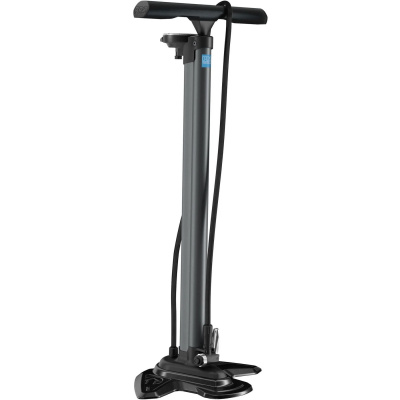
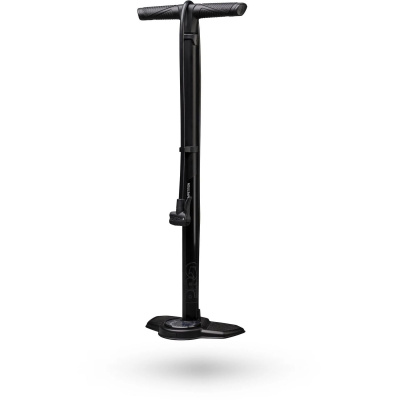
Pro's range covers the full spread: high-pressure models for road and cross-country, high-volume options for gravel and trail, and construction tiers from practical steel-barrelled everyday pumps through to CNC-machined alloy Team-series tools built for people who treat their workshop seriously. The proprietary EZ Head and AH Head systems mean you're not fiddling with grommets every time you switch between a Presta-valved road wheel and a Schrader-valved commuter tyre. Oversized pressure gauges - analogue or digital depending on the model - give you a clear reading without squinting. Compare the current Pro lineup below and find the best UK prices across our verified retailers.
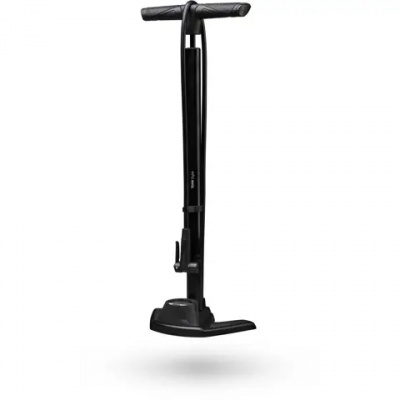
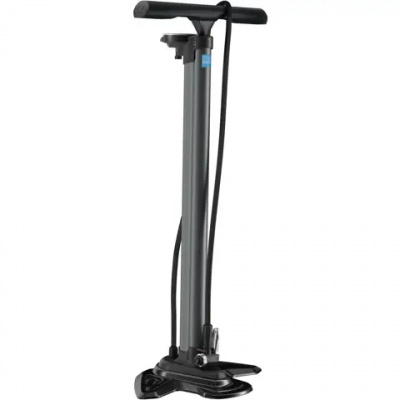
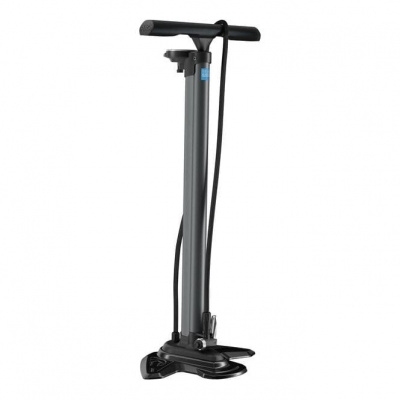
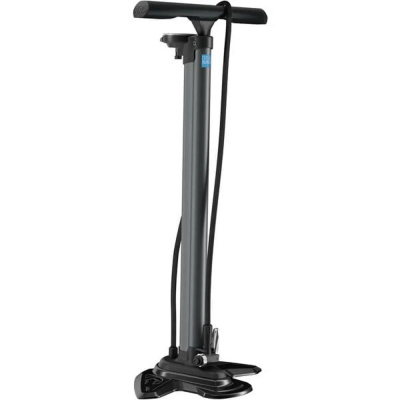
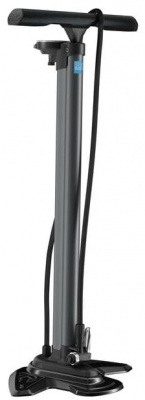
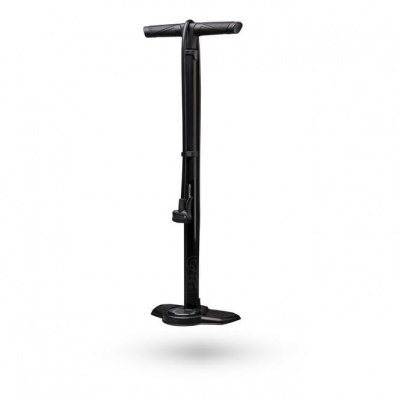
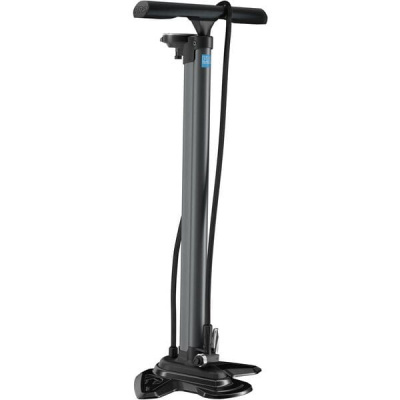
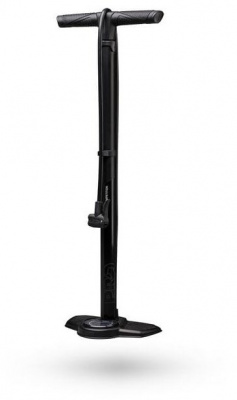
Prices and availability can change quickly. Delivery charges are not always included in listed prices.
Final price, stock status and delivery terms are set by retailer. We may receive a commission on purchases made.
Valve Heads and Pressure: Getting the Match Right
The first thing to sort before buying any Pro bicycle floor pump is whether you need high pressure, high volume, or a pump that handles both adequately. Road cyclists chasing precise tyre pressures - say, dialling in 90 PSI on a 25mm slick for a flat sportive - want a model rated to 160 PSI with a fine, accurate gauge. Trying to inflate a 2.4-inch trail tyre with that same pump is technically possible but physically exhausting; the narrow barrel displaces too little air per stroke. For MTB and gravel riders, the priority flips: you want a wide alloy barrel that moves big volumes quickly and can generate enough pressure spike to pop a tubeless bead.
Pro's EZ Head handles the Presta/Schrader question neatly. It's a push-on, auto-selecting twin-valve system - press it onto whatever valve is in front of you and it reads the situation, no dismantling required. That's genuinely useful when your track pump lives in a shared garage and gets used on everything from a carbon road bike to a kid's hybrid. The AH Head (Advanced Head) takes a different approach: a screw-on collar with micro-adjust bleed valves for a more secure, precision fit. It's the head you want when you're running tubeless at low pressures where even a small blow-off is annoying, or when gritty winter valves are making a push-on connection unreliable. Both systems eliminate the need to swap internal parts - a Topeak or Lezyne pump will ask you to do the same, so this is genuinely competitive ground for Pro.
On valve compatibility: yes, all current Pro track pumps with either head work with both Presta and Schrader valves without any internal modification. If you're running Presta - standard on road and most MTB - unscrew the valve core finger-tight, give it a quick tap to release the air lock, push the head on firmly, and lift the locking lever. Done. Schrader is even simpler; just push and lock.
Pro Track Pump Hierarchy: Team vs. Competition
Pro runs two meaningful construction tiers, and the differences are worth understanding before you spend. The Team series is the top of the stack: CNC-machined alloy barrels, oversized analogue or digital gauges calibrated for both road and tubeless setups, and a build quality that's designed to be maintained rather than replaced. If a seal wears out or the gauge drifts, you can rebuild it. For a serious home mechanic or a small club workshop, that rebuildability is real long-term value. The alloy barrel is also stiffer under load, which means the pressure you read on the gauge is closer to what's actually in the tyre - important when you're running 25 PSI tubeless and a two-PSI error matters.
The Competition and Touring models step down to steel barrels and resin bases. They're heavier, they're less precise at the extremes of the pressure range, and the gauges are functional rather than surgical. What they are is reliable and honest. If your pump lives by the back door and sees one or two uses a week from a rider who wants decent inflation without overthinking it, the Competition tier does the job with Shimano-backed build quality behind it. You're not getting a flimsy budget pump; you're getting a sensible trade-off between cost and capability.
By comparison, Silca and Park Tool occupy similar professional-grade territory to the Team series, often at higher prices. SKS competes directly with the Competition tier on value. Where Pro has the edge is the EZ and AH head technology, which tends to handle the push-on/screw-on question more elegantly than some rivals at equivalent price points.
One practical note: if you're building out a workshop setup, it makes sense to pair a Pro pump with other Pro accessories. Their bar tape and saddles follow the same component-brand logic - made to spec, priced sensibly, backed by the same supply chain.
Keeping Your Pump Alive Through a UK Winter
A steel-based pump stored in a damp, unheated shed through a British winter is going to rust. Not dramatically, not immediately, but the base will go orange and the barrel can corrode at the seams if it's sitting on a concrete floor with condensation doing its work through November to March. If your pump lives somewhere properly cold and damp - a brick outbuilding, an open-sided bike shelter - the Team series alloy construction is worth the extra spend on grounds of longevity alone.
For pumps that are already in service, a couple of maintenance habits make a significant difference. Keep the main plunger shaft lightly coated with silicone spray; a dry plunger drags, increases pump effort, and wears the seal faster. Don't use WD-40 - it dries out and leaves residue. The rubber grommets inside the EZ Head will eventually wear, especially if you're pushing it onto muddy or gritty valves after rides in the Peak District or on Scottish winter roads. Pro supplies replacement grommet kits, and fitting one takes about three minutes. That's a much better outcome than binning a good pump because the head won't seal properly.
Cold hands are a real factor too - UK riders know the drill of trying to pump up a tyre at 7am in February when you can't feel your fingers. Pro's ergonomic handle design on the Team series is noticeably better in those conditions than a basic T-bar; the grip surface stays workable even through gloves. Worth factoring in if autumn and winter riding is your staple.
On gauge accuracy: the oversized analogue gauges on the Team models are reliable across the mid-range of their scale. At very low pressures - under 30 PSI, which matters for tubeless MTB setups - even a good analogue gauge has limitations. A dedicated digital pressure gauge used alongside your floor pump is the cleanest solution for that use case. The Team series digital gauge models close most of that gap, but if you're running 18 PSI in a 2.6-inch tyre and need precision, that's the honest picture.
If you want to round out your setup beyond the pump, Pro's water bottles and seatposts follow the same practical-over-flashy brief.
PRO Track Pumps FAQs
How do you use a Pro track pump on a Presta valve?
Unscrew the valve core finger-tight and give it a quick tap to break the air lock. Push the EZ Head or AH Head firmly down onto the valve - it'll seat with a solid click - then lift the locking lever to secure it. Start pumping. When you're done, release the lever before pulling the head off to avoid unseating the valve core.
Does a Pro track pump work with both Presta and Schrader valves?
Yes. Both the EZ Head and AH Head on current Pro track pumps handle Presta and Schrader without dismantling the head or swapping any internal parts. The EZ Head auto-selects on contact; the AH Head uses a screw-collar approach for a more locked-down fit. No grommet juggling required.
How accurate is the gauge on a Pro floor pump?
Team series gauges - analogue or digital - are well calibrated and reliable across the bulk of their pressure range. For road and cross-country use above 40 PSI, they're more than accurate enough. Below 30 PSI, where tubeless MTB setups live, a dedicated digital gauge is still the more precise tool, though the Team digital models get reasonably close.