
Pinhead Locks
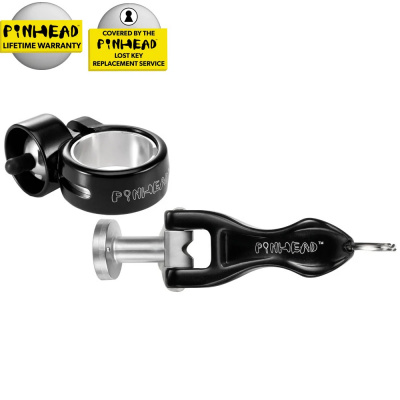
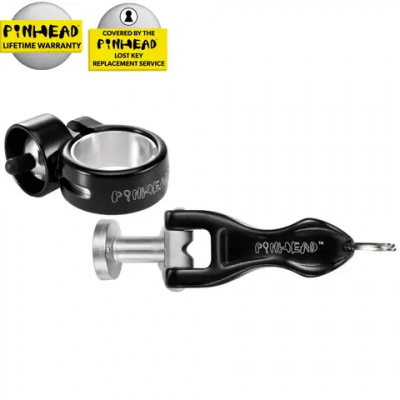
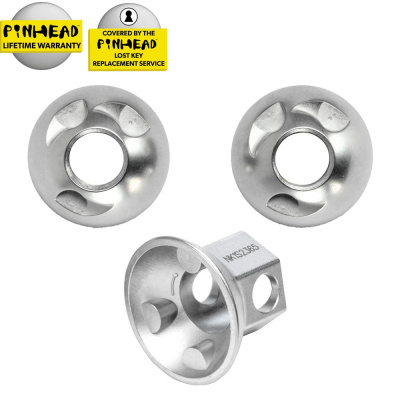
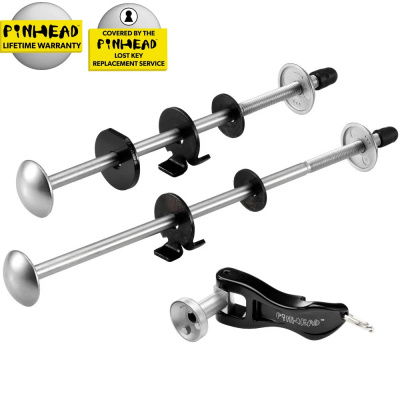
Pinhead bike locks tackle a problem that a D-lock alone can't solve: the opportunist who ignores your frame entirely and walks off with your wheels or saddle instead. In busy UK cities, component theft is rife, and a standard quick-release skewer might as well be an open invitation. Pinhead's answer is to replace those skewers and bolts with forged chromoly steel fasteners that look deceptively ordinary but can only be turned by a single, unique coded key.
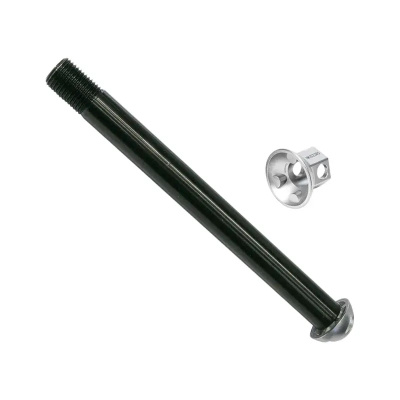
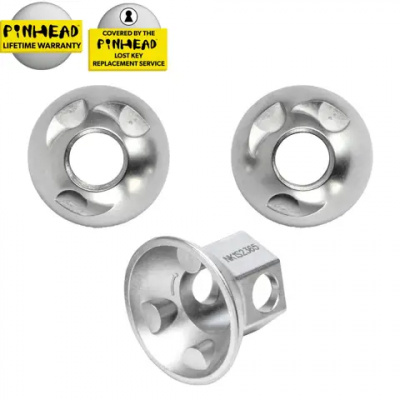
The key system itself uses multi-pinned engagement across a 9-digit code - so there's no picking it, and no universal workaround. What stops the angle-grinder crowd from just gripping the head with pliers is convex disc technology: the fastener head is curved outward, giving tools nothing to bite into. It's a clever bit of engineering that adds almost no weight and removes the need to carry extra cables around your post.
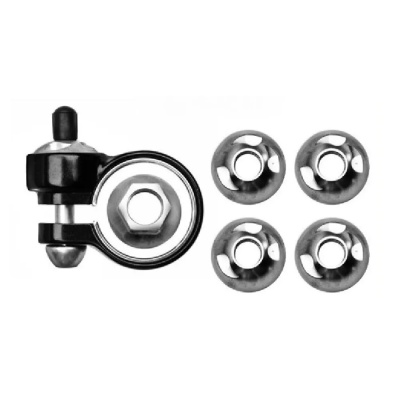
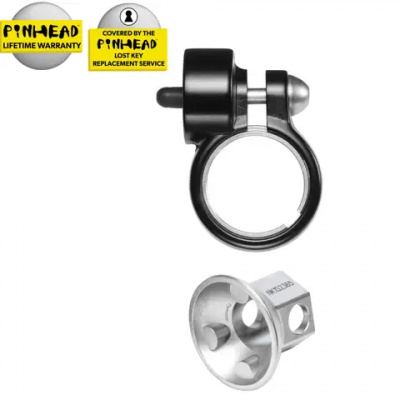
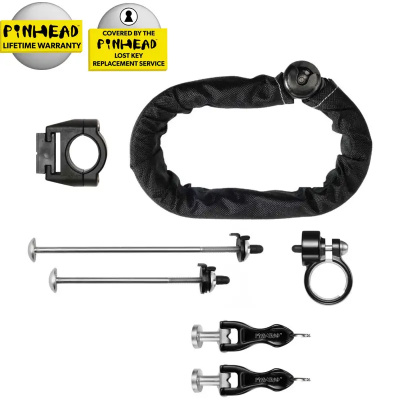
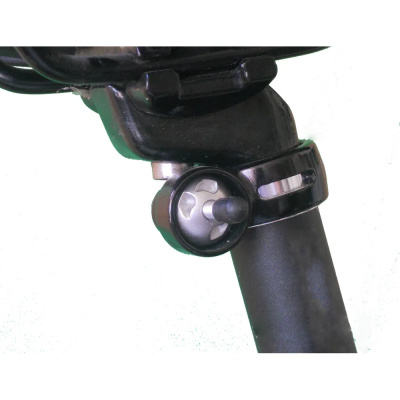
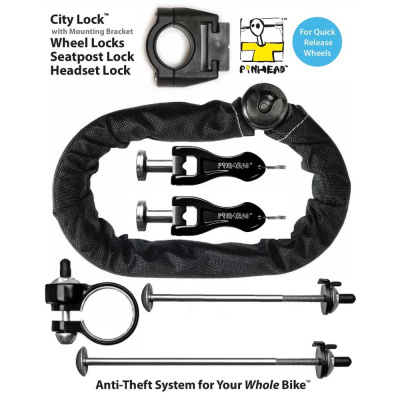
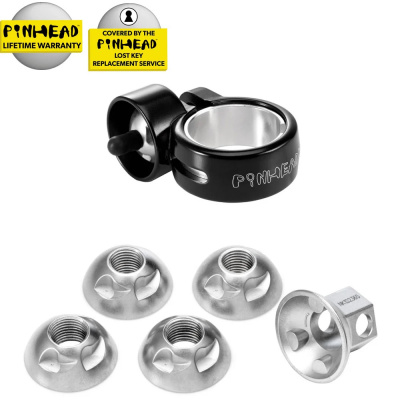
Pinhead covers front and rear wheels, seatpost collar, and headset - so you can lock down every pinchable component on the bike. For commuters locking up in London, Manchester, or Bristol, that's a meaningful secondary layer of security that works quietly in the background every single day.
Prices and availability can change quickly. Delivery charges are not always included in listed prices.
Final price, stock status and delivery terms are set by retailer. We may receive a commission on purchases made.
Will Pinhead Fit Your Bike? Compatibility Explained
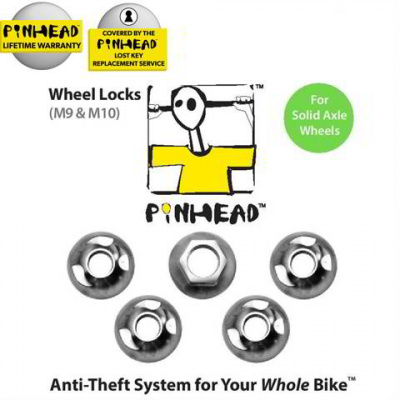
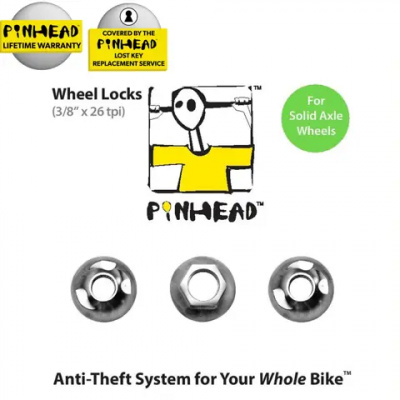
Getting the right Pinhead kit starts with knowing exactly what axle standard your bike runs. Most road and older mountain bikes use a quick release (QR) skewer - typically 100mm spacing at the front and 135mm at the rear. Pinhead's standard QR kits are built around these dimensions, and fitting is straightforward. Track bikes and fixed-gear setups with bolt-on solid axles need Pinhead's Solid Axle kits instead, which use a different thread interface entirely.
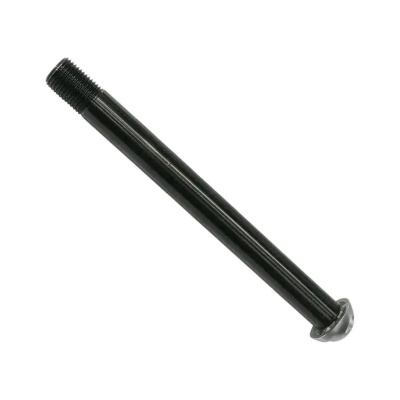
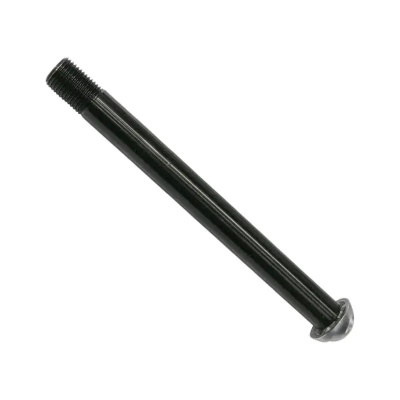
Thru-axles are where you need to be precise. Modern mountain bikes and many gravel bikes run thru-axles, and Pinhead security skewers are available in thru-axle versions - but you must match two measurements before ordering: the overall axle length and the thru-axle pitch. Pinhead covers pitches of 1.0mm, 1.5mm, and 1.75mm, and getting this wrong won't just mean the part doesn't fit - it can strip the threads in your frame or fork dropout. Not a repair you want to be explaining at the shop. Remove your current thru-axle and measure it, or check your frame's spec sheet. When in doubt, take it to a mechanic before ordering.
Seatpost collars and headset top caps are generally less fussy on sizing, but double-check seatpost diameter (common sizes are 27.2mm, 30.9mm, and 31.6mm) before adding those to your order. Pinhead lists compatibility clearly per product, so cross-reference carefully.
Pinhead Sets: Choosing the Right Pack
Pinhead sells its anti-theft components in bundles, and the pack you need depends on how many components you're trying to secure and where you're locking up.
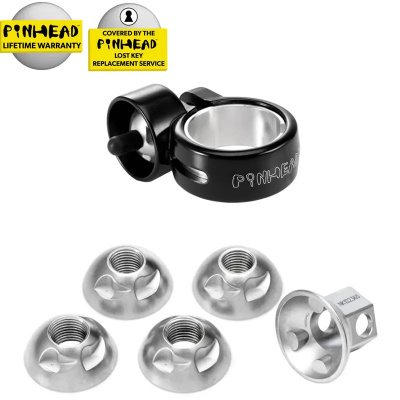
The 2-Pack covers front and rear wheel skewers - the most commonly stolen components, and the right starting point if you're on a tight budget or your bike lives somewhere reasonably secure overnight. A step up, the 3-Pack adds a seatpost collar lock, which matters more than people think: saddle-and-post theft is a daily occurrence in most city centres, and a decent saddle is worth protecting. If you're commuting regularly into a busy urban environment, the 4-Pack - wheels, seatpost, and headset - is the one to go for. It leaves no obvious weak point for an opportunist, and the cost difference over the 3-Pack is modest for the peace of mind it buys.
Pinhead also makes the Pinhead Bubble Lock, their take on a compact U-lock, which can be ordered keyed alike to your component skewers. One key for everything on the bike. That's genuinely useful when you're fumbling with gloves on a wet November morning in Leeds. It's worth considering whether a dedicated heavy-duty lock from Kryptonite or Abus might serve as your primary frame lock alongside Pinhead's component system - the two approaches complement each other rather than compete.
Riders looking at comparable component-level security from other specialist brands might also consider Pitlock, whose system uses a similar skewer-replacement approach. The coded key mechanisms differ in detail, so it's worth comparing the specifics of each before committing. For broader lock coverage - cables, chains, folding locks - Hiplok offers a solid range worth browsing alongside your Pinhead shortlist.
Keeping Pinhead Skewers Working Through a UK Winter
Here's the thing about Pinhead skewers that catches people out: unlike a standard QR you might swap between bikes or remove for cleaning, Pinhead fasteners stay on the bike. Permanently. Which means they're exposed to everything a British winter throws at the roads - road salt, standing grit, and the kind of persistent damp that works its way into threads and causes solid axle and skewer seizure over a season or two.
The fix is straightforward and worth doing at installation rather than after the fact. Apply a good anti-seize compound or marine grease to the threads before fitting. Don't use standard chain lube - it washes out. Anti-seize is the right call, especially on any steel-on-alloy interface where galvanic corrosion can build up quietly over winter. If you're running Pinhead wheel locks on a bike with an alloy frame, this step isn't optional.
The coded key system itself needs a little attention too. The multi-pinned mechanism is precise, and if grit works into the key interface, engagement becomes stiff and eventually unreliable. A dry PTFE lubricant - not an oil-based spray - applied occasionally to the key contact point keeps things running cleanly without attracting dirt. Store the key somewhere dry; a damp keyring isn't ideal long-term.
If you're fitting these yourself rather than having a shop do it, use a torque wrench and follow Pinhead's specified values. Over-tightening a chromoly fastener into an alloy dropout is a mistake that doesn't announce itself until you try to remove it. The forged chromoly steel construction gives Pinhead excellent shear strength, but that's working in your favour against thieves - not as a reason to go heavy-handed with a spanner.
Pinhead Locks FAQs
How do Pinhead locks work?
Pinhead replaces your standard quick-release skewers or bolts with forged chromoly steel fasteners machined to a convex profile - meaning pliers, vice grips, and wrenches can't get purchase on them. The only way to fit or remove them is with your unique coded key, which uses a multi-pinned engagement pattern tied to a 9-digit code. No universal key exists.
Are Pinhead locks compatible with thru-axles?
Yes, Pinhead makes thru-axle versions of their security skewers, but compatibility depends on matching your frame's thread pitch - 1.0mm, 1.5mm, or 1.75mm - and the correct axle length. Measure your current thru-axle before ordering. Fitting the wrong pitch risks stripping dropout threads, which is an expensive frame repair.
What happens if I lose my Pinhead key?
You can order a replacement directly from Pinhead using your unique 9-digit key code - but only if you registered it online after purchase. Pinhead includes a card with this code in the box. Keep it somewhere safe: without it, getting a replacement is considerably more complicated and potentially means a workshop job to remove the fasteners.