
Patagonia Overtrousers
Patagonia overtrousers are what you reach for when the sky goes grey mid-ride and there's no sheltering it out. Built around Patagonia's H2No Performance Standard, these waterproof cycling trousers don't just keep the rain off - they do it without turning every climb into a sweat-soaked ordeal. That balance is genuinely hard to find, and it's where Patagonia consistently delivers.
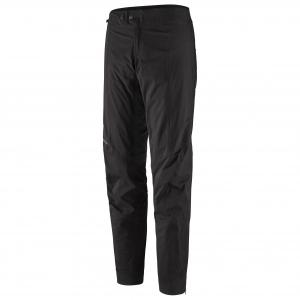
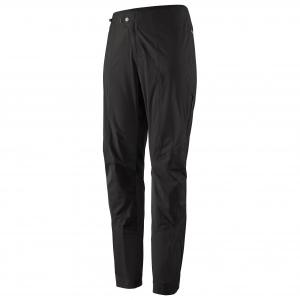
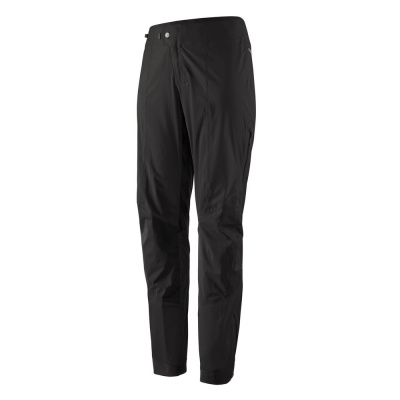
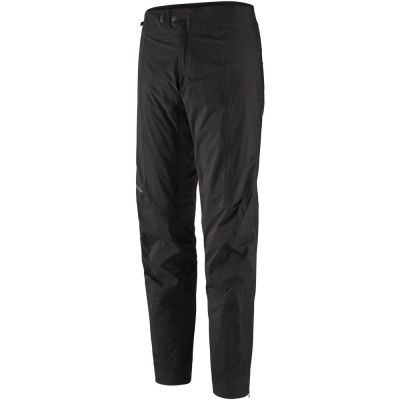
The range covers everything from the trail-focused Dirt Roamer Storm pants, with their reinforced seat panels for abrasive winter MTB trails, to lighter packable rain pants for cycling that stuff into a jersey pocket when the forecast surprises you - which, let's be honest, it usually does in the UK. Articulated knees give your pedal stroke proper room to breathe, the fully taped seams lock out trail spray, and the PFC-free DWR finish means water beads and rolls off the fabric rather than soaking through.
Materials are recycled nylon throughout, and Fair Trade Certified production runs across the range - so the environmental credentials back up the performance ones. Whether you're grinding up Peak District grit roads in January or spinning to work through a London downpour, there's a Patagonia waterproof trouser built around your kind of riding.
Prices and availability can change quickly. Delivery charges are not always included in listed prices.
Final price, stock status and delivery terms are set by retailer. We may receive a commission on purchases made.
Fabric Tech and Weather Performance: The H2No Advantage
The H2No Performance Standard is Patagonia's own benchmark for waterproof, windproof, breathable shells - and it's more demanding than it might sound. Every product carrying that label has to pass a set of internal tests for water pressure resistance, breathability, and durability that go beyond what standard waterproof ratings require. In practice, you get a shell that holds up against sustained rain and trail spray, not just a quick shower.
Within the range, the key distinction is construction. Three-layer builds bond an outer face fabric, a waterproof-breathable membrane, and an inner backer into a single, robust laminate. There's no loose inner lining to snag on knee warmers or bunch up mid-ride. The trade-off is packability - 3-layer overtrousers are more durable and more breathable during hard efforts, but they pack down larger than their 2.5-layer counterparts. If you're after something that disappears into a small saddle pack as emergency cover, the 2.5-layer options compress smaller and weigh less, though they're best suited to lower-intensity or commuting use rather than full-gas winter trail riding.
Both constructions use a PFC-free DWR finish on the outer face. DWR - Durable Water Repellent - is what makes water bead up and roll off rather than saturating the outer fabric. Once that outer fabric wets out, breathability drops sharply, even if the membrane itself stays waterproof. Worth knowing before your first big ride in them. The breathable membrane works by allowing sweat vapour molecules to pass outward while blocking liquid water from coming in - the physics only work efficiently when there's a vapour pressure gradient, meaning you need to be generating heat for it to do its job. On a steady Welsh trail centre climb, that's fine. Stopped at a gate in horizontal Pennine rain, less so - worth having a packable mid-layer ready.
Recycled nylon throughout keeps the environmental footprint lower without compromising abrasion resistance, and Fair Trade Certified manufacturing means the people making them are working in verified conditions.
Understanding the Patagonia Fit and Range
Patagonia cuts their overtrousers with a regular to relaxed fit, and the layering room is already built in - you don't need to size up. The fit is designed to sit comfortably over padded liner shorts or thermal bib tights without binding through the hips or thighs. If you're between sizes, go with your normal size and you'll have enough space for a base layer underneath.
The Dirt Roamer Storm pants are the MTB-specific end of the range. Articulated patterning at the knees maps to the actual angles your legs move through during a pedal stroke, so there's no pulling or restriction when you're cranking up a loose climb. High-denier panels across the seat and inner thigh handle the abrasive mud and grit that shreds lighter fabrics on winter trail riding - the kind of slow, grinding contact you get when you're pushing through deep ruts on the South Downs or shuffling along a rocky Lakeland descent. Side-zip venting is worth looking for in this category; it lets you dump heat on sustained climbs without having to stop and strip a layer, which is exactly the feature that stops these becoming unbearable on a big day out.
For packable rain pants for cycling at the lighter end - commuting, road, or gravel use where you're not dragging your backside through mud - Patagonia's slimmer-cut options work well over regular clothing and compress down to next to nothing. They're not the right call for aggressive trail riding, but for keeping dry on the way to work or stashing emergency cover in a back pocket, they're hard to fault.
If you're after dry-weather trail riding trousers - something with more stretch and ventilation but no waterproofing - these overtrousers aren't what you need. Have a look at our Patagonia Trousers page, where the non-waterproof trail and casual options are listed.
For comparison, Endura overtrousers tend to run slightly more technical-fit for road and commuting use, while Fox overtrousers lean harder into the MTB-specific end of the market. Patagonia sits in the middle - genuinely trail-capable but designed with a broader set of riders in mind.
Layering and Care for UK Riding
Getting the layering right makes the difference between a miserable January ride and a perfectly manageable one. Patagonia overtrousers work best over a thermal base layer and a set of padded liner shorts or bib tights - the liner shorts keep the chamois in place, the bib tights add insulation, and the overtrousers handle everything coming from outside. Pair that with a Patagonia jacket up top and a Patagonia base layer underneath and you've got a system that works across most of what a UK winter throws at you.
On milder days, a single base layer under the overtrousers is often enough. The temptation is to over-layer and then overheat - if you're riding hard, the breathable shell does a lot of the work. Start cooler than you think you need to.
Washing matters more than most people realise. Mud, trail grit, and body oils degrade the DWR finish faster than anything else, and once that finish goes, the outer fabric wets out and breathability tanks even though the membrane is still technically waterproof. Wash them regularly - after muddy rides, not just occasionally - using a technical cleaner like Nikwax Tech Wash or Grangers Performance Wash. Avoid standard biological detergents and never use fabric softener; both strip DWR faster than the trail does. After washing, tumble dry on low heat. The heat reactivates the DWR treatment and restores water-beading performance. If tumble drying isn't an option, a warm iron on a low setting through a cloth works as a substitute. It's a five-minute job that adds years to the life of the garment and keeps the breathability working properly - worth the effort every time.
Frequently Asked Questions
Are Patagonia overtrousers fully waterproof for cycling?
Any Patagonia overtrouser built to the H2No Performance Standard is fully waterproof and windproof, with fully taped seams and a DWR-treated outer to keep rain and trail spray out. They're breathable too, so heat can escape during hard efforts rather than building up inside the shell.
How do Patagonia waterproof trousers fit over normal clothes?
The fit is regular to relaxed and designed to accommodate layers underneath - padded shorts, bib tights, or casual clothing - without needing to size up. Order your normal size; the cut already accounts for the extra bulk of an underlayer.
Can you wash Patagonia overtrousers without ruining the waterproofing?
Washing them regularly is actually what keeps the waterproofing working properly. Use a technical wash like Nikwax or Grangers, skip the fabric softener, and tumble dry on low heat afterwards to reactivate the DWR coating. Skipping washes lets grit and oils degrade the DWR faster than any washing machine will.
Patagonia Overtrousers FAQs
Are Patagonia overtrousers fully waterproof for cycling?
Any Patagonia overtrouser built to the H2No Performance Standard is fully waterproof and windproof, with fully taped seams and a DWR-treated outer to keep rain and trail spray out. They're breathable too, so heat can escape during hard efforts rather than building up inside the shell.
How do Patagonia waterproof trousers fit over normal clothes?
The fit is regular to relaxed and designed to accommodate layers underneath - padded shorts, bib tights, or casual clothing - without needing to size up. Order your normal size; the cut already accounts for the extra bulk of an underlayer.
Can you wash Patagonia overtrousers without ruining the waterproofing?
Washing them regularly is actually what keeps the waterproofing working properly. Use a technical wash like Nikwax or Grangers, skip the fabric softener, and tumble dry on low heat afterwards to reactivate the DWR coating. Skipping washes lets grit and oils degrade the DWR faster than any washing machine will.