
P1 MTB Wheels
Swapping your wheelset is the sharpest performance gain you can make on a mountain bike, and P1 MTB wheels are built around that idea. Fewer grams spinning at the rim means the bike accelerates faster, changes direction more willingly, and feeds you clearer information about what's happening underneath the tyre - particularly useful when you're picking lines on loose, rooty UK descents.
P1 engineers their rims with optimised internal widths to properly support modern high-volume trail and enduro tyres. Get the internal width right and your tyre sits with a more open, supported profile; run it too narrow and you're fighting roll and burping on off-camber sections where low pressures are essential. Their hubs use high-engagement freehub mechanisms so there's almost no dead-spot between pedal stroke and drive - handy when you're punching out of a steep, rutted corner and need traction immediately.
The range covers standard Boost spacing and Super Boost Plus configurations, with rotor mounting in both 6-bolt and Centerlock flavours. Whether you're running a lightweight XC build or a burly enduro setup, there's a P1 mountain bike wheelset matched to the job. Use our comparison below to find the right spec for your frame, fork, and drivetrain.
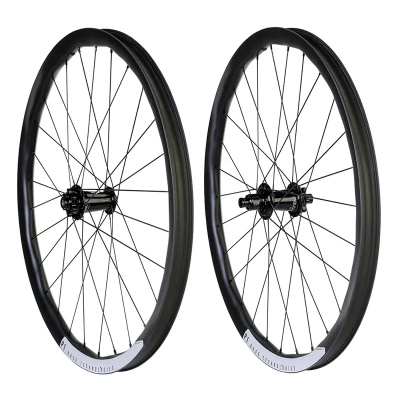
Prices and availability can change quickly. Delivery charges are not always included in listed prices.
Final price, stock status and delivery terms are set by retailer. We may receive a commission on purchases made.
Will P1 Wheels Fit Your Bike? Axle, Freehub, and Rotor Standards Explained
Before you click buy, get the compatibility sorted - this is the stuff that catches people out in the garage on a Sunday morning. Most modern P1 MTB wheels ship with Boost spacing as standard: that's 15x110mm through-axle at the front and 12x148mm at the rear. If you're running a longer-travel enduro bike with a wider rear dropout, check whether your frame takes Super Boost Plus (12x157mm) - P1 offer this on select models, and it's worth confirming before ordering because axle spacing isn't something you can bodge.
Freehub bodies are where drivetrain compatibility gets specific. Running SRAM Eagle? You'll need the SRAM XD driver body, which accepts the 10-tooth small sprocket that Eagle cassettes start on. On Shimano 12-speed, you need a Micro Spline freehub - it's a different interface entirely from the older HG standard, so a 10-speed or 11-speed cassette won't sit correctly on it. Some P1 hubs ship with one body and offer the other as a swap, so check the product listing carefully rather than assuming. Standard HG freehubs are still available on certain models for older 10 and 11-speed builds.
Rotor mounting splits between 6-bolt and Centerlock. Most trail riders in the UK run 6-bolt rotors without thinking about it, but Shimano-brake users often prefer Centerlock for its cleaner interface and quicker swaps. P1 offer both across the range - just match it to whatever your calipers are already running. And double-check your fork and frame dropouts before purchasing; through-axle thread pitch (usually 1.0mm or 1.75mm) needs to match too. If you're comparing options from brands like Hope or DT Swiss, you'll find the same compatibility matrix applies - P1 aren't unusual here, just thorough.
XC, Trail, and Enduro: Choosing the Right P1 Wheelset
P1's MTB wheel lineup isn't a one-size-fits-all catalogue. The XC-oriented wheelsets prioritise low rotational weight above all else - fewer spokes, narrower internal rim widths (typically around 25mm), and a profile built for speed on hardpack and smooth singletrack. If your riding is largely cross-country racing or fast trail days where you're not regularly throwing yourself down technical chunk, these make sense. Lighter rotating mass is genuinely noticeable in acceleration and on long climbs.
Move up to the trail and enduro tier and the geometry shifts. Internal rim widths run to 30mm or beyond, which properly supports 2.4-inch to 2.6-inch tyres - the kind of rubber most UK riders are running on their all-mountain and enduro bikes. Wider internal width gives the tyre a broader contact patch and reduces the chance of the bead rolling off under hard cornering loads or at the low pressures you need on wet Welsh trail centre roots or Peak District grit. The rims themselves are reinforced with more material at the bead and impact zones.
P1's asymmetric rim profiles are worth understanding here. On a rear wheel, the drive-side spokes sit under significantly more tension than the non-drive side due to the cassette's position. An asymmetric rim offsets the spoke bed toward the non-drive side, balancing tension across both flanges. The result is a wheel that's more structurally even, less prone to going out of true after hard riding, and generally more durable over time. It's a considered engineering decision rather than a marketing tick-box.
The carbon options within the P1 range add stiffness-to-weight advantages over alloy - a carbon rim can be lighter and stiffer simultaneously, which translates to sharper steering response and better vibration damping on rough ground. The hookless bead design on P1's carbon rims also plays a role: by removing the traditional hooked bead, the rim wall can be made more consistent in thickness, improving impact resistance at the cost of restricting maximum tyre pressure (typically capped at 30psi for hookless rims - always check the manufacturer's guidance). For tubeless setups, which most trail and enduro riders are running, this isn't a practical issue. If you want to compare carbon options from other respected builders, ENVE and Reserve sit in a similar bracket and are worth a look alongside P1. It's also worth knowing that P1's engineering approach carries across disciplines - their road wheels share some of the same rim construction logic if you're running a mixed quiver.
UK Conditions, Hub Maintenance, and Making Them Last
British trails are hard on wheels. Not in a dramatic way, just persistently - grit-laden mud turns into an abrasive paste that works into hub bearings and freehub pawls over a winter season. P1's hub bearing seals are designed to resist ingress, but no hub seal is truly impervious to repeated submersion in Peak District slurry or Tweed Valley silt. The practical upshot: clean and inspect your hubs after prolonged wet riding, not just when something sounds wrong.
Freehub engagement is one of P1's stronger suits. Their high-engagement freehub mechanisms reduce the hub engagement angle - meaning less rotation before the pawls or ratchet teeth catch and drive kicks in. Fewer degrees of dead travel matters most on technical climbs where you're weighting and unweighting the pedals constantly. Keep the engagement crisp by regreasing or re-oiling the freehub internals every six months if you ride through winter. The specific lubricant matters: most ratchet-style mechanisms prefer a light oil or manufacturer-specified grease rather than thick bearing grease, which can slow engagement in cold temperatures.
On the tyre side, tubeless ready rim beds need sealant refreshed every three to six months depending on how much you ride and how dry your garage is. Sealant dries out and stops plugging punctures effectively - pour in a fresh 30-60ml dose before it turns to a rattling rubber plug inside the rim. Check spoke tension after the first few rides on any new set of wheels; spokes bed into the nipples and hub flanges during initial use and a quick pass with a spoke key keeps things even. If you've never tensioned spokes before, a local bike shop can do a bed-in true for a modest fee and it's worth it on a decent wheelset. Brands like Hope publish their own service intervals for comparison if you want a benchmark.
P1 MTB Wheels FAQs
Are P1 MTB wheels compatible with SRAM Eagle or Shimano 12-speed?
Yes. P1 MTB wheels are available with different freehub bodies to suit your drivetrain. SRAM Eagle requires an XD driver body to accept the 10-tooth small sprocket. Shimano 12-speed needs a Micro Spline freehub - a different interface from the older HG standard. Check the product listing to confirm which body is included and whether the alternative is available as a swap.
Do P1 mountain bike wheels use Boost spacing?
Most P1 MTB wheels ship with standard Boost spacing: 15x110mm at the front and 12x148mm at the rear. Some models also support Super Boost Plus (12x157mm) for longer-travel enduro frames with wider rear dropouts. Always verify your frame and fork axle specifications before ordering - axle spacing isn't adjustable after the fact.
What is the internal rim width of P1 MTB wheels?
It varies by discipline. XC-focused P1 wheels typically run around 25mm internal width. Trail and enduro options step up to 30mm or wider, which properly supports 2.4-inch to 2.6-inch tyres, gives a better contact patch shape, and reduces the risk of tyre roll at the low pressures UK conditions often demand.