
Orro Road Bikes
Orro road bikes are designed and developed at the foot of Ditchling Beacon in Sussex - one of British cycling's most storied climbs - and that geography is no coincidence. The thinking goes: if a frame can handle the punishment of rough, lumpy British roads and unpredictable weather, it can handle anything. What separates Orro from the crowd of premium carbon brands is their use of Sigmatex Spread Tow Carbon (STC), a proprietary material that builds frames lighter and stiffer than conventional weaves allow, without turning every pothole into a spine-rattler. Two core families cover the range. The Venturi is the aero-road weapon - aggressive geometry, integrated front-end, built for riders chasing speed and power transfer. The Gold takes a different line: relaxed geometry, longer days in the saddle, compliance where it counts on Britain's chipped and cratered B-roads. Both lines run STC and standard carbon trim levels, so there's a price entry point whether you're speccing your first carbon build or going all-in on the flagship. Use the grid below to compare current UK prices across the full Orro carbon road lineup.
Prices and availability can change quickly. Delivery charges are not always included in listed prices.
Final price, stock status and delivery terms are set by retailer. We may receive a commission on purchases made.
Decoding the Orro Road Bike Lineup
Orro keep things focused. Two platforms, clear roles, no muddying the brief. The Venturi is the race-end machine - aero tube profiles, a stack and reach geometry that puts you low and forward, and a stiffness-to-weight ratio built around power transfer over smooth, fast roads. It's the bike you reach for when the club run turns competitive or you're targeting a sportive PB. If you've ever ridden a bike that feels like it's actively pushing back at you every time you put the power down, the Venturi is the opposite of that.
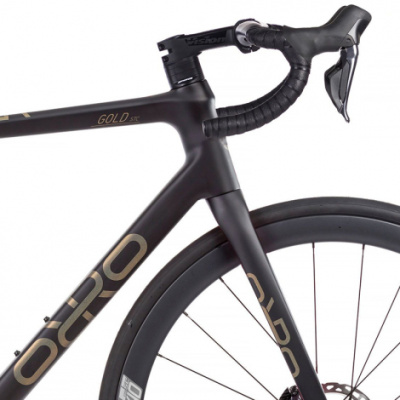
The Gold occupies the endurance road space. The geometry opens up - a higher front end, a touch more reach - so you're not folded in half after four hours on the bike. The carbon layup is tuned specifically for compliance, absorbing the high-frequency chatter that British roads specialise in producing. It's not a slow bike; it's a fast bike you can still enjoy at mile eighty. Think of it as the difference between a sprint finish and a long breakaway - different tools, different demands.
Within each family, you'll find STC (Spread Tow Carbon) builds sitting above the standard carbon variants. The STC frames use Orro's proprietary Sigmatex weave throughout, while the standard layups blend conventional carbon for a more accessible price point. The ride character is recognisably Orro on both - the STC versions simply sharpen everything up a level. Worth knowing before you start comparing build kits: the frame itself is doing different work depending on which trim you pick.
The Orro Tech Philosophy: Sigmatex and Speed
Orro's use of Sigmatex Spread Tow Carbon is the detail that sets them apart technically, and it's worth understanding what it actually means rather than just nodding at the badge. Traditional carbon weaves use round yarns that crimp over and under each other - those crimps are structurally weak points. Spread tow carbon uses flat, wide tapes laid without crimping, so the fibres stay straighter, load is distributed more evenly, and you get a meaningful reduction in weight alongside a genuine increase in stiffness and impact resistance. It's not marketing language; it's a measurable structural difference.
The frames are developed specifically to handle real-world road vibrations - tested, according to Orro, on the kind of roads you actually find at the foot of Ditchling Beacon rather than a perfectly smooth test track. That matters for British riders. A frame tuned on smooth continental roads often feels harsh when you point it at a British B-road that's been resurfaced approximately never. Orro's tailored carbon layups factor that in from the start.
On the aero side, the Venturi's tube profiles are optimised for crosswind stability as well as outright drag reduction - a trade-off that matters when you're riding in gusty British conditions rather than a wind tunnel. The integrated cable routing cleans up the front end aerodynamically and looks sharp, though it does mean a little more care at service time. Worth factoring in if you do your own spannering. Brands like Cervélo and BMC play in similar aero-road territory, but Orro's STC partnership gives them a material story that's genuinely distinct rather than borrowed from the same Taiwanese catalogue everyone else uses.
Living with an Orro in the UK
Clearance matters more than people admit. Orro's modern road frames accommodate 28c to 32c tyres depending on the model, and if you're riding anything other than a closed circuit in the UK, you'll feel the benefit. A 30c tyre on a Gold soaks up the kind of chip-seal vibration that leaves your hands numb on a 25c setup. It's not a comfort upgrade - it's a performance decision. You'll hold more speed over rough surfaces because you're not fighting the bike.
Wet winters and integrated headsets are a combination that rewards a bit of routine attention. Mud and grit find their way into the headset bearing seats faster than you'd expect, especially if you're commuting or riding through winter. A quick clean and regrease every few months keeps everything turning smoothly and avoids the kind of creaking that makes you question every component on the bike. Torque specs on integrated front-end bolts are worth keeping handy too - over-tightening carbon steerer clamps is an easy mistake with real consequences.
If you're building a long-term relationship with your Orro, keeping spares straightforward is part of the deal. Check out Orro seatposts for direct replacements if you're upgrading or need a swap after a crash. For those moments when a hanger gets bent on a rough descent - and it will, eventually - having the right replacement part sourced in advance saves a wasted week. Compared to sourcing parts for something like a Giant, Orro's UK base means support tends to be more direct. That's not a small thing when you're stuck mid-build.
One practical note on build choices: Orro road bikes come specced across a range of groupsets, so if you're comparing models, pay attention to brake rotor size alongside groupset tier. A 160mm front rotor is standard on most builds, but some riders running descents regularly prefer the 180mm option for heat management. It's a cheap swap at purchase; less so afterwards.
Orro Road Bikes FAQs
Are Orro bikes made in the UK?
Orro bikes are designed and assembled in the UK at their Sussex base. The carbon frames are manufactured in Taiwan to Orro's own specifications - a standard approach across the premium carbon market - but the engineering, testing, and final builds are done in Britain. It's a genuinely British product in the ways that matter most.
What is the difference between Orro Gold and Venturi?
The Venturi is Orro's aero road bike - aggressive geometry, stiff chassis, built for speed and race-oriented riding. The Gold is their endurance platform, with a more relaxed position and a carbon layup tuned to absorb road vibration over long distances. Different purposes, same quality of construction. Which suits you depends on how long your rides are and how hard you're pushing.
What is Orro STC carbon?
STC stands for Spread Tow Carbon, developed with UK composite specialists Sigmatex. It uses flat, wide carbon tapes rather than traditional woven yarns, which eliminates the weak crimping points in conventional weaves. The result is a lighter, stiffer frame with better impact resistance. It's a structural improvement, not a badge - and it's what separates the STC builds from Orro's standard carbon frames.