
Moon Mini Pumps
When a puncture hits on a deserted lane, Moon mini pumps are the kind of kit you're quietly glad you remembered to pack. Moon has built a reputation for CNC-machined alloy hardware that looks sharp and holds up - and their compact hand pumps follow the same logic. The barrels are machined from aluminium alloy, which helps dissipate heat during rapid inflation and resists the kind of damage a pump takes rattling around in a jersey pocket or strapped under a down tube all winter.
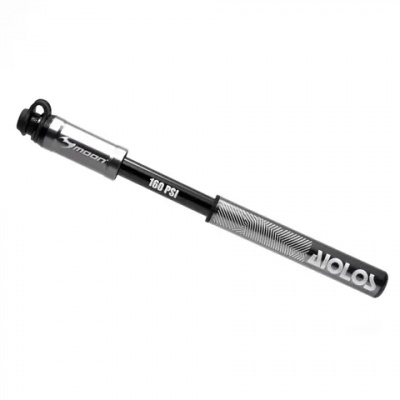
There's a model for most setups. High-pressure (HP) variants are aimed squarely at road riders who need to get a tyre back up to 90 - 100 PSI at the roadside, while high-volume (HV) barrels move air faster at lower pressures - better suited to gravel or MTB tyres that need volume rather than sky-high PSI. Both styles are genuinely pocket-sized, and the mounting brackets are designed to sit cleanly beneath a standard bottle cage without rattling loose on potholed roads. Integrated dust caps protect the valve head internals from road spray and grit - useful year-round in the UK, essential in winter. If you ride Presta on the road and Schrader on a second bike, the reversible valve head means you're not carrying adapters.
Prices and availability can change quickly. Delivery charges are not always included in listed prices.
Final price, stock status and delivery terms are set by retailer. We may receive a commission on purchases made.
Valve Compatibility and Choosing the Right Barrel
The first thing to get right is the valve match. Most Moon mini pumps use a reversible internal rubber grommet and plastic insert, so switching between Presta and Schrader is a thirty-second job with no adapters needed - unscrew the pump head cap, flip both pieces, reassemble. Worth doing at home before you need it, not at the side of the road in the rain.
Beyond that, the HP versus HV choice matters more than people expect. A high pressure (HP) barrel is optimised for narrow road tyres running 90 PSI and above. The bore is smaller, so each stroke moves less air but builds pressure more efficiently. A high volume (HV) barrel has a wider bore - you'll fill a 2.4-inch trail tyre much faster, but you'll hit a wall trying to push a road tyre much past 60 PSI. Get this wrong and you'll either be there all day pumping a gravel tyre, or unable to get your road bike rideable. Check the model spec before you buy.
Mounting is straightforward. Moon's bracket systems are designed around standard bottle cage bolt spacing, so the pump tucks alongside your cage without fouling the bottle itself. On bikes with tight clearances or full-length mudguards, it's worth measuring before committing - a few Moon models run slightly longer than rivals like Lezyne mini pumps or Topeak mini pumps, which can occasionally clash with guard stays on commuter builds.
Pocket Pump or Telescopic - What's the Trade-off?
Moon's range splits roughly into two camps. The ultra-compact pocket pumps are genuinely small - short enough to disappear into a jersey pocket and light enough that you stop noticing them. That convenience costs you stroke efficiency. You're doing more pumping to move the same volume of air, which matters when your arms are already tired and the light is fading on a Peaks ride.
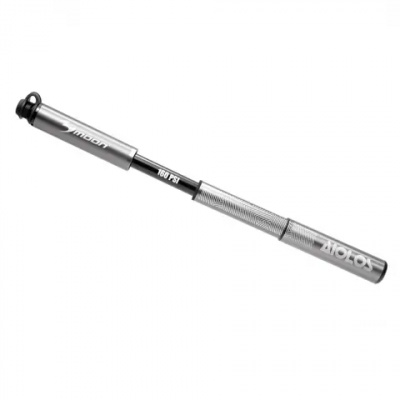
The slightly longer telescopic models use an extending barrel to increase stroke volume without adding much to the overall packed length. More air per stroke, fewer total pumps, noticeably quicker inflation - especially on road tyres where you're fighting against high backpressure. The weight penalty is marginal. If you're regularly commuting or doing longer sportives, the telescopic option is the practical call. The pocket pumps make more sense for racing where grams genuinely count and you carry a CO2 inflator as backup.
Alloy construction across both styles means durability isn't really a concern - these aren't pumps that crack or creak after a season. The CNC machining gives a consistent bore finish that keeps the shaft action smooth. The trade-off versus plastic-bodied rivals like SKS mini pumps is grip in the cold: bare alloy gets slippery with wet winter gloves, so consider wrapping the barrel with a strip of bar tape if you're using it through January.
Looking for a high-capacity pump for your home workshop? The Moon Track Pumps page covers fast, accurate pre-ride inflation without the compromise of a hand pump. And if you're building out a commuter or touring setup around the same bottle cage area, pairing a Moon mini pump mount with Moon Lights keeps the whole cockpit tidy and from the same product ecosystem.
Keeping a Moon Pump Working Through a UK Winter
A mini pump mounted on the down tube through a British winter takes a beating. Road salt, grit, and standing water work into every gap - and a pump that seizes or leaks air mid-inflation is worse than useless. Moon's integrated dust caps on the valve head do most of the protective work, but they need to actually be on the pump. Lost dust caps are the number-one reason these mechanisms fail early. If yours goes missing, a small piece of electrical tape over the head costs nothing.
Every few months - more often if you're riding through winter - unscrew the pump head cap and pull out the rubber grommet. Rinse it under warm water, dry it off, and check it hasn't started to crack or deform. A degraded grommet is what causes that frustrating hiss when you engage the valve. While you're at it, apply a small drop of silicone lubricant to the main shaft O-ring. Not degreaser, not WD-40 - silicone lube only, or you'll strip the rubber and the pump will start losing pressure on the backstroke. The pumping action should feel smooth and consistent; any roughness or sticking usually means the shaft needs a clean and re-lube rather than a replacement pump.
If the pump is frame-mounted, check the bracket bolts haven't worked loose every few rides. On rough roads - and there are plenty across the north of England and rural Wales - a loose pump will rattle against the frame and, eventually, eject itself entirely. Check it takes about five seconds.
Moon Mini Pumps FAQs
How do you change a Moon mini pump from Presta to Schrader?
Most Moon mini pumps use a reversible internal rubber grommet and plastic insert. Unscrew the pump head cap, flip both pieces to match your valve type, then screw the cap back on firmly. It takes under a minute and requires no tools or separate adapters - worth doing at home so you know the setup before you need it roadside.
What is the maximum pressure a Moon mini pump can reach?
Moon high-pressure mini pumps are rated to reach up to 120 PSI on paper. In practice, pushing beyond 90 PSI by hand takes real effort - expect shorter, harder strokes as backpressure builds. For road bikes, 90 - 100 PSI is a realistic roadside target. HV models are not designed for high-pressure road use.
Can I mount a Moon mini pump alongside my bottle cage?
Yes. Moon mini pumps typically include a side-mount bracket that bolts under your standard bottle cage screws. It keeps the pump secure and accessible without interfering with the bottle. On tightly spaced frames or bikes with mudguards, check the pump length against your frame clearance before buying.