
Mission Workshop Bar Bags
Mission Workshop bar bags sit at the serious end of bikepacking storage - US-made, built from advanced laminates, and designed to stay functional when a British winter does its worst. The fabrics here aren't an afterthought. Dimension Polyant VX-21 X-Pac and HT500 double-coated nylon are structural materials that resist abrasion and genuinely repel water rather than relying on a DWR coating that washes out after three muddy rides. That matters on a January gravel loop through the Peaks as much as it does on a loaded touring overnighter.
Two models do most of the work: The Toro and The Helix. Compact enough to clear most cockpit setups, both bags are built around YKK Urethane coated weatherproof zippers and attachment hardware that doesn't rattle loose over rough ground. The Arkiv® modular system means the Helix can also slot into a broader Mission Workshop carry setup if you run one of their packs.
Below, we break down which model suits your cockpit, how to mount either bag without wrecking your frame's clear coat, and what maintenance actually looks like after a winter of grit and mud paste.
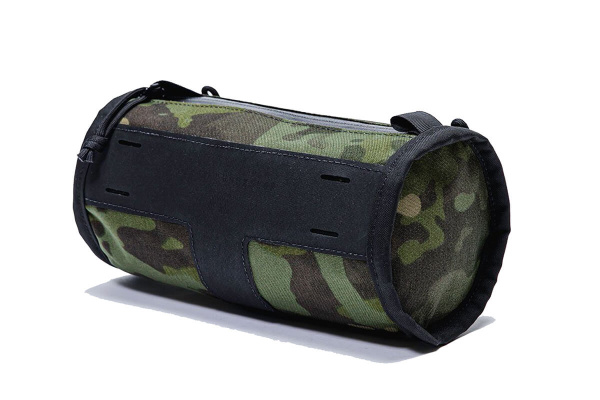
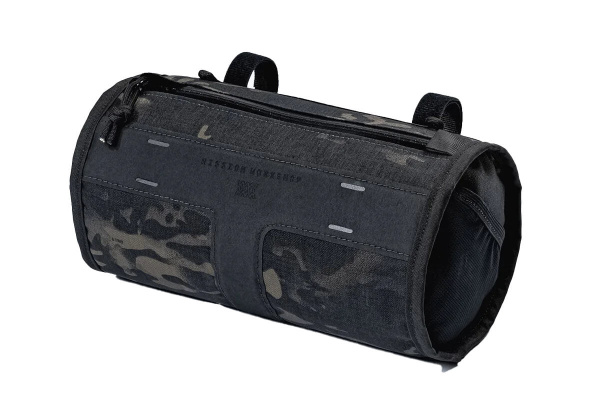
Prices and availability can change quickly. Delivery charges are not always included in listed prices.
Final price, stock status and delivery terms are set by retailer. We may receive a commission on purchases made.
Cockpit Compatibility and Getting the Fit Right
Fitting a bar bag cleanly takes a bit of thought, especially on a modern gravel or road bike with full cable housing or hydraulic hoses. The bag's main straps wrap around the bars, but it's the lower stabilisation strap - the one that runs down to the head tube - where most problems start. That strap pulls the bag tight against bar movement, but it also contacts the frame directly. UK riding means grit and mud paste work their way into that contact point fast, and a few hundred kilometres later you're looking at worn clear coat or bare alloy. Fix it before the first ride: a strip of 3M helicopter tape on the head tube costs almost nothing and stops that damage entirely.
Cable routing is the other thing worth sorting before you cinch anything down. Gear cables and hydraulic hoses need a clear path from the bars down to the frame; a bar bag that's too wide or mounted too low can kink a hose under hard steering. Check your steering lock in both directions with the bag fitted, loaded, and straps tight. It sounds obvious but it's easy to miss when you're packing in the car park.
Out-front GPS mounts - Garmin Quarter-Turn or Wahoo's ELEMNT-compatible bracket - are usually fine, but clearance depends on how far your mount extends past the bars. If the bag pushes up against your computer under load, try angling the mount slightly upward or switching to a stem-cap style mount, which sits higher and clears the bag's profile. Lights mounted to the bars rather than the fork crown are more likely to cause issues; a fork-crown or helmet mount sidesteps the problem entirely.
The Toro vs The Helix: Choosing Your Model
The Mission Workshop Toro is the compact cylinder - roughly burrito-shaped, which is a useful mental reference for capacity. It's the one to reach for if you want a bar bag that fits almost any cockpit without negotiating with your brake levers, carries a wind shell, a few tools, and your snacks, and doesn't shift the bike's handling noticeably. The roll-top closure keeps things accessible on the move, and the VX-21 X-Pac fabric means the bag's shell stays rigid enough to unroll one-handed. It suits gravel, audax, and loaded road riding equally well.
The Mission Workshop Helix is the larger option and the one that makes more sense if you're planning multi-day routes or want your bar bag to integrate with a broader carry system. The stowable strap system is a practical detail - straps tuck away when the bag's off the bike, so there's no dangling hardware catching on your leg as you carry it. Crucially, the Helix is compatible with Mission Workshop's Arkiv® modular attachment system, meaning it can attach directly to compatible Arkiv packs and frames. If you already run a Mission Workshop backpack, that integration is genuinely useful rather than just a spec-sheet talking point.
What justifies the price across both models? US manufacturing, a lifetime warranty against defects, and materials that are specified rather than value-engineered. The YKK Aquaguard urethane-coated zippers are a good example - they cost more than standard YKK pulls, but they don't delaminate or split after a season of wet riding. Compared to bags from Apidura or Ortlieb, Mission Workshop sits at a higher price point, but the construction quality and warranty position it as a buy-once proposition. Chrome offers a more urban-focused alternative if commuting is your primary use case.
If you're planning a longer trip and want to spread weight across the bike rather than loading the bars heavily, pairing a Toro or Helix with Mission Workshop frame bags keeps handling more neutral and reduces fatigue on longer days.
How These Bags Handle a UK Winter
The core advantage of Dimension Polyant VX-21 X-Pac over coated nylon or simple ripstop is that X-Pac is a laminate - it doesn't absorb water. A standard DWR-coated bag wets out eventually, gets heavy, and starts wicking moisture inward through stitched seams. X-Pac's construction resists that from the start and keeps resisting it. On a wet ride through the Trough of Bowland or along a muddy bridleway in the South Downs, that means the bag's contents stay dry and the bag doesn't double in weight by lunchtime.
HT500 double-coated fabric, used on some Mission Workshop pieces, adds abrasion resistance on top of weather protection - relevant when your bag is rubbing against bar tape, foam grips, or cable housing for thousands of kilometres.
Maintenance is straightforward but worth doing properly. Don't machine wash either bag - the agitation and heat can stress the laminate bonds and degrade the urethane zip coating over time. After a muddy ride, hose the bag off while the mud's still wet, before it dries into an abrasive paste. Clean the YKK Aquaguard zippers with a soft toothbrush along the teeth - grit trapped in the zip mechanism is what splits the urethane coating and causes leaks. A light application of zipper lubricant (Gear Aid or similar) twice a season keeps them running smoothly.
If you're building out a full bikepacking setup, Mission Workshop hip packs and hydration packs use the same fabric family and attachment logic, so the whole system feels considered rather than cobbled together.
Mission Workshop Bar Bags FAQs
Do handlebar bags scratch your bike frame?
Any bar bag can mark your frame if grit gets trapped under the stabilisation strap where it contacts the head tube. Apply a layer of clear 3M helicopter tape to the head tube before fitting the bag - it's cheap, invisible, and stops the abrasion before it starts. UK winter grit accelerates this faster than most riders expect.
How do you fit a bar bag with an out-front computer mount?
Check clearance with the bag fully loaded and straps cinched tight - that's when it sits highest. If your Garmin or Wahoo mount fouls the bag, try angling the mount slightly upward or swap to a stem-cap mount, which clears the bag's profile more easily. Tighten the bar straps properly; a loose bag bounces up into the mount under vibration.
Are Mission Workshop bags fully waterproof?
They're highly weatherproof - VX-21 X-Pac and HT500 fabrics don't absorb water, and the YKK Aquaguard zippers resist ingress effectively in heavy rain. Stitched seams mean they're not submersible dry-bags, but for UK riding conditions, including sustained downpours, they perform well beyond what a standard DWR-coated bag manages.