
Chrome Bar Bags
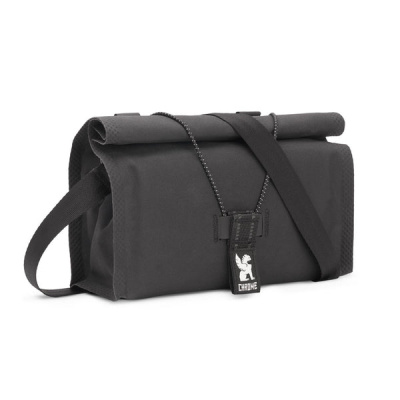
Chrome bar bags take everything that made Chrome Industries a cult name among city messengers and repackage it at your cockpit - tough, no-nonsense handlebar storage that won't quit when the weather or the road does its worst. We're talking 1050D military-grade nylon outer shells that laugh off road grit, 500D TPE tarp liners that keep moisture out where it matters, and PU-coated zippers that keep sealing long after cheaper bags have given up. Whether you're threading through city traffic on a wet Tuesday or grinding wet fire roads somewhere in mid-Wales, the materials are chosen for punishment, not shelf appeal.
What sets Chrome apart from a straightforward bikepacking bag is the dual-life design. The stowable crossbody strap tucked inside most models means the bag pulls free of your bars and rides on your shoulder the moment you lock up - no faff, no decanting your kit into a separate bag. That's a genuinely useful feature for urban riders who can't leave a bag unattended. Mounting is handled by adjustable hook and loop straps with a head tube strap to kill bounce, and the fit covers standard and oversized bar diameters without adapters. Compact enough for narrow filtering in traffic, robust enough for a loaded gravel day out.
Prices and availability can change quickly. Delivery charges are not always included in listed prices.
Final price, stock status and delivery terms are set by retailer. We may receive a commission on purchases made.
Fitting Your Chrome Bar Bag Without Upsetting Your Cockpit
Getting the mount right takes five minutes and saves you a headache later. Chrome bar bags use adjustable hook and loop straps that wrap around the bars and tighten down securely - they cover standard 31.8mm bars and oversized 35mm bars without needing additional hardware. The key thing most people skip: always route those straps under your gear and brake outer cables, not over them. Route them over and you risk restricting cable movement, which can cause ghost shifting or, worse, brake binding mid-corner. Turn your bars lock-to-lock after fitting and check nothing snags.
The head tube strap is not optional. Without it, even a well-cinched bar mount will allow the bag to bounce on rougher surfaces - annoying on a wet commute, genuinely distracting on gravel. Thread it around the head tube, snug it up, and the whole setup becomes solid. One more thing worth doing before your first ride: apply a strip of clear frame protection tape to the head tube where the strap contacts the paint. The 1050D nylon is tough enough to sand through a finish over time, and a bit of tape costs nothing compared to a respray.
Cable clearance is worth checking on bikes with external routing or dynamo wiring. The bags are designed with cable clearance in mind, but cockpit setups vary - if you're running a dynamo light cable down the fork, make sure the bag profile doesn't compress it at full steering lock. A short cable guide or a dab of electrical tape can tidy things up if needed.
Helix, Doubletrack, or Urban Ex - Which One Are You After?
Chrome runs three distinct lines and they're not interchangeable, so it's worth knowing what each is actually built for before you buy.
The Helix is the everyday workhorse. Water-resistant stitched construction, clean profile, and that stowable crossbody strap that converts it to a shoulder sling in seconds. It handles UK drizzle and road spray without drama, and the stowable strap integration is tidier here than on most competitors - Brooks bar bags offer classic style but few match this level of off-bike versatility. The Helix suits commuters and gravel riders who want one bag that works on and off the bike.
The Doubletrack steps up the structure slightly. You get a more defined main compartment and quick-access side mesh pockets - handy for a phone, energy gels, or a folded map if you're the type who still uses one. The slightly bigger footprint works well on drop bars with enough room to reach those pockets without unclipping anything. If you're doing longer days out and want organised access, the Doubletrack is the sensible choice over the Helix.
For genuine all-weather confidence, the Urban Ex line is a different beast. These bags use Knurled Welded construction - high-frequency welded seams rather than stitching - which eliminates needle holes entirely and delivers proper 100% waterproofing, not just water resistance. If you're commuting through a Scottish winter or running a loaded gravel setup where the bag might be submerged in a ford crossing, this is the one. It's heavier and stiffer than the Helix, but that's the trade-off for a bag that genuinely keeps water out regardless. Ortlieb bar bags use a similar welded approach and are worth comparing if you want to benchmark waterproofing claims, while Apidura bar bags offer an alternative for weight-conscious bikepacking setups.
One thing to keep in mind: none of these bags are designed for heavy or bulky loads. If you're carrying a laptop, a D-lock, and a full change of clothes, a bar bag isn't the right tool - check out Chrome messenger bags or Chrome rucksacks for that kind of capacity.
Keeping Chrome Bags Running Through a UK Winter
Road salt is the quiet destroyer of cycling kit. The 1050D nylon shell shrugs off grit mechanically - it won't split or abrade - but salt residue builds up in the weave and around seams if you leave it. A wash-down with mild soapy water and a soft brush every few weeks during winter riding is all it takes. Don't blast it with a pressure washer; you'll stress the seam tape and push water into places it shouldn't go.
The PU-coated zipper is where most riders go wrong. PU-coated zippers are significantly more water-resistant than standard ones, but road grit works into the teeth over time and wears down the coating. Once that coating splits, the zip stops sealing properly and becomes hard to pull. Keep it clean - a wipe with a damp cloth after muddy rides makes a real difference - and occasionally run a dry silicone spray or a stick of zipper wax along the track. It keeps the teeth moving freely and slows coating wear. Catch it early and the zip lasts the life of the bag. Ignore it and you're looking at a zipper failure by February.
The TPE tarp liner inside is durable and doesn't need any treatment, but if you're carrying electronics regularly, a small dry bag inside the main compartment adds a sensible secondary layer for sustained rain. The Urban Ex's welded construction makes this redundant, but it's worth doing on Helix and Doubletrack models if you're out in a proper downpour. If you're building out a gravel kit, pairing a Chrome bar bag with Chrome MTB and gravel shoes gives you a consistent durability standard across your contact points - worth considering if wet-weather resilience is a priority across the whole setup.
Chrome Bar Bags FAQs
Are Chrome bar bags fully waterproof?
It depends on the model. The Urban Ex line uses Knurled Welded seams - fully welded, no needle holes - so it's genuinely 100% waterproof. The Helix and Doubletrack use PU-coated zippers and TPE tarp liners, which handle UK drizzle and road spray well, but in a sustained heavy downpour you may see a small amount of moisture get in. For serious all-weather use, go Urban Ex.
Will a handlebar bag interfere with my bike cables?
Not if you mount it carefully. Route the hook and loop straps under your gear and brake outers - never over them - and check that turning the bars lock-to-lock doesn't restrict cable movement. Leave enough slack in your cables when fitting. It takes two minutes to check and prevents ghost shifting or brake binding later.
Can you use a Chrome bar bag as a sling off the bike?
Yes, and it's one of the more useful features. The Helix and Doubletrack both include a stowable crossbody strap that tucks away when the bag is mounted. Pull it out, clip it on, and the bag becomes a shoulder sling or waist pack - useful when you're locking up and don't want to leave the bag on the bike.