
Minoura Rollers
Minoura Rollers give you one of the most effective ways to sharpen your pedal stroke, build core stability, and dial in your cadence through the winter months. Unlike a fixed turbo trainer that lets you zone out and grind, rollers demand constant micro-corrections - your core is working, your form is being audited every second, and that translates directly to cleaner, faster riding when you're back on the road.
What sets Minoura apart from cheaper alternatives is the use of precision-machined alloy drums rather than moulded PVC. Alloy spins true, stays true, and - crucially - doesn't generate the static electricity that makes plastic drums attract every bit of fluff and tyre rubber in your garage. It's a small detail that matters after the first month of use.
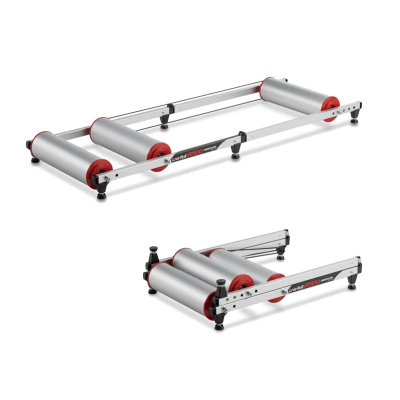
The range covers real ground, from the compact tri-fold MoZ-Roller designed with tight UK flats in mind, through to the high-inertia LiveRoll for riders chasing sprint power and a more road-like feel indoors. All models use parabolic drum shaping to keep your bike naturally centred, which makes the learning curve far less brutal than flat-drum alternatives.
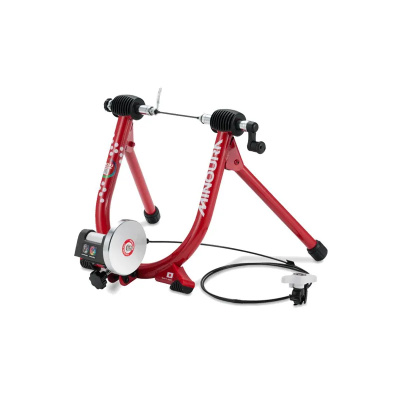
If you'd rather have a fixed-axle setup, take a look at our Minoura Regular Turbo Trainers or Minoura Smart Turbo Trainers pages instead.
Prices and availability can change quickly. Delivery charges are not always included in listed prices.
Final price, stock status and delivery terms are set by retailer. We may receive a commission on purchases made.
Sizing Your Rollers to Your Bike
Getting the wheelbase adjustment right is the first thing to sort before you even think about turning a pedal. Minoura rollers typically accommodate wheelbases from around 950mm up to 1090mm, covering everything from a compact road bike to a 29er hardtail. Measure the distance between your front and rear axles, then slide the front drum forward or back to match. Most Minoura frames use a quick-release rail system - no tools needed, just a firm click into the correct slot.
The critical positioning detail: your front axle should sit just slightly behind the top-dead-centre of the front drum. Too far forward and the bike will want to roll off the front - which happens faster than you'd expect. Too far back and the handling feels sluggish and unnatural. A couple of minutes getting this right is worth it.
Wheel size compatibility runs from 24-inch kids' and compact bikes up to 700c road wheels and 29-inch mountain bike hoops. Speaking of mountain bikes - if you're thinking of rolling your trail bike on these, fit a slick indoor training tyre first. Knobbly rubber on alloy drums creates a noise level that will have your neighbours reconsidering the friendship, and the vibration through the frame isn't pleasant either. A slick tyre also reduces rolling resistance so your session data is actually meaningful. Wheelbase adjustability and tyre choice are the two things that catch most people out at the start.
How the Minoura Range Breaks Down
There are three distinct tiers worth understanding before you commit. The MoZ-Roller sits at the entry-to-mid level and is the one to look at if storage is your primary constraint. Its three-piece folding frame collapses flat - genuinely flat, not just slightly smaller - and the 80mm drums are perfectly adequate for base fitness work, technique sessions, and general winter maintenance riding. If you're in a terrace with a hallway cupboard rather than a garage, this is your roller.
Step up to the Action Roller Advance series and you get a more conventional fixed frame with the option to bolt on a magnetic resistance unit. That optional add-on changes the game: rather than relying solely on your gearing to create load, you can dial in progressive resistance and simulate climbs without maxing out your cassette. It's the most versatile mid-range option, particularly for riders who want structured interval work alongside balance training. Compared to Elite Rollers at a similar price point, Minoura's alloy drum quality gives it a durability edge.
At the top sits the LiveRoll, and the difference is immediately obvious in the spec: 105mm drums versus 80mm. Larger drums carry significantly more rotational mass, which means the system holds momentum better between pedal strokes. At high cadences and during sprint efforts, this creates a sensation much closer to road riding - the flywheel effect smooths out the dead spot in your stroke. It also makes the roller more forgiving to ride at speed, because the system doesn't react violently to small balance corrections. If you're doing threshold or sprint work through winter, the LiveRoll's larger drums justify the step up in cost. Tacx Rollers and Wahoo Rollers compete at this level too, but neither offers the same mechanical simplicity combined with Japanese manufacturing tolerances.
The parabolic shaping on all Minoura drums deserves a mention here. The subtle crown in the centre of each drum acts like a gentle funnel - if your wheel drifts toward the edge, the geometry encourages it back toward the middle rather than off the side. It won't save you if you're completely checked out, but it makes normal sessions considerably less stressful, especially while you're building confidence.
Keeping Your Rollers Running Through a UK Winter
The damp shed or garage reality for most UK riders is worth addressing directly. Minoura's alloy drums won't corrode in the way steel alternatives can, but that doesn't mean they're entirely maintenance-free. The sealed cartridge bearings inside the drums are protected against moisture ingress, though a garage full of fine concrete dust over several months will work its way into anything if you're not careful. Keep the rollers covered when not in use - an old pillowcase over the drums works fine.
Tyre rubber accumulates on the drum surface faster than you'd think, particularly if you're doing hard efforts. A mild degreaser on a clean cloth every few weeks keeps the drum surface grippy and prevents uneven wear patterns developing. Don't use anything aggressive or solvent-based - you want to lift the rubber residue, not strip the alloy surface.
The component that does wear and will eventually need replacing is the urethane drive belt connecting the rear drum to the front. Urethane is more durable and quieter than rubber alternatives, but it does fatigue over time, particularly if the rollers are used heavily or stored in very cold conditions. When you notice the belt starting to look cracked or the drive feeling slack, replace it promptly - a snapped belt mid-session is a surprise nobody needs. Check the Minoura Storage Stands and Hooks section for ancillary kit, and source replacement belts and step-up resistance blocks through a dedicated spares category to keep everything original-spec. Running the rollers on a foam mat also reduces transmitted noise - worth thinking about if you're above a downstairs neighbour.
Minoura Rollers FAQs
Are Minoura rollers good for beginners?
Yes, genuinely - more so than most roller brands at this price. The parabolic drum shaping across the Minoura range nudges your wheels back toward the centre if they drift, which removes one of the most anxiety-inducing aspects of learning. Start with the rollers positioned in a doorway so you can rest your elbows lightly on the frame while you find your balance. Most riders are riding without support within a handful of sessions.
How do I adjust the wheelbase on Minoura rollers?
Measure the axle-to-axle distance on your bike, then slide the front drum along the frame rail to match. The front axle should sit just slightly behind the top-centre of the front drum - this stops the bike from wanting to roll forward off the roller. Most Minoura frames adjust without tools; you're just relocating the front drum along a slotted rail and locking it in place.
Do Minoura rollers have resistance?
Standard models use the natural resistance of the drums combined with your bike's gearing - perfectly adequate for technique work and endurance sessions. If you want progressive load for intervals or climb simulation, the Action Roller Advance accepts an optional magnetic resistance unit that bolts directly to the frame. The MoZ-Roller and LiveRoll use gearing-based resistance only.