
Merida BMX Bikes
Searching for Merida BMX bikes puts you in interesting territory. Merida doesn't produce traditional 20-inch freestyle BMXs - that's worth knowing upfront, because it saves you a frustrating scroll. What they do build is arguably more useful for most UK riders: the Hardy dirt jump series, a line of 26-inch alloy park and jump bikes that share the same aggressive, single-speed spirit as a BMX but with geometry and compliance that suits bigger air and longer sessions. Alongside that, their Matts J range covers younger riders wanting a tough, skatepark-ready build without the fragility of cheaper alternatives. All of it is wrapped in Merida's Racelite 61 Aluminium - an aerospace-grade alloy that keeps the frame stiff where it counts and light enough that you're not hauling a boat anchor up the jump queue. Whether you're sessioning the pump track on a damp Tuesday or eyeing up the bigger lips at your local trails, Merida's park-focused bikes are a more considered choice than a budget BMX from a supermarket aisle. Compare UK prices on the full range below.
Prices and availability can change quickly. Delivery charges are not always included in listed prices.
Final price, stock status and delivery terms are set by retailer. We may receive a commission on purchases made.
Decoding the Merida BMX and Dirt Jump Lineup
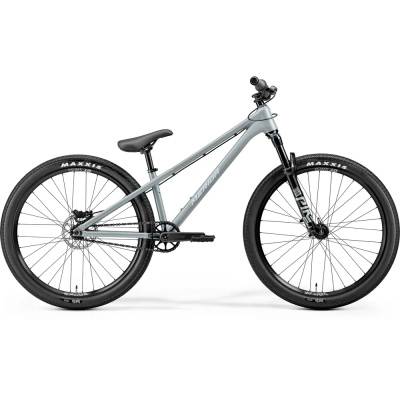
Let's clear this up straight away: if you've arrived here expecting a classic 20-inch freestyle BMX with a gyro and four pegs, Merida isn't your brand. They don't make one. What they do make is the Hardy - a dedicated dirt jump and pump track bike that occupies the same cultural space as a BMX but is built around 26-inch wheels and a short-travel suspension fork. For many riders over 14, that's actually the better tool. The Hardy runs single speed, keeps the cockpit low and the chainstays short, and handles a skatepark or a set of dirt jumps with equal confidence.
For younger riders, the Matts J series is worth a look - rugged kids' bikes with BMX-friendly geometry that take a beating and keep rolling. If you're shopping for a child who wants to session the local park rather than just pootle round the block, check out Merida kids' bikes for the full picture. Some Hardy builds also come specced for geared 4X or trail use, so it's worth checking drivetrain options when comparing models - not every Hardy is a stripped-back single-speeder.
Where does Merida sit against the competition? Brands like DMR and Marin occupy a similar dirt jump space, and they're worth cross-referencing if the Hardy doesn't quite fit your budget or preferred spec. But Merida's frame quality at each price point is genuinely hard to argue with.
The Merida Tech Philosophy: Built to Case
Casing a jump on a poorly built frame is a horrible feeling - that dead, rattling thud that tells you something's unhappy. Merida's answer to that is Racelite 61 Aluminium, an aerospace-grade alloy that's both lighter and more fatigue-resistant than the generic 6061 you'll find on cheaper park bikes. It's not just the raw material that matters, though. The Techno Forming System (TFS) is what makes the difference at the junctions - headtube, bottom bracket shell - where heavy landings concentrate stress. TFS uses hydroforming and internal butting to reinforce exactly those areas without piling on weight. Think of it like the gusseting on a good pair of work trousers: invisible until you actually need it.
Geometry-wise, the Hardy sits meaningfully apart from a traditional rigid BMX. The longer wheelbase gives you stability at speed and in the air, which matters when you're hitting lips above a metre rather than bunny-hopping kerbs. The front suspension fork - typically 80 - 100mm travel on Hardy builds - takes the sting out of rough landings and lets you ride longer without your wrists paying the price. Short chainstays keep the rear end snappy and responsive, so the bike still flicks and manuals the way a park bike should. Sliding dropouts handle single-speed chain tensioning cleanly, letting you dial chain tension without faffing around with a half-link chain. It's a small detail that regular BMX riders will appreciate immediately.
If you're weighing up a Merida dirt jumper against something like a Kona or Specialized park bike at a similar price, look closely at frame junction quality and fork travel - that's where the real differences show up, not in the headline spec.
Living with a Merida Park Bike in the UK
UK riding is its own thing. Even if you're primarily a skatepark rider, you'll likely end up at outdoor dirt jumps or pump tracks at some point, and they're rarely the manicured, bone-dry jumps you see in YouTube edits. Damp lips, muddy run-ins, gritty surfaces - that's the reality at most UK spots from October through to April. The Hardy's alloy frame has enough mud clearance around the front tyre to handle winter conditions without packing up, but tyre choice matters. The fast-rolling, slick-ish tyres that feel great on a dry pump track or an indoor park like Adrenaline Alley will wash out on wet clay. Keep a knobbier rear tyre option to hand for winter dirt jump sessions - a quick swap makes the bike feel like a different animal on slippery takeoffs.
Maintenance is straightforward but worth staying on top of. The sliding dropouts that tension your single-speed chain can accumulate grit and gradually bind up if you're riding in damp, dirty conditions - a wipe-down and a light grease after muddy sessions keeps them moving freely. The headset and bottom bracket take the most punishment on a jump bike, so check for play regularly. Sealed cartridge bearings in both are standard on Hardy builds, which resists water ingress better than cup-and-cone setups, but they're not indestructible. If you feel any creaking or looseness in the front end, sort it before your next session rather than hoping it beds in.
The Merida mountain bike range shares much of the same frame technology, so if you're already familiar with Merida's build quality from an MTB, you'll find the Hardy a natural step sideways into park riding. Spare parts and servicing are widely supported through UK dealers, which counts for a lot when you've bent something on a bad landing.
Merida BMX Bikes FAQs
Does Merida make BMX bikes?
Not in the traditional 20-inch freestyle sense, no. Merida's park-focused range centres on the Hardy series - 26-inch dirt jump bikes that cover pump tracks, skateparks, and dirt jumps for older riders. For younger kids wanting a more BMX-style build, the Matts J range is worth a look.
What is the difference between a dirt jumper and a BMX?
A dirt jumper like the Merida Hardy runs 26-inch wheels and a front suspension fork, which gives you more stability at speed and softens the impact on big landings. A traditional BMX uses rigid forks and 20-inch wheels - lighter and more agile for technical street tricks, but less forgiving when you're hitting anything with real size.
Are Merida bikes good for skateparks?
Yes, the Hardy handles skateparks well. The short chainstays and single-speed drivetrain keep it responsive and easy to throw around, while the suspension fork takes the edge off rough concrete transitions. For smooth indoor parks, swap to a faster-rolling tyre and you'll get the most out of it.