
Manitou Suspension Forks
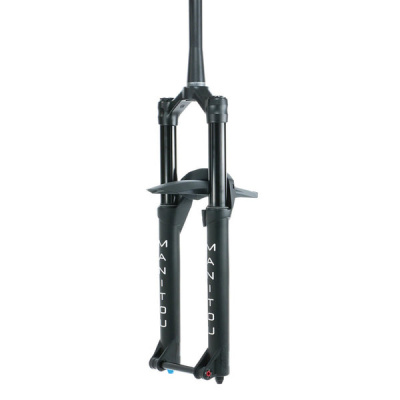
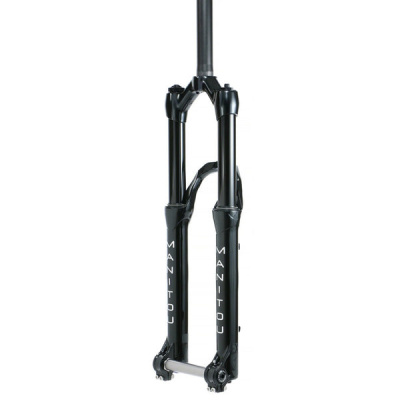
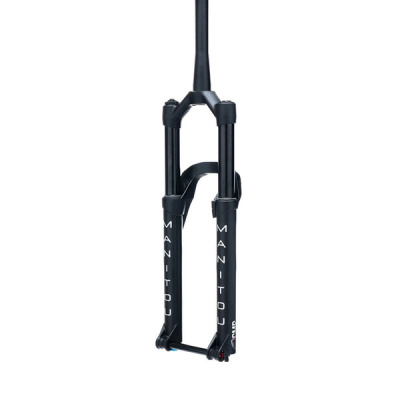
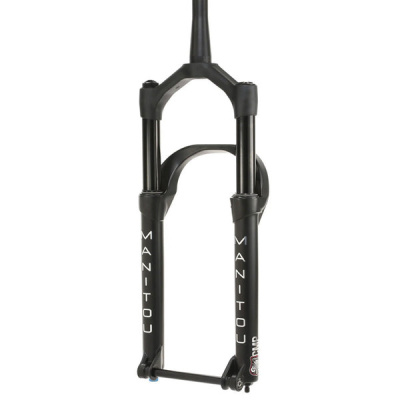
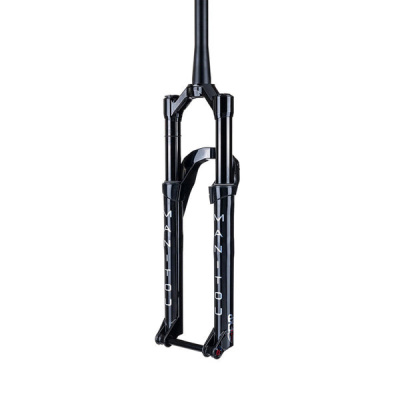
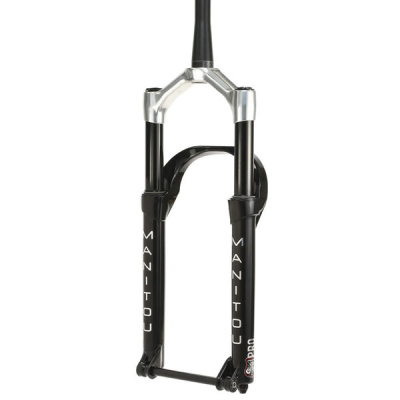
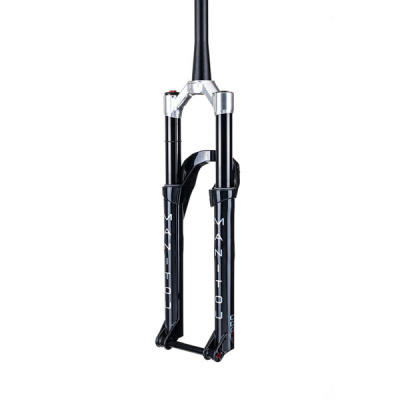
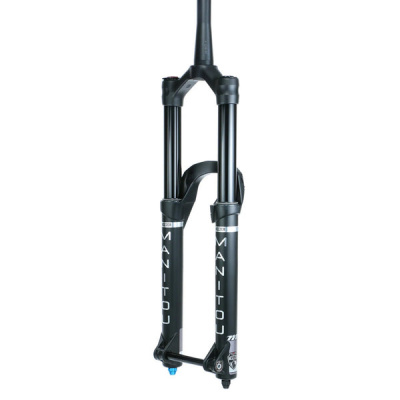
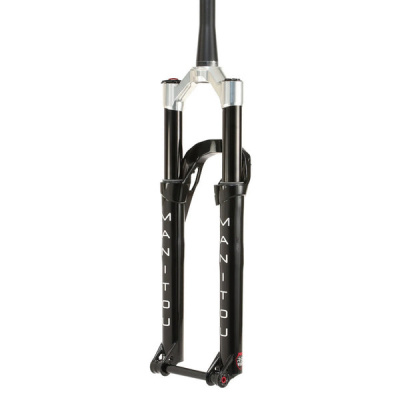
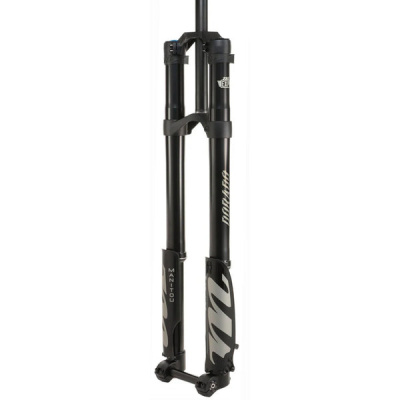
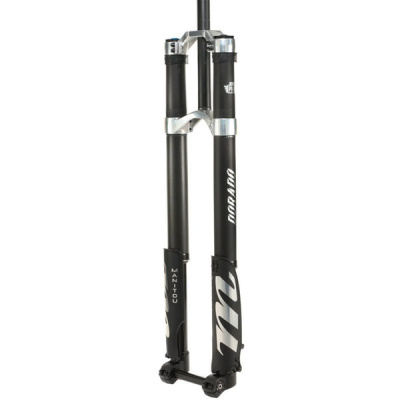
Manitou suspension forks occupy a genuinely interesting corner of the market - well-known to suspension tuners and long-time enduro riders, yet still underrated by anyone who's only ever spec'd Fox or RockShox. The signature Reverse Arch makes them instantly recognisable in a bike shop stand, but what actually sets them apart is what's going on inside. Manitou's IRT (Infinite Rate Tune) dual-positive air spring lets you dial mid-stroke support and bottom-out resistance independently, which is a bigger deal than it sounds when you're trying to keep your front end honest on a steep, rutted Tweed Valley chute. You're not just fiddling with rebound and compression like everyone else - you're tuning the spring curve itself. The lineup covers proper ground too: the Mezzer for enduro and aggressive trail riding, the Mattoc for all-mountain versatility, the lightweight R7 for XC, and the inverted Dorado for downhill. Each fork is built around the idea that riders who know what they want should be able to get it - without sending the fork back to a suspension specialist every time conditions change. If you like to tinker, Manitou rewards the effort.
Prices and availability can change quickly. Delivery charges are not always included in listed prices.
Final price, stock status and delivery terms are set by retailer. We may receive a commission on purchases made.
Decoding the Manitou Mountain Bike Fork Lineup
Start with the Mezzer. It's Manitou's enduro weapon - 37mm stanchions, up to 170mm of travel, and built around the MC2 damper on the Pro trim. Those fat stanchions aren't just for show; they keep flex in check when you're loading the front wheel hard into a berm or absorbing a square-edged root at pace. The Mezzer Pro pairs that chassis stiffness with the full IRT air spring, giving you independent control over the mid-stroke and the final third of travel. The Expert trim uses the simpler VTT damper and a standard air spring - fewer dials, faster setup, perfectly capable for most riders who'd rather ride than obsess over tune sheets.
The Mattoc steps down to 34mm stanchions and sits in the trail and all-mountain bracket. Lighter, slightly more nimble in the handling, and available in travel ranges that suit 29ers well. It's the fork that makes most sense if you're riding mixed bags - a bit of Peak District gritstone one weekend, a Welsh trail centre the next. The R7 goes further still toward XC geometry with 32mm stanchions and shorter travel, while the Dorado flips the script entirely with an inverted design where the larger-diameter lower legs are at the top. That layout is a known approach for downhill-specific stiffness and Hydraulic Bottom Out (HBO) compliance under serious race loads. Worth knowing: Manitou forks 29er compatibility is well covered across the Mezzer and Mattoc ranges, so wheel size shouldn't be a barrier to finding a fit.
On trim levels, the Pro vs Expert split is consistent across the range. Pro means the MC2 damper - more external adjusters, more independent circuit control - and the IRT spring system. Expert means the VTT damper and a conventional positive air chamber. Neither is a bad fork. The Expert is a set-and-forget tool; the Pro is for riders who genuinely use the adjustments.
What the Tech Actually Does for You
The Reverse Arch places the crown arch behind the stanchions rather than in front of them. That repositioning shortens the effective arch span, which means Manitou can achieve the same torsional stiffness with less material. The result is a fork that feels planted without being unnecessarily heavy - a real trade-off that's easy to overlook when you're comparing specs on paper but becomes obvious when you're watching the front wheel track a loose line rather than wander off it.
IRT is the technology worth understanding properly. A conventional air spring has one positive chamber - you set your sag, and the spring rate climbs predictably from there. With IRT, there are two positive chambers: a main chamber and a secondary IRT chamber. The main chamber handles your sag and small-bump sensitivity. The IRT chamber loads progressively through the mid-stroke and ramps up toward the bottom. Run lower pressure in the main chamber for a supple initial stroke, then use the IRT chamber to ensure you're not blowing through travel on steeper, choppier ground. It's a bit like having two suspension tunes in one fork - useful when UK conditions change from loose autumn loam to frozen ruts within the same ride.
HBO (Hydraulic Bottom Out) works alongside IRT in the damper circuit. As the fork approaches full travel, a hydraulic valve engages to slow the last portion of the stroke. The practical benefit is that harsh metal-on-metal clunks on big drops or compression hits are absorbed rather than transmitted straight into your wrists. It's not a substitute for correct spring setup, but it does act as a sensible backstop. The Dorado Air Spring on the inverted downhill model uses a balancing valve between the negative and positive air chambers - similar in concept to how high-end rear shocks manage spring balance - to keep the initial stroke smooth even under the higher loads a DH fork sees. If you're comparing options at the sharper end of the market, Öhlins Racing suspension forks use a comparable balancing approach, though with different damper architecture.
Owning a Manitou Fork Through a UK Winter
Mud clearance is genuinely good thanks to the Reverse Arch geometry - there's simply less structure in the way of the tyre as it spins through thick, gritty winter mud. That said, the arch profile means standard clip-on fenders don't always play nicely without an adapter. Check our Manitou mudguards page for compatible options before your first wet ride - it'll save a grimy face later.
One thing that makes Manitou forks genuinely practical for home mechanics is travel adjustment. On most models, you adjust travel using travel adjustment spacers on the existing air shaft - no buying a new shaft, no specialist tools beyond a basic service kit. Drop the lower legs, rearrange the spacers, and you're done. That's a meaningful advantage if you want to run 150mm for a more trail-focused geometry one season and 160mm for something burlier the next. For the service side, lower-leg oil changes and wiper seal replacement are well within reach for anyone comfortable with basic bike maintenance. Our Manitou tools and Manitou fork spares pages carry the lower-leg service kits and wiper seals you'll want before the season turns nasty.
In terms of honest trade-offs: the MC2 damper on the Pro models has more adjusters than some riders will ever use, which can feel overwhelming if you just want to set it and ride. The Expert trim sidesteps that entirely. Stanchion diameter on the Mattoc (34mm) is slightly narrower than the 36mm stanchions on comparable Fox suspension forks at the same price point, so if absolute rigidity in demanding conditions is your priority, that's worth weighing up. And if you're coming from a RockShox suspension fork with Charger damper familiarity, the IRT setup has a short learning curve - give it two or three rides before judging the tune. Manitou vs Mattoc and Mezzer comparisons often come down to that exact point: the tech is excellent, but it asks a little more of you upfront.
Manitou Suspension Forks FAQs
Are Manitou forks any good?
Genuinely, yes. Manitou forks are well-regarded among riders who care about suspension tuning - the IRT system in particular offers a level of spring-curve control that most rivals don't match at the same price. They're not as ubiquitous as Fox or RockShox on complete bikes, but that's a marketing and supply story, not a quality one.
What is the difference between Manitou Mezzer Pro and Expert?
The Mezzer Pro gets the MC2 damper and the full IRT dual-positive air spring - more adjusters, independent mid-stroke and bottom-out tuning. The Expert uses the VTT damper and a standard air spring, which is simpler to set up and perfectly capable for most riders. Choose Pro if you'll use the adjustability; choose Expert if you want to set it and forget it.
How do you adjust travel on a Manitou fork?
Most current Manitou forks use clip-on travel adjustment spacers on the existing air shaft - you drop the lower legs, reposition the spacers, and you're done. No new parts needed. It's one of the more home-mechanic-friendly approaches in the fork market, and the process is well-documented in Manitou's own service guides.