
Livall Helmets
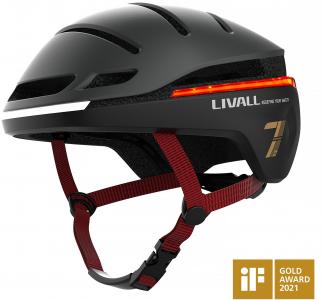
Livall Helmets have carved out a genuinely different space in cycling safety by weaving usable technology directly into the shell - not bolting it on as an afterthought. Where most helmets stop at impact protection, Livall adds integrated LED tail lights and turn signals, open-ear Bluetooth speakers, and an automatic SOS fall detection system, all controlled without taking your hands off the bars. For UK riders, that combination is particularly relevant. Winter commutes in British cities mean months of low-light riding, unpredictable traffic, and the kind of drizzle that starts subtle and ends soaking. Having rear visibility and the ability to signal a left turn on a busy roundabout - without fumbling for a hand signal - changes how drivers read you in traffic. The electronics are protected to IPX4 or IPX5 standard, so a proper British downpour won't end your ride or your warranty claim. Beneath all the tech, the shells use high-density EPS impact foam and in-mould polycarbonate construction, so these are genuine helmets first and gadgets second. Whether you're a daily commuter or a road cyclist who rides through winter, the Livall range offers a level of connected safety that passive helmets simply can't match.
Prices and availability can change quickly. Delivery charges are not always included in listed prices.
Final price, stock status and delivery terms are set by retailer. We may receive a commission on purchases made.
Smart Tech That Actually Does Something Useful
The centrepiece of any Livall smart cycling helmet is the handlebar-mounted remote - a compact controller that lets you activate the LED turn signals and tail lights without releasing your grip. Left signal, right signal, brake-light flash: all triggered with a thumb. On a congested commute into a UK city, that's a meaningful difference. Drivers get a clear, repeatable visual cue rather than a tentative arm waggle.
The integrated LED lighting isn't just a gimmick. The tail light is bright enough to register in daylight and genuinely prominent in the dark. Turn signals add a layer of communication that most cyclists never had before. If you've ever hesitated to signal on a fast descent because releasing the bars felt sketchy, you'll get the point immediately.
The open-ear Bluetooth speakers sit just ahead of your ears rather than sealing them off. You can take navigation prompts or answer a call while still hearing traffic, a lorry pulling alongside, or a shout from another rider. It's a fundamentally different proposition to earbuds - you stay connected to the road. Pair it with your phone via the Livall app and you also get ride data and remote configuration.
The most technically ambitious feature is the 3-axis gyroscope that powers the SOS alert system. The helmet continuously reads your movement; a sudden, sharp change consistent with a fall triggers a countdown on the paired app. If you don't cancel it within 90 seconds - because you're unconscious, or unable to reach your phone - it sends an automated SMS containing your GPS location to pre-set emergency contacts. For solo riders heading out on quiet rural roads in the Welsh valleys or Scottish Highlands, that's a genuinely reassuring backstop. It's not infallible - a sharp pothole could occasionally trip it - but false alarms are easily dismissed, and the downside of a missed alert is far worse than a brief notification.
Underneath all of this, the helmets use the same construction principles as any quality lid. High-density EPS impact foam absorbs energy on impact; the in-mould polycarbonate shell keeps everything together and resists abrasion. The tech doesn't compromise the safety fundamentals - it adds to them. For comparison, well-regarded passive helmets from Giro or Bell offer excellent impact protection, but they won't text your emergency contact if you come off on a dark lane at 6am.
Picking the Right Model and Getting the Fit Right
Livall's range splits broadly into two camps. The commuter-focused models - the BH51 series being the most recognisable - use a rounder, skater-inspired profile with 360-degree lighting coverage and a silhouette that works as well off the bike as on it. These suit city riding, leisure cycling, and anyone who wants maximum visibility in all directions. The shell is deeper, the venting moderate - fine for 30 minutes in traffic, less ideal for a 90-minute summer ride.
The road-focused models, including the BH60 and the Evo21, shift the priorities. You get a more aggressive forward pitch, extended aerodynamic ventilation channels, and a profile that sits closer to what you'd find on a dedicated road lid. Vents are larger and more numerous, which matters when you're two hours into a winter base ride and your head temperature needs managing. These suit road cyclists who want Livall's safety tech without sacrificing the feel of a performance helmet.
Sizing runs across small, medium, and large in most models, covering roughly 52 - 61cm head circumferences - check the specific model listing for exact ranges. The rear retention dial is the key fitting tool: a micro-adjustment system that cinches the internal harness snugly around the back of your head. It's precise enough to accommodate a thin cycling cap underneath in winter, or a merino skull cap when temperatures drop properly. Get the dial snug without pressure points - the helmet should feel secure when you shake your head, not tight when you're sitting still.
If you're between sizes, go larger and use the dial to tighten rather than cramming into a smaller shell. A helmet that's too small sits high on your forehead; one that fits correctly covers the forehead to roughly two finger-widths above the eyebrows. That rule applies regardless of brand - whether you're looking at Livall, Abus, or Endura.
The Livall helmet sizing guide in the app is worth using - input your head circumference and it narrows the options quickly. Don't skip it.
Battery Life, Charging, and Riding Through British Weather
The battery question comes up constantly with smart helmets. Most Livall models deliver between four and ten hours of continuous use, depending on how hard you're running the speakers and how often the lights are active. A pure commuter who uses lights and signals but keeps audio off will sit at the longer end. Streaming music and running lights simultaneously will drain things faster. Check the specific model's listed run time - it varies across the range.
Cold weather affects lithium-ion batteries, full stop. A helmet fully charged at room temperature may deliver noticeably less run time on a January morning in the Peak District than it did in September. The practical response: charge the helmet the night before rather than the week before, and store it indoors rather than in a cold garage. That applies to any rechargeable cycling kit, Livall or otherwise.
Charging uses a magnetic USB connection. The magnetic interface matters more than it sounds - it seats cleanly, there's no forcing a connector into a port with numb fingers, and the sealed design keeps moisture out of the charging socket between rides. In a wet British autumn, that kind of detail prevents the slow corrosion that kills electronics on cheaper kit. Charge time is typically a few hours from flat.
On waterproofing: IPX4 means the electronics handle water splashing from any direction; IPX5 adds resistance to low-pressure water jets - essentially, direct spray. Either rating handles everything a British ride throws at you: rain, road spray, puddle splash-back. These aren't submersible - don't leave the helmet face-down in a puddle - but for riding, the protection is solid. The Livall Bluetooth cycling helmet electronics are fully sealed against normal weather, and we haven't seen field reports of moisture failures from standard rain riding.
One practical point: if you're riding through a full winter without drying the helmet out between uses, occasionally check that the magnetic charging port area is clear and dry before plugging in. Two minutes of care keeps the contacts clean and the connection reliable across a long season. Pair your Livall with quality Endura wet-weather kit and you've covered most of what a British winter can throw at a commute.
Livall Helmets FAQs
How does the Livall SOS alert work?
A 3-axis gyroscope monitors your movement continuously. A fall or sharp impact triggers a 90-second countdown in the paired Livall app. If you don't cancel it - because you can't - the helmet automatically sends an SMS with your GPS coordinates to your pre-set emergency contacts. You set those contacts in the app before you ride.
Are Livall helmets waterproof enough for UK rain?
Livall helmets carry IPX4 or IPX5 ratings depending on the model, meaning the electronics are sealed against rain and road spray from any direction. They're not designed for submersion, but standard British riding conditions - including heavy downpours - are well within the rated protection. Check the individual model listing for its specific rating.
How long does the battery last on a Livall helmet?
Most models run between four and ten hours depending on usage. Running lights and speakers together drains faster than lights only. Cold weather reduces capacity slightly, so charge the night before a winter ride rather than relying on a charge from earlier in the week. Recharging via the magnetic USB cable takes a few hours from flat.