
Lake Road Shoes
Lake road shoes have built a reputation that most brands spend decades chasing - precision fit across a genuinely broad range of foot shapes, paired with materials and sole technology that serious riders actually notice on the bike. Where most road shoes force you into a single width profile and hope for the best, Lake offers Standard, Wide, and Extra Wide lasts across their range, making them the go-to for riders who've spent years battling hot spots, numbness, or simply shoes that never quite felt right.
The construction backs up that fit promise. K-Lite Kangaroo leather uppers mould to your foot over time in a way that synthetic materials simply don't, while the Custom Fit Carbon soles deliver the stiffness you need for efficient power transfer without feeling punishing on longer rides. Heat-moldable heel cups add another layer of personalisation that's hard to find at any price point. Whether you're pushing through a sportive, logging winter base miles, or racing crits, there's a Lake built around your foot - not the other way around. Browse our full range of Lake road shoes below.
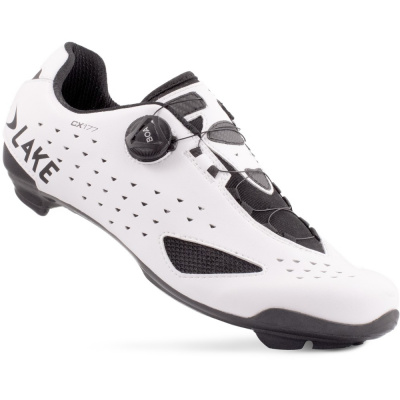
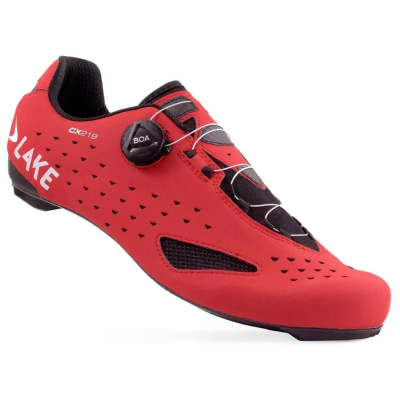
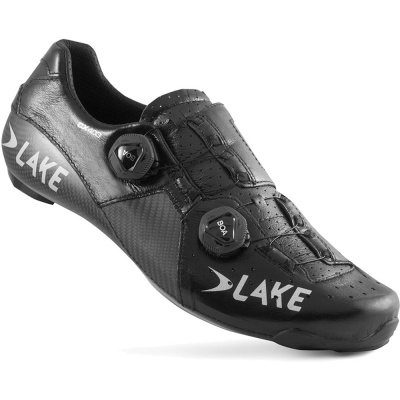
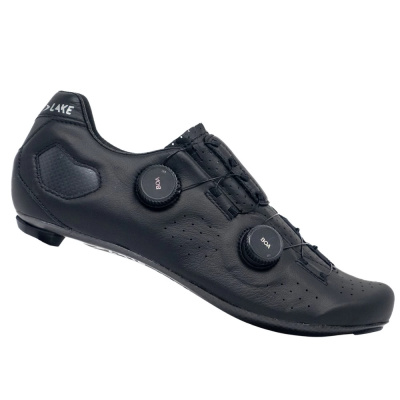
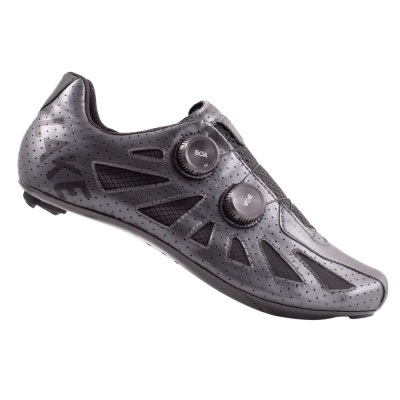
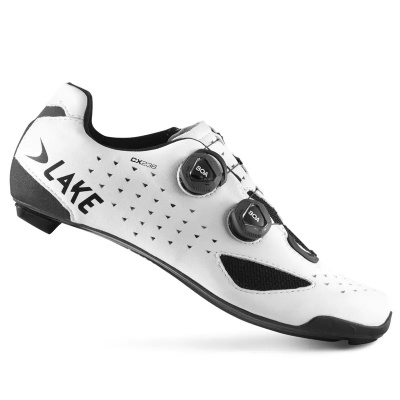
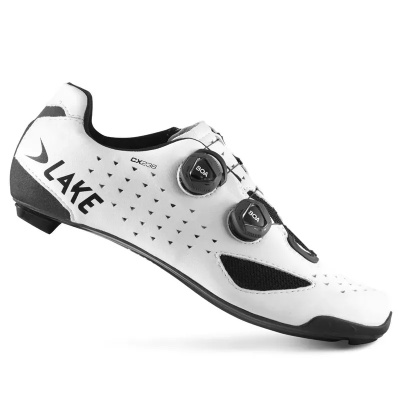
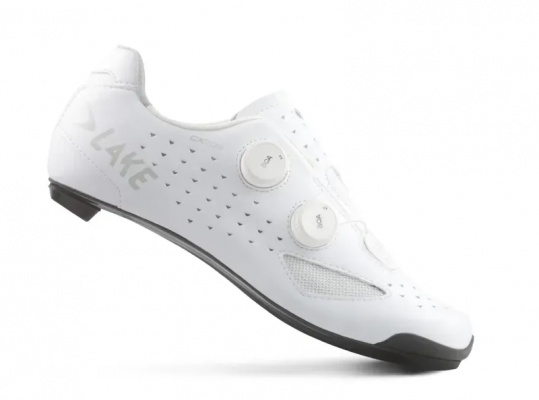
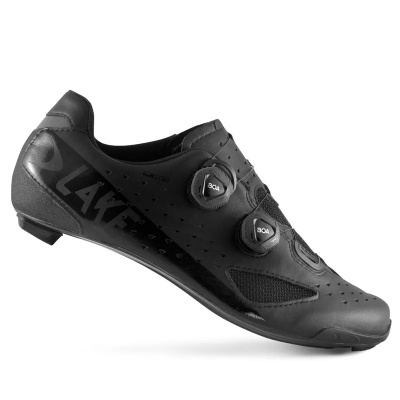
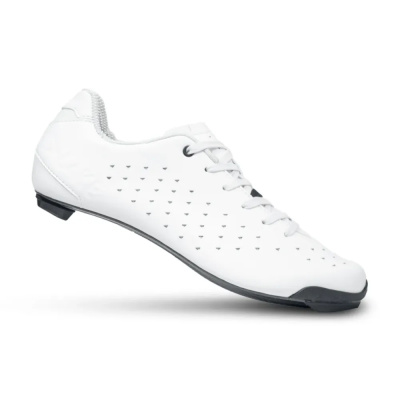
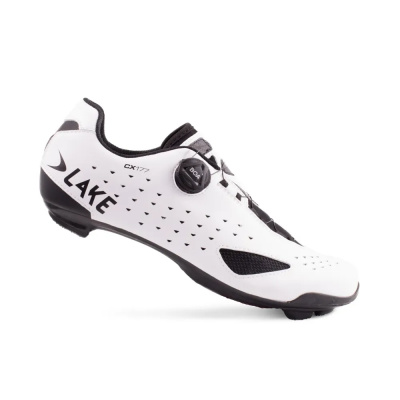
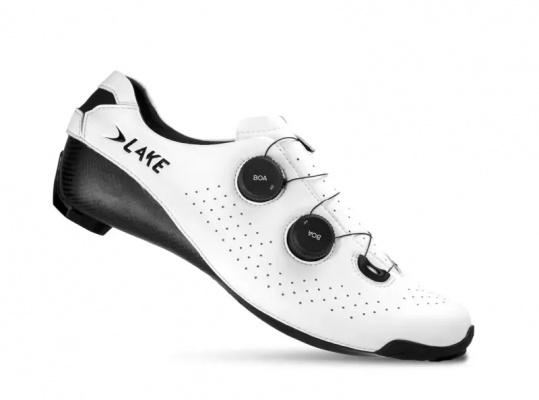
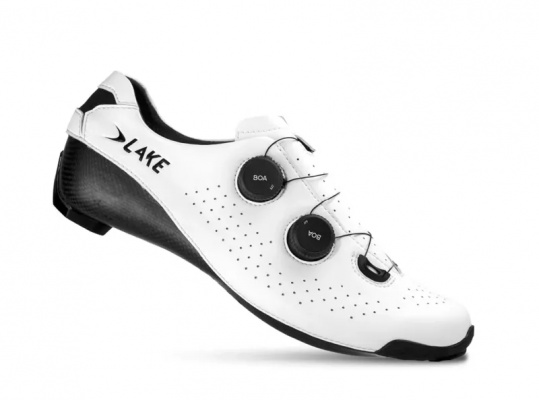
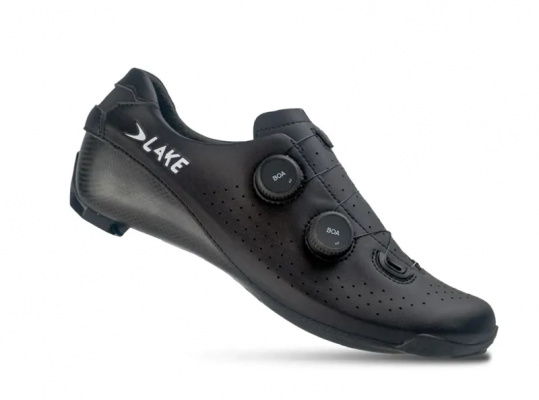
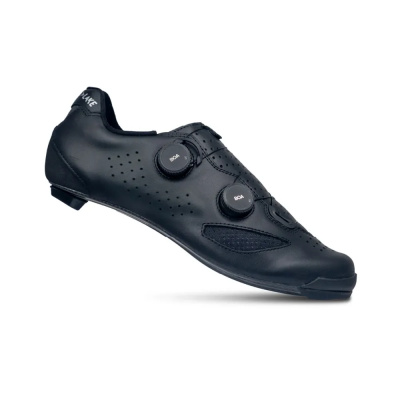
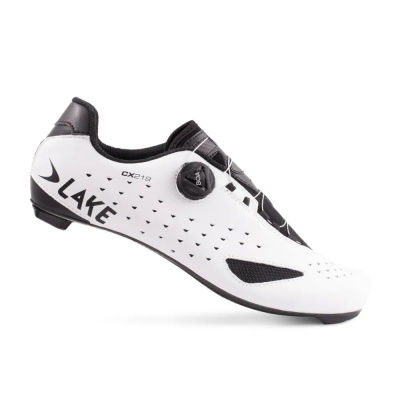
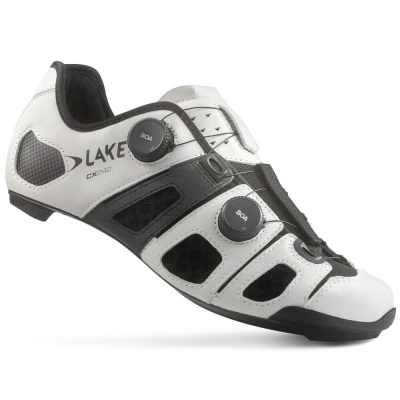
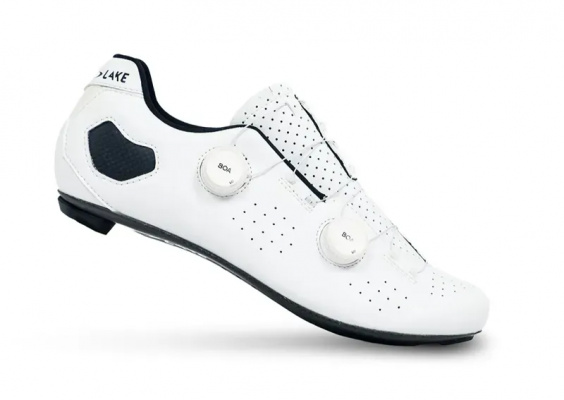
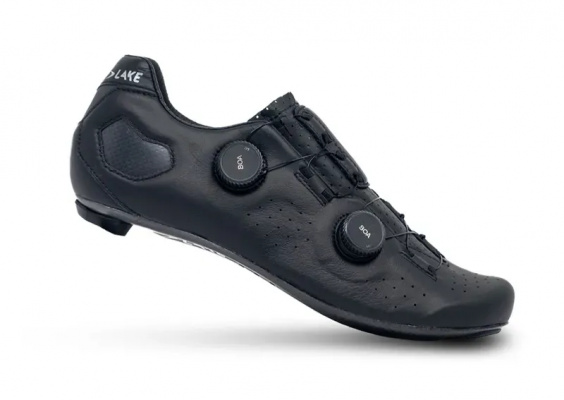
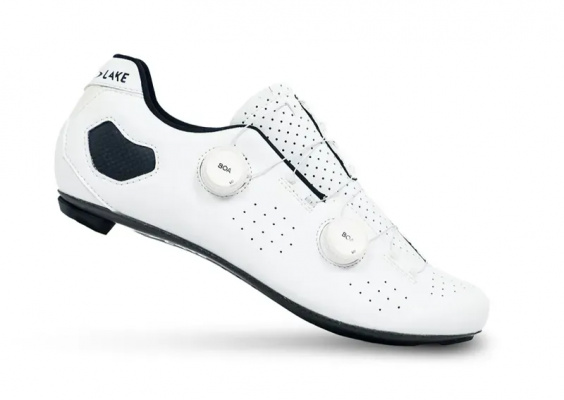
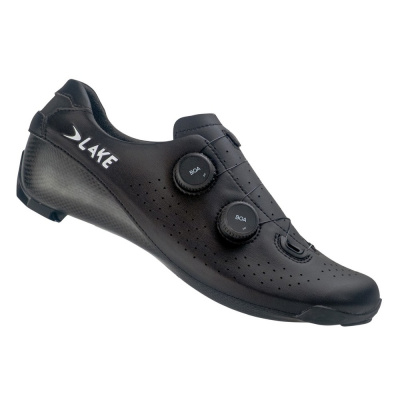
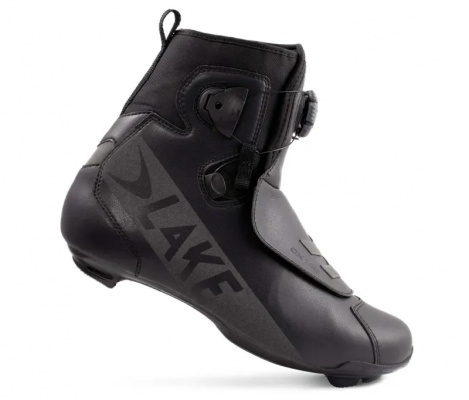
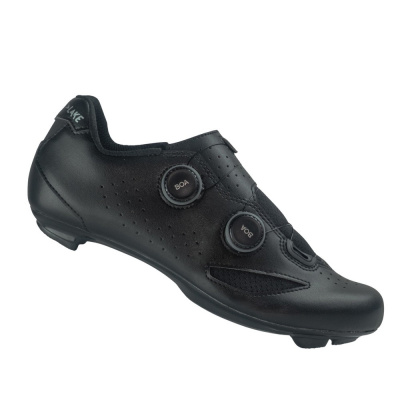
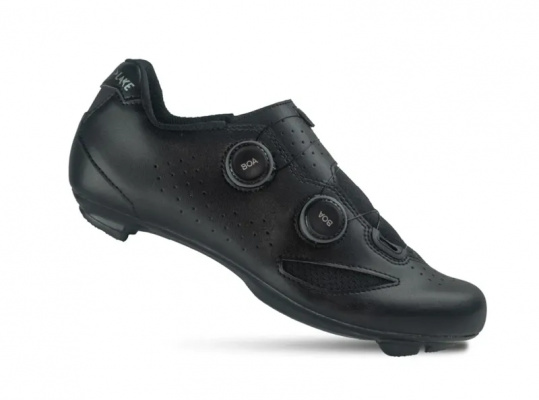
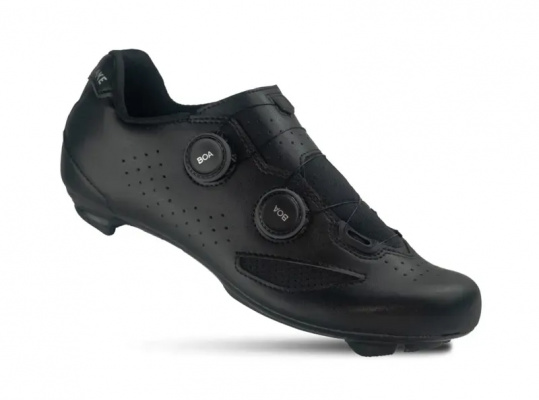
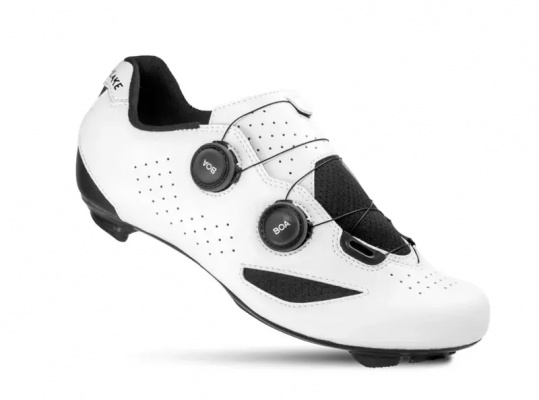
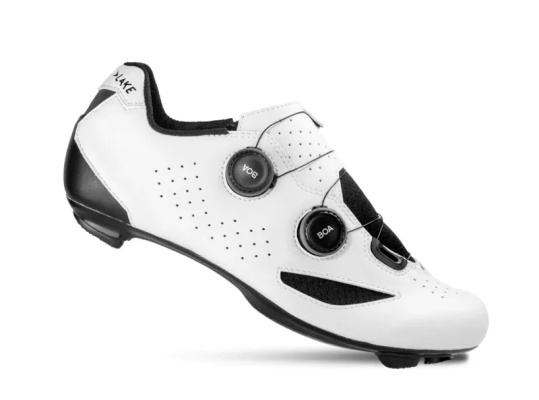
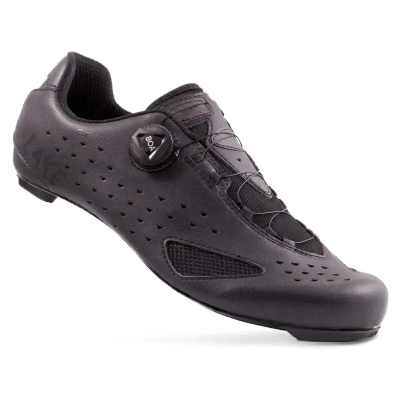
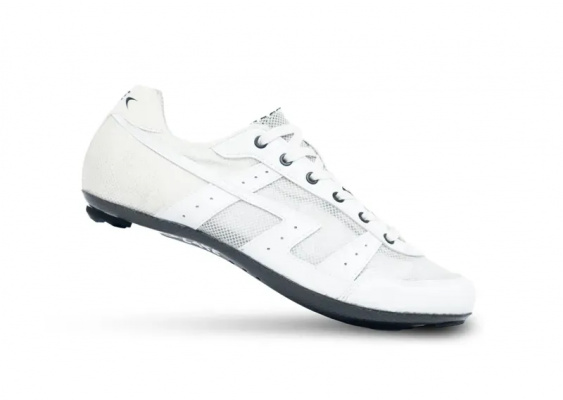
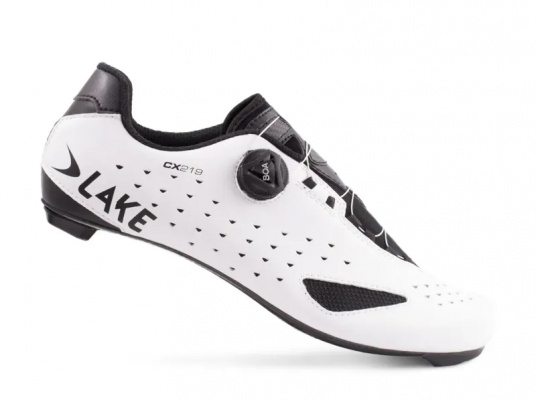
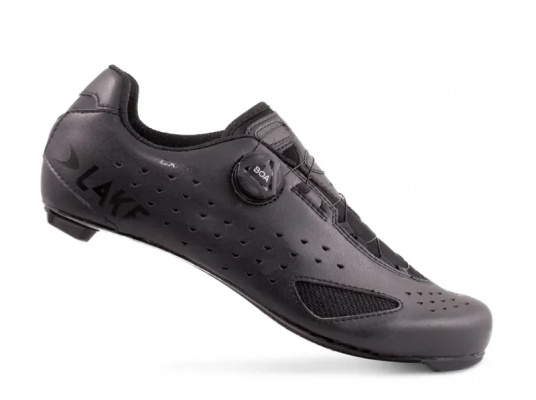
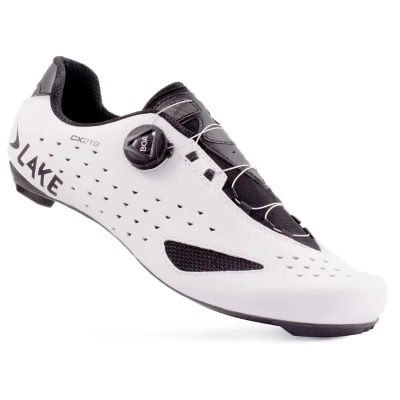
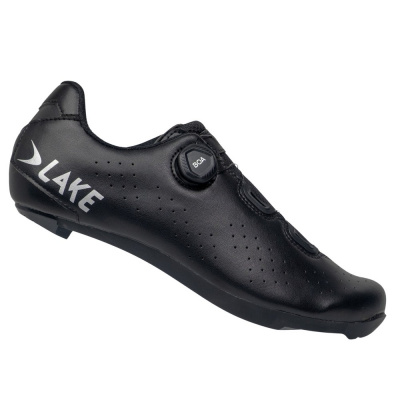
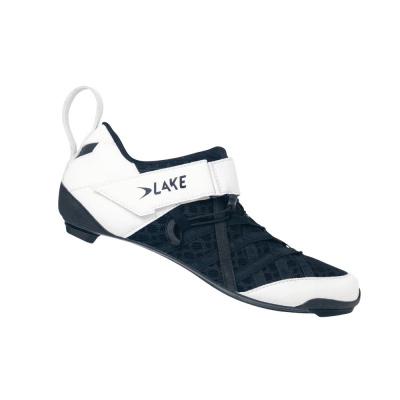
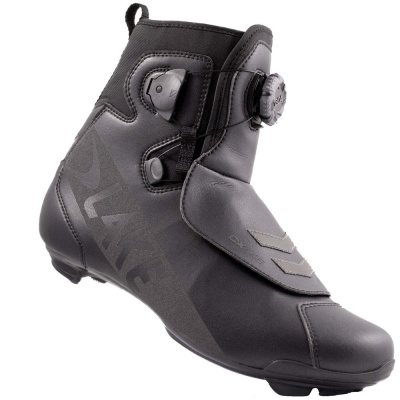
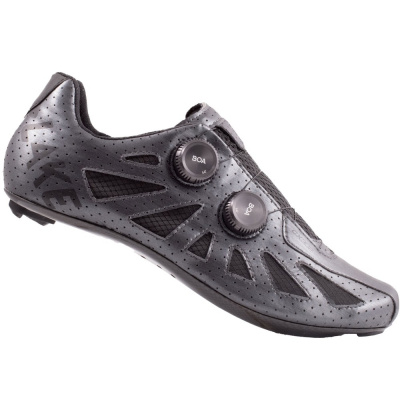
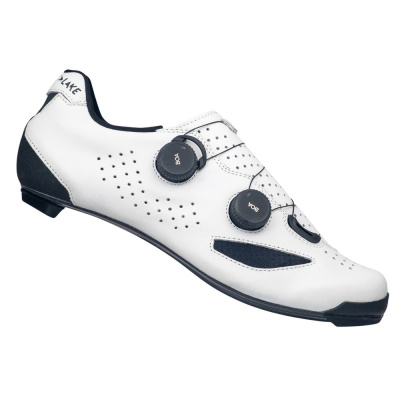
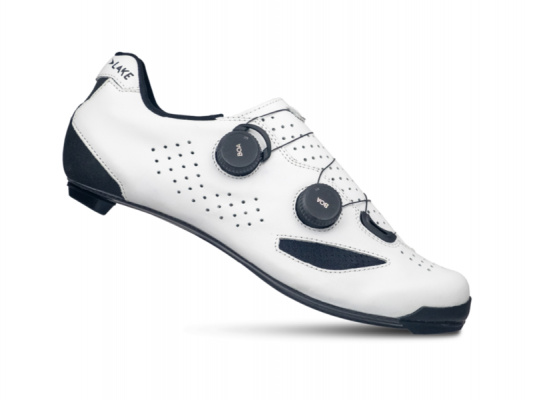
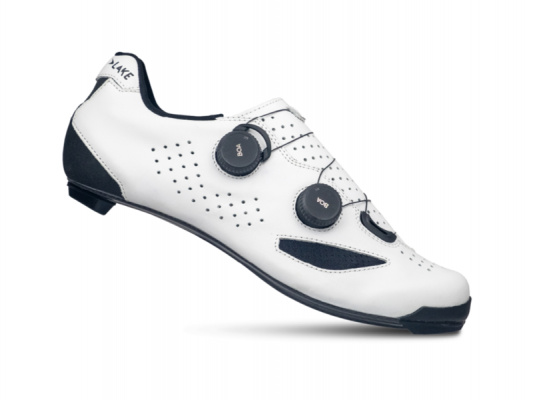
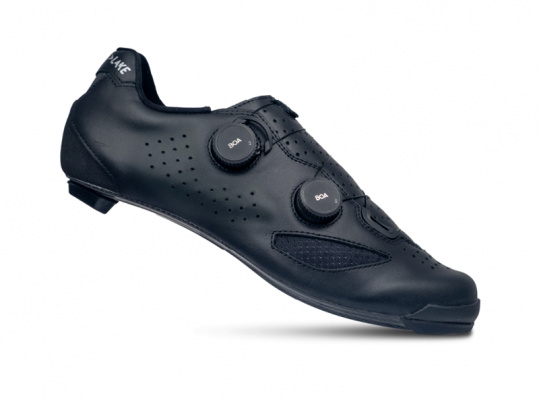
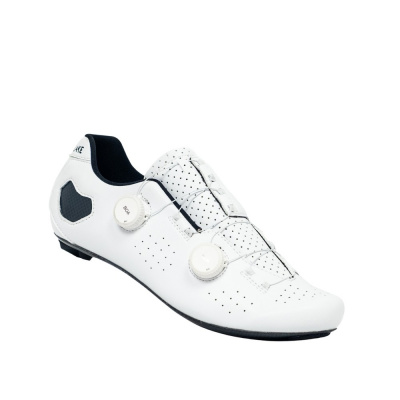
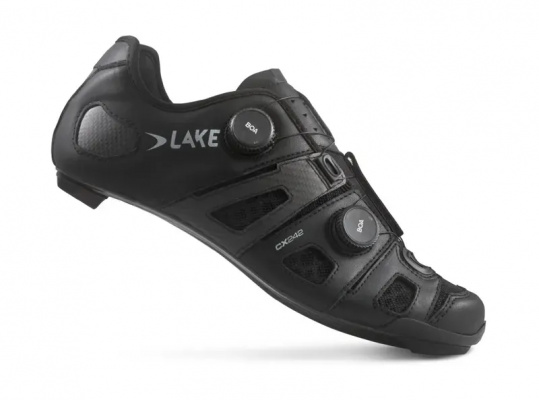
Prices and availability can change quickly. Delivery charges are not always included in listed prices.
Final price, stock status and delivery terms are set by retailer. We may receive a commission on purchases made.
What Lake's Materials Actually Do for Your Feet
The headline material across Lake's premium road range is K-Lite Kangaroo leather - lighter and more supple than full-grain bovine leather, with a fine grain structure that conforms closely to your foot's shape over time. Think of it less like a shoe upper and more like a second skin that gradually maps to your foot. It breathes better than most synthetics, too, which matters on a four-hour summer ride when your feet are working hard.
Full-grain leather features on some models in the range and brings its own advantages: exceptional durability and a natural resistance to road spray when treated correctly. That last point is worth noting if you're riding UK country lanes regularly. Chip-seal and persistent drizzle are a fact of life here, and untreated leather will crack and stiffen over time. A quality leather balm applied after wet rides isn't optional - it's part of the ownership deal with Lake shoes, and riders who keep on top of it find the uppers genuinely last years.
The Custom Fit Carbon soles sit at the stiffer end of the spectrum, giving you direct power transfer from foot to pedal without flex robbing your effort mid-stroke. Stiffness ratings vary across the range - entry models use fibreglass-reinforced soles that offer a reasonable compromise for sportive riders, while the flagship models use full carbon construction. The Thermaform moldable heel cup is built into the sole unit on performance models, allowing the heel cradle to be shaped specifically to you during the heat-moulding process. It's a meaningful difference if you've ever suffered heel lift on climbs.
Making Sense of Lake's Lasts and the CX Range
The concept of a "last" - the foot-shaped form a shoe is built around - is central to understanding why Lake road shoes work so well for so many riders. Lake uses several distinct lasts, and choosing the right one matters more than chasing a specific model number.
The Race last is cut for a snug, performance-oriented fit with higher arch support and a relatively narrow profile through the midfoot and toe box. It suits riders with average to narrow feet who want an aggressive feel on the bike - the kind of fit that keeps your foot locked in place during hard efforts. The CX332 is built on this last, adding a heat-moldable heel cup and a stiff carbon sole that's aimed squarely at racing use. If you're comparing it to something like Sidi road shoes or Specialized road shoes at the performance end, the CX332 competes directly - but with that heat-moulding advantage built in.
The Competition last opens up the toe box and gives more room for foot expansion on longer rides, which is genuinely important if you're out for five or six hours and your feet naturally swell through the day. The CX238 uses this last and is Lake's endurance workhorse - a better fit for most recreational and sportive riders than the Race last models. It's worth noting that the Competition last is also available in Wide and Extra Wide versions, which is where Lake genuinely separates itself from the field. Bont road shoes are the other brand regularly mentioned in the same breath when it comes to wider fits, but Lake's leather construction gives it a different character and feel.
Dual BOA Li2 and IP1 dial systems feature across the range, giving you independent micro-adjustment across the forefoot and instep. It sounds like a detail, but being able to tweak tension in two zones independently - especially mid-ride when your foot volume changes - is something you genuinely use. If you're also looking at insoles to fine-tune arch support further, our Lake MTB and gravel shoes category is worth a look for riders who split time between disciplines.
Sizing runs true to length across the range, but the width profiles vary enough that measuring your foot in millimetres and checking Lake's last-specific sizing chart is strongly recommended before buying. Don't assume your size in another brand translates directly - it often doesn't, particularly if you're stepping between the Race and Competition lasts.
Year-Round Riding in the UK and Keeping Your Lake Shoes in Shape
Lake's summer road shoes are ventilated enough to stay comfortable on warm days, but they're not a one-season product. The real conversation among UK riders tends to turn to Lake's winter road boots - the CX146 being the most widely referenced - when October arrives and the roads get properly grim. These are insulated, weatherproofed, and stiff enough to remain efficient even when you're grinding through a February morning in the Peak District or slogging back from the South Downs in the dark. If you ride through winter rather than on the turbo, they're worth the investment.
For the rest of the year, leather care is your main maintenance job. After wet rides - and there will be wet rides - let the shoes dry naturally away from direct heat, then work in a leather food or balm before storing them. Forcing drying near a radiator will crack the leather faster than anything else. It takes five minutes and extends the life of the shoe significantly.
BOA dials are robust but not indestructible. If a dial stops tensioning smoothly or a lace snaps, replacements are available through our shoe spares section - BOA's own replacement programme also covers dials directly, worth knowing before you panic. Cleat bolts and threads deserve a check every few months too, particularly if you're riding through winter grit. Pairing your Lake shoes with good-quality cycling socks that manage moisture properly rounds out the system - thin, well-fitted socks also help the BOA dials apply even tension across the forefoot rather than bunching.
If you're coming from a synthetic shoe and switching to Lake's leather construction, give yourself a few weeks for the upper to bed in. The K-Lite leather does soften and adapt, but it's not instantaneous. Most riders find the fit improves noticeably after the first half-dozen rides as the leather takes on the shape of their foot.
Lake Road Shoes FAQs
Are Lake road shoes true to size?
Length-wise, Lake shoes generally run true to size. The more important variable is width - Standard, Wide, and Extra Wide profiles are available across different models, and the fit changes meaningfully between the Race and Competition lasts. Measure your foot in millimetres and check Lake's sizing chart for the specific model you're buying rather than relying on your size in another brand.
How do I heat mold Lake cycling shoes?
Set your oven to 90°C (195°F), place the shoes inside for around five minutes until the Thermaform heel cup becomes pliable, then put on your cycling socks and step straight into them. Tighten the BOA dials, then use your hands to press the heel cup snugly around your heel as it cools. The whole process takes under ten minutes and the result is a noticeably more secure heel hold.
What is the difference between Lake CX238 and CX332?
The CX238 is built on the Competition last - a roomier toe box, better suited to long rides where foot volume increases over time. The CX332 uses the narrower Race last with a heat-moldable heel cup and a stiffer full carbon sole, aimed at racing and high-intensity riding. If comfort over distance is your priority, the CX238; if you want an aggressive race-day shoe, the CX332.