
Kask Full Face Helmets
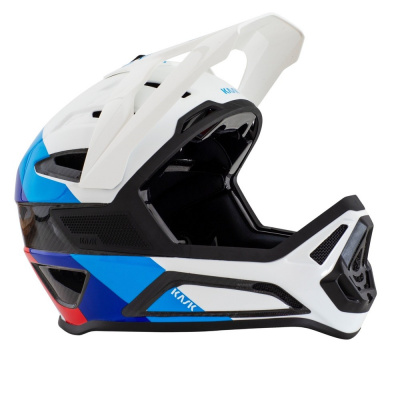
When the trail points straight down, Kask full face helmets deliver uncompromising gravity protection without the traditional weight penalty. Built around a full carbon fiber shell, Kask's flagship gravity lid - the Defender - is engineered for downhill racers, bike park regulars, and aggressive enduro riders who refuse to carry unnecessary grams on their head. That carbon construction keeps weight competitive at around 750g for a medium, which matters when you're muscling through a long run at Ae Forest or nursing your neck on repeat laps.
Safety isn't just a sticker here. Kask puts their helmets through WG11 rotational impact testing - a protocol that replicates the oblique, twisting forces of a real crash rather than a straight-line lab drop - alongside ASTM F1952 downhill certification. You get a helmet that's been genuinely stress-tested for how riders actually fall.
The other thing Kask gets right is airflow. Eighteen ventilation ports across the shell means the classic full-face sauna effect is far less of an issue on those grinding enduro transitions in the Tweed Valley or the Welsh valleys. Protection and breathability in the same lid. That's the core offer, and it's a strong one.
Prices and availability can change quickly. Delivery charges are not always included in listed prices.
Final price, stock status and delivery terms are set by retailer. We may receive a commission on purchases made.
Carbon Shell Construction and the Safety Case
The foundation of any serious Kask downhill helmet is the full carbon fiber shell. Carbon gives you a high strength-to-weight ratio that polycarbonate simply can't match at this weight - around 750g in a medium for the Defender - which means less neck fatigue over a long descending day and no compromise on impact resistance. It's stiff where it needs to be, and it doesn't add bulk that slows your head movement when you're picking lines at speed.
On certification, the ASTM F1952 standard is the benchmark for dedicated DH use - it's the rating that covers the higher-energy impacts a downhill course or gnarly bike park run can produce. But Kask goes further with their proprietary WG11 rotational impact test protocol. Standard helmet tests hit the helmet straight on. WG11 simulates angled, glancing impacts - the kind that generate rotational forces through your brain. That's the mechanism behind a significant proportion of serious head injuries, so a helmet that's designed and tested against it is a meaningfully different proposition to one that isn't. If you're comparing options, Fox full face helmets and Troy Lee Designs full face helmets are the other names regularly in this conversation - each with their own safety protocols - but Kask's WG11 standard is one of the more rigorous proprietary approaches in the gravity market.
The chin guard is integral to the shell rather than bolted on as an afterthought, keeping the overall structure tight and the weight distribution balanced. That matters when you're already wearing goggles and body armour and don't want your lid sitting like a bobblehead.
Fit, Closure and Finding Your Size in the Kask Range
Kask's gravity helmets fit with a snug, race-oriented profile - not aggressive to the point of discomfort, but purposeful. The double D-ring chin strap is the closure system here, and that's the right call for a DH-certified lid. D-rings don't rattle loose under vibration the way some buckle systems can, and once you've threaded and set it, it stays where you put it through a rough run. Takes about ten seconds once you're used to it.
The quick-release cheek pads are worth paying attention to. In a medical emergency, paramedics need to remove a full-face helmet without wrenching the rider's neck - the quick-release system is designed precisely for that. It's also useful day-to-day for cleaning, which we'll come to. The Kask Defender helmet sizing runs generally true to head circumference, but measure carefully: use a tape just above your ears, check Kask's size chart, and if you're between sizes, try the larger. A lid that's too small will create pressure points on a long day out.
If you're after a trail, road, or commuter helmet rather than a gravity-specific lid, our main Kask helmets hub covers the full range. Time trial riders should head over to Kask aero TT helmets for the speed-focused options. Full face is a specific tool - right for the right job, not a substitute for every ride.
The 18 ventilation ports are strategically placed to draw air across the crown and out through the rear, which makes the Defender far more manageable on enduro transition climbs than older, more bunker-like full-face designs. It's not an open-face helmet in disguise - you'll still feel the difference on a long fire-road push - but it's far enough from suffocating that riders are running it for mixed-format enduro events rather than just pure DH. MET full face helmets and Bell full face helmets offer comparable ventilated options if you want to broaden the comparison at this end of the market.
Goggle Compatibility, Post-Ride Cleaning and UK Winter Realities
The viewport on Kask's gravity helmets is wide - properly wide - which matters for two reasons. First, peripheral vision on technical lines is critical; a narrow opening that crops your sightlines under goggles isn't something you want to discover halfway down a loose Welsh hillside. Second, a generously cut viewport reduces the chance of your goggles fogging against the foam surround, which becomes very relevant in the damp, low-airflow conditions that UK winter riding serves up regularly.
Modern MTB goggles from the main brands sit cleanly in the opening without gap or significant pressure points. If you're running a larger goggle frame, check the fit before you commit - but the Defender's profile is accommodating enough for most current goggle shapes.
Now, the cleaning bit. UK riding means mud. Specifically, it means that particular cold, gritty, omnipresent sludge that gets into every pad and liner and smells increasingly unpleasant if you leave it. The cheek pads and inner liners in Kask full face helmets are removable - pull them out after a wet session, hand wash with a mild non-bio detergent, and hang them to air dry completely before refitting. Don't rush the drying, and don't go near a radiator or tumble dryer. That simple routine after a winter ride at Gisburn or Hamsterley will extend the life of the padding considerably and keep the fit consistent. If your pads are past their best, Kask helmet spares stock replacement pads and visors so you don't have to retire the whole lid. And if you're riding in genuinely cold conditions and want a thin layer under the helmet, Kask headwear includes under-helmet skull caps that work with the Defender's interior without distorting the fit.
One practical note: always inspect the shell after a significant impact. Carbon can absorb an impact without showing visible damage, and a compromised shell needs replacing regardless of how it looks. If in doubt, contact Kask directly - they offer crash replacement programmes that are worth looking into before you need them.
Kask Full Face Helmets FAQs
Are Kask full face helmets true to size?
Generally, yes - Kask full face helmets fit true to size with a snug, race-ready feel. Measure your head circumference just above the ears and cross-reference Kask's own size chart before ordering. If you're sitting between two sizes, the larger is usually the safer call for comfort over a long day.
How heavy is the Kask Defender helmet?
The Kask Defender comes in at around 750g for a size medium - competitive for a DH-certified full face lid. That low figure is down to the full carbon fiber outer shell, which keeps impact resistance high without piling on the grams. Less neck fatigue on long descending days is the practical result.
Can you wash the padding in a Kask full face helmet?
Yes. The cheek pads and inner liners are removable and washable - hand wash with a mild, non-bio detergent and let them air dry fully before refitting. Avoid heat sources like radiators or tumble dryers, which can distort the foam. Worth doing regularly if you're riding through a UK winter.