
Ghost E-Bikes
Ghost E-Bikes have quietly built one of the most technically coherent lineups in the European e-MTB market, and if you've been doing your homework, you'll know why riders keep coming back to them. Designed in Germany with a sharp focus on rider-first engineering, Ghost's electric range covers serious full-suspension enduro machines, lightweight trail bikes, and hardtails versatile enough to handle everything from a muddy Welsh trail centre to a mixed-surface commute.
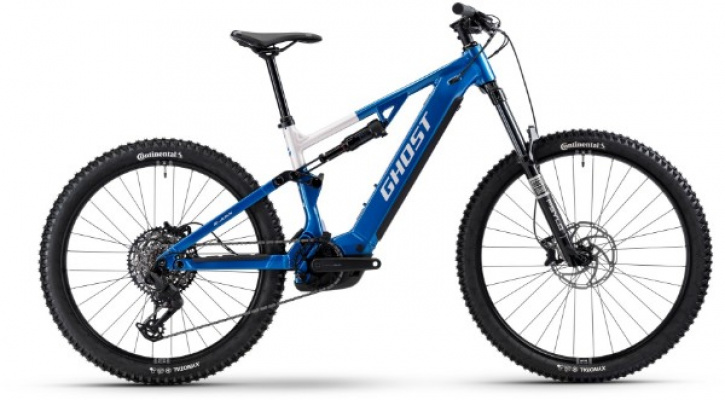
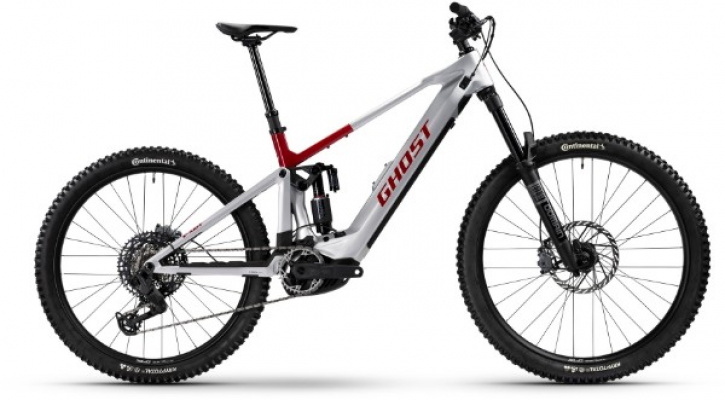
The E-Riot is the full-power, full-suspension flagship - steep, technical, and built to self-shuttle enduro lines. The Path Riot keeps things nimble with a lighter build and a more natural pedalling feel. The E-Teru hardtail covers the practical end: weekend riding, light singletrack, and getting to work without arriving wrecked. All three families share Ghost's proprietary SuperFit geometry, which takes the guesswork out of sizing, and full-suspension models use TractionLink to keep the rear wheel honest when things get slick and rooty.
Power comes from Bosch Performance Line CX and Fazua Ride 60 systems depending on the model - serious torque where you need it, or a lighter, more discreet assist when you don't. If you're after acoustic riding, our Ghost Mountain Bikes and Ghost Gravel Bikes collections are worth a look.
Prices and availability can change quickly. Delivery charges are not always included in listed prices.
Final price, stock status and delivery terms are set by retailer. We may receive a commission on purchases made.
Decoding the Ghost E-Bike Lineup
Three distinct families, each with a clear purpose. The E-Riot is Ghost's full-suspension, full-power trail and enduro weapon. It runs a Bosch Performance Line CX motor paired with a high-capacity integrated battery, and the geometry is set up for aggressive riding - slack head angle, long reach, low bottom bracket. Think Glentress or Afan in the wet, not a gentle spin along the canal. It's a proper 29er e-MTB at most trim levels, though some builds run a mullet setup for sharper steering response in tighter, rooty sections. Within the E-Riot range, trim levels run from Essential through Universal and Advanced up to Pro, with component spec climbing accordingly - better suspension, brakes, and drivetrain as you move up.
The Path Riot takes a different approach. It pairs a lightweight carbon frame layup with the Fazua Ride 60 motor system, which is notably lighter and quieter than the Bosch unit. The result is a bike that handles much closer to an unassisted trail bike - you feel the geometry and the suspension doing their job rather than leaning on the motor. If you're a strong rider who wants the option of a boost on long climbs but doesn't want to feel like you're piloting a powered barge, the Path Riot is the more honest conversation. It suits riders making the step up from acoustic trail bikes more than those coming from an e-MTB background.
The E-Teru is the hardtail of the range and the most versatile ticket in the Ghost catalogue. Bosch-powered, confident geometry, and well-suited to riders who want one bike that can do the school run, a weekend trail centre session, and a gravel loop without complaining. It's not the bike for sending drops at Bike Park Wales, but it'll handle more than you'd expect. Comparing it to something like the Cube e-bike range or Bergamont's electric lineup, the E-Teru holds its own on spec at each price point, and the SuperFit sizing gives it a small but meaningful edge for riders who've struggled to find the right fit on other brands.
The Ghost Tech Philosophy: SuperFit and TractionLink Explained
SuperFit geometry is one of those ideas that sounds like marketing until you understand what's actually going on. Ghost fed biometric data from hundreds of thousands of riders into an algorithm that calculates optimal reach and stack for each frame size. In practice, that means you're far less likely to need a different stem length or to immediately start tweaking the cockpit when the bike arrives. It's not magic - you'll still want to fine-tune saddle height and bar roll - but the baseline position is noticeably more considered than bikes sized by eye or tradition. For UK riders who often buy online without a fitting session, that matters.
TractionLink is Ghost's virtual pivot suspension design, and it's the reason the E-Riot climbs as well as it descends. A virtual pivot system places the suspension's pivot point at a calculated location that isn't physically present on the frame - it's defined by the interaction of two separate linkage points. The practical effect is that Ghost can tune the suspension kinematics so that braking forces and pedalling forces are largely isolated from the shock. You get strong anti-squat under power, which means the rear end stays composed when you're grinding up a steep, wet climb, and the rear wheel doesn't kick back under hard braking the way it does on simpler single-pivot designs. On loose, rooty ascents - the kind you find on the upper trails at Kirroughtree or deeper into the Peak District - that rear-wheel traction is the difference between cleaning a climb and dabbing out.
The Lightweight Carbon LC construction used in premium models like the Path Riot is worth calling out separately. Ghost's carbon layup prioritises weight reduction in the main triangle while maintaining stiffness at the bottom bracket and headtube junctions - the areas that matter most for power transfer and steering precision. It's not the same as budget carbon, where a low weight claim can come at the cost of impact resistance. Handled properly, it's durable kit.
Running a Ghost E-Bike Through a UK Winter
The TractionLink pivots are a known maintenance point, particularly if you're riding through a Scottish or Welsh winter. The lower linkage bearings sit close to the ground and take a regular coating of grit and silty mud. Ghost spec decent bearings, but they won't last indefinitely without attention - clean and re-grease those pivots every few rides in wet conditions, and check them at the start and end of each season. It's a five-minute job that saves you a bearing replacement mid-season. Most good bike shops will do it as part of a service if you'd rather not get your hands dirty.
The Bosch Performance Line CX motor is well-suited to wet riding. Bosch's IP rating covers normal UK wet-weather use comfortably, and the motor itself is proven across years of trail riding in conditions far worse than a damp Surrey Hills loop. What does need a bit of care is the battery. If you're storing the bike over a cold snap, remove the Bosch or Fazua battery and keep it indoors - somewhere that doesn't drop below freezing. Lithium cells lose capacity quickly when they're charged and stored in the cold, and you'll notice the range drop before anything else. Keep it between 30% and 80% charge for long-term storage. That's not unique to Ghost, but it's easy to forget when the bike lives in an unheated garage.
Mud clearance on the E-Teru hardtail is adequate for most UK winter riding, but if you're heading somewhere particularly sloppy, a quick tyre swap to something with an open, self-clearing tread knob will make a bigger difference than any other single change. The frame has the clearance for it. On the E-Riot full-suspension models, the same logic applies to the rear - pack clearance is tighter, so tyre choice matters more than it does on a hardtail.
Ghost E-Bikes FAQs
Are Ghost e-bikes any good?
Ghost e-bikes are well-regarded for solid German engineering, thoughtful geometry, and reliable performance on UK trails. The TractionLink suspension on full-suspension models is a genuine technical advantage on technical climbs, and the brand consistently delivers competitive component specs across trim levels. They're not the flashiest name in the car park, but they're built to ride rather than to look good leaning against a van.
What motors do Ghost e-bikes use?
Full-suspension E-Riot models and the E-Teru hardtail run Bosch Performance Line CX motors - high torque, well-proven, and reliable in wet conditions. The Path Riot uses the Fazua Ride 60 system, which is lighter and more discreet, giving the bike a feel much closer to an unassisted trail ride. Your choice between them largely comes down to how much assist you want and how much weight you're willing to carry.
How does Ghost SuperFit geometry work?
SuperFit uses an algorithm trained on biometric data from a very large rider sample to calculate the optimal reach and stack for each frame size. The result is a bike that fits well straight out of the box without needing a stem swap or significant cockpit adjustment. It won't replace a proper bike fit for riders with specific needs, but it gets most people to a solid baseline faster than most competitors manage.