
Garbaruk 12 Speed Cassettes
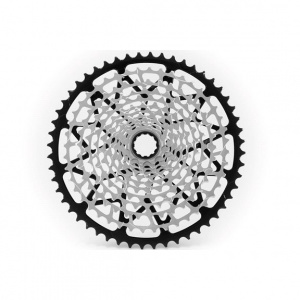
Garbaruk 12 speed cassettes exist for one reason: to strip meaningful grams from your drivetrain without handing you a fragile, short-lived component in return. These are Polish-made, CNC-machined cassettes built to a precision that OEM options from the big two rarely match at equivalent weight. Not anodised shelf decoration - actual engineering.
The construction tells you everything. A single-piece chromoly steel block covers the lower 11 gears, giving you the durability you need where chain load is highest. The largest cog - your bailout gear on steep climbs - is bolt-on 7075-T6 aluminium, and that's where the serious weight saving happens. Drop in unsprung mass is real: less rotating weight means your suspension tracks better, particularly on rooty, technical ground where small improvements in wheel response add up quickly.
Range runs from 10-50T up to 10-52T depending on the version, so whether you're threading through tight Peak District singletrack or grinding out long Alpine-style descents in the Welsh mountains, there's a ratio spread that works. Available in both SRAM XD and Shimano Micro Spline freehub versions, these cassettes slot into most modern wide-range drivetrains - but compatibility matters, and getting it right before you buy is non-negotiable.
Prices and availability can change quickly. Delivery charges are not always included in listed prices.
Final price, stock status and delivery terms are set by retailer. We may receive a commission on purchases made.
Compatibility Matrix: Will It Fit Your Hub?
Get this wrong and you've got an expensive paperweight, so let's be clear about what fits what. Garbaruk produces two distinct 12-speed cassette lines: one for SRAM XD freehub bodies, one for Shimano Micro Spline. These are not interchangeable. Your freehub body dictates which cassette you buy - full stop. If you're running a standard HG freehub (common on older bikes), neither version will mount without a freehub swap.
Chain compatibility is equally strict. The Micro Spline versions use custom tooth profiling optimized for Shimano HG+ 12-speed chains, while the XD versions are built around SRAM Eagle shifting standards. Run the wrong chain and you'll get ghost shifting, noisy running, and accelerated wear. It's not a grey area - match cassette to chain standard, always.
Then there's derailleur capacity. Running a 10-52T cog demands that your mech can physically wrap enough chain and clear the largest sprocket. Modern SRAM Eagle derailleurs handle 52T natively. Current Shimano SGS long-cage units generally cope, too. Where you might hit trouble is on older 11-speed mechs or early 12-speed conversions with shorter cages - that's the scenario where a Garbaruk oversized derailleur cage becomes relevant. If you're already running a current-generation groupset, you're unlikely to need one. If you're unsure, check your derailleur's published maximum cog size before ordering. Worth a two-minute check rather than a return shipment.
For riders comparing alternative cassette options before committing, it's worth looking at what Shimano 12 speed cassettes offer at various price points, or browsing SRAM 12 speed cassettes if you're already invested in that ecosystem.
Steel Block vs. Aluminium Cog: What the Construction Actually Means
The architecture here is deliberate. The single-piece CNC machined chromoly steel block covering the lower 11 gears isn't just a durability play - it's also a stiffness argument. One solid piece means no flex between individual sprockets under hard pedalling loads, which translates to crisper shifts and less drivetrain noise over time. Compare that to a cassette built from individually stamped and stacked steel cogs, and you'll notice the difference on a long, grinding climb where chain tension is high and gear changes need to be precise.
The bolt-on 7075-T6 aluminium largest cog is where Garbaruk makes the weight numbers work. Aluminium at this size saves a significant chunk compared to steel, and because it's bolt-on rather than integrated, you can replace it independently when it wears - which it will, faster than the steel section, particularly in UK conditions. That replaceability is a genuine practical advantage over cassettes where the whole unit needs replacing once the big cog gives up.
On range: the 10-50T spread suits most UK trail riders well, giving you a usable top-end without making the gear steps feel cavernous in the middle of the cassette. The 10-52T version is the choice for riders tackling seriously steep ground - think long Welsh mountain climbs or anything where an extra two teeth on the bailout gear is the difference between spinning and grinding. The steps between gears on a 10-52T are slightly wider, which you'll notice on flat or rolling ground, but on technical descents and steep ascents that's rarely the priority.
Against stock Shimano XT or SRAM GX cassettes, Garbaruk commands a premium - but those OEM options are heavier, typically using more stamped steel construction, and don't offer the same tooth-profile precision for either shifting standard. If weight matters to your build and you're already spending on a quality wheelset, the drivetrain is the logical next place to look. Brands like e*thirteen 12 speed cassettes occupy a similar aftermarket space, though their construction approach differs. Sunrace 12 speed cassettes are worth a look if budget is the primary driver, though you trade machining quality accordingly.
UK Durability and Maintenance: Keeping It Running Through Winter
British riding conditions are a specific kind of punishment. Peak District grit mixed with moisture turns into an abrasive paste that works at chain and cassette alike - and the aluminium bailout cog is the first place you'll see the damage. The steel block is highly resistant; the aluminium cog is not, especially if you spend extended time cross-chaining in the big-big combination on steep climbs. Use it as a true bailout, not your default climbing gear, and it'll last considerably longer.
Chain wear is the critical variable here. Replace your chain at 0.5% wear - not 0.75%, not "when it feels rough." A worn chain accelerates cassette wear dramatically, and on a cassette at this price point, protecting your investment with regular chain changes is the cheapest maintenance you'll do. Keep a chain wear indicator in your toolkit and use it after every few wet rides during winter.
The open CNC architecture of the steel block is genuinely useful in thick mud - debris clears more readily than on tightly packed stamped cassettes, reducing the risk of chain skipping mid-descent. That said, it still needs cleaning. A stiff brush and degreaser after muddy rides, followed by a quality dry lube or a hard wax coat, keeps the block running quietly and slows corrosion on the chromoly steel. Wet lubes are tempting in winter but attract grit - a good wax lube applied to a clean chain does the job with less accumulation. A quick wipe-down before you load the bike back in the car takes thirty seconds and saves you a cassette.
Garbaruk 12 Speed Cassettes FAQs
Do I need a Garbaruk derailleur cage for their 12-speed cassette?
Not necessarily. Modern SRAM Eagle derailleurs and current Shimano SGS long-cage mechs clear a 10-52T cassette without modification. You'd only need a Garbaruk oversized cage if your derailleur's published maximum cog size falls short - most common with older 11-speed or early 12-speed conversions. Check your mech's spec sheet before buying.
Are Garbaruk 12-speed cassettes compatible with Shimano chains?
Yes, but only with the correct variant. Garbaruk makes specific Micro Spline cassettes with tooth profiling optimised for Shimano HG+ 12-speed chains. Don't mix a Shimano-spec cassette with a SRAM Eagle chain, or vice versa - the tooth profiles differ and shifting performance will suffer from the first pedal stroke.
How long do Garbaruk cassettes last in muddy conditions?
The chromoly steel block is genuinely tough and handles UK grit well with proper cleaning. The aluminium largest cog wears faster, particularly if cross-chained heavily in abrasive mud. The single biggest factor in cassette lifespan is chain condition - replace your chain at 0.5% wear and you'll protect the cassette significantly. Neglect that and no cassette, regardless of brand, lasts long.