
Frog Bikes Kids Bikes
Frog Kids Bikes have become the benchmark for children's cycling in the UK - and once you understand why, it's hard to look elsewhere. These aren't adult bikes squeezed down to a smaller size. Every frame is engineered around a child's actual proportions, from the child-specific geometry to the patented cranks that narrow the distance between the pedals. That last detail matters more than it sounds: cheaper bikes force kids into a wide, waddling pedal stroke that wastes energy and puts strain on young knees. Frog removes that problem before the rider even leaves the drive.
The lightweight 6061 T6 aluminium frames make a genuine difference too. When a bike weighs a significant fraction of the rider's bodyweight, every gram counts - a heavy bike doesn't just feel hard to push, it actively gets in the way of learning. Frog keeps things light without cutting corners on durability, which is why these bikes survive British winters in damp sheds and still resurface on the second-hand market years later looking almost presentable.
This page covers Frog's core First Pedal and Hybrid ranges - the bikes most families are choosing for first rides and school runs. If you're looking at balance bikes, mountain bikes, road, or gravel, we've got dedicated pages for each.
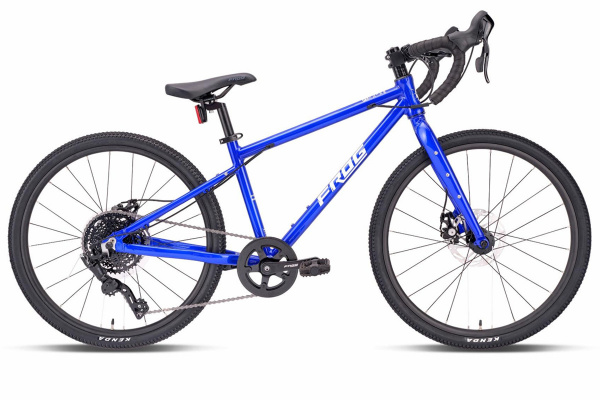
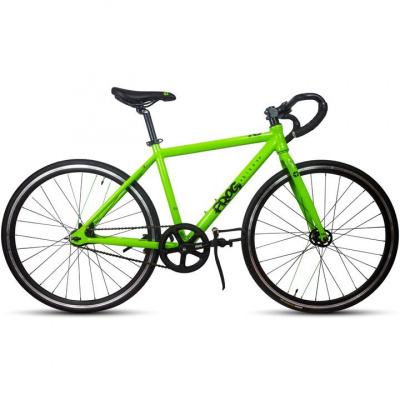
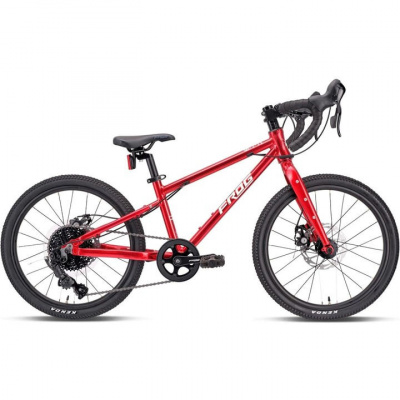
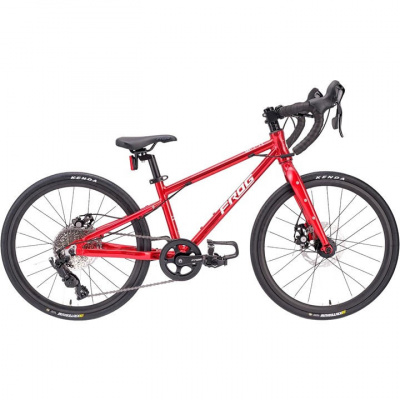
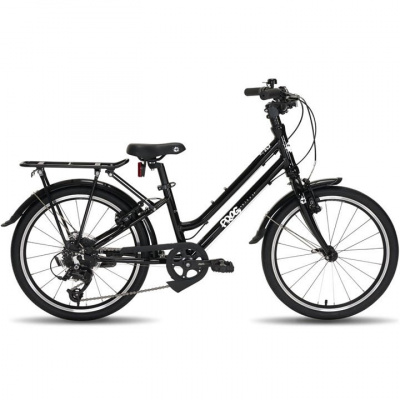
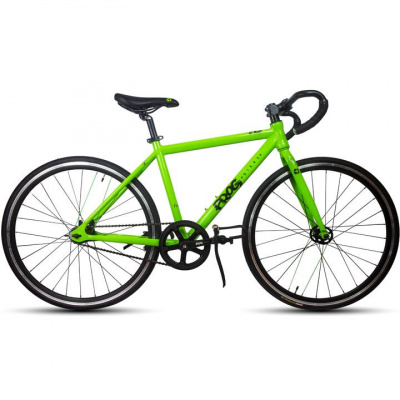
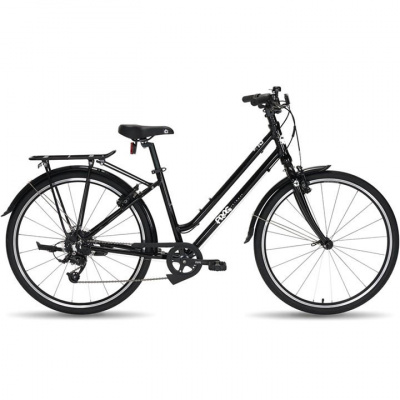
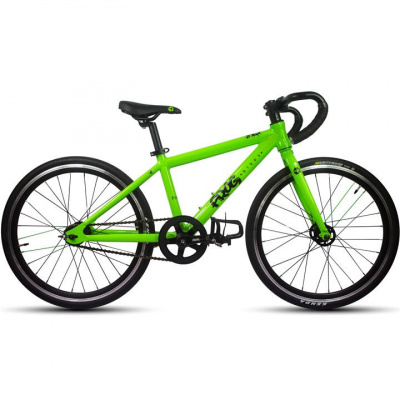
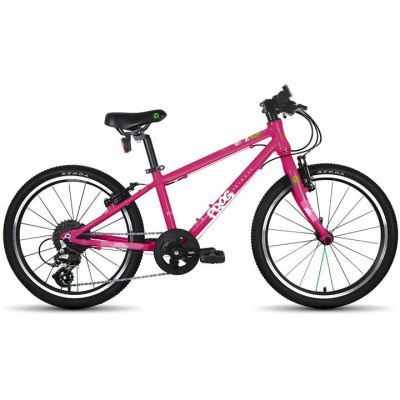
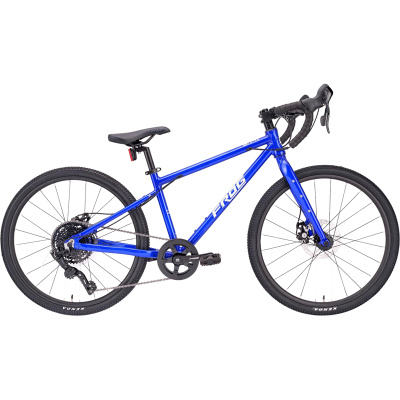
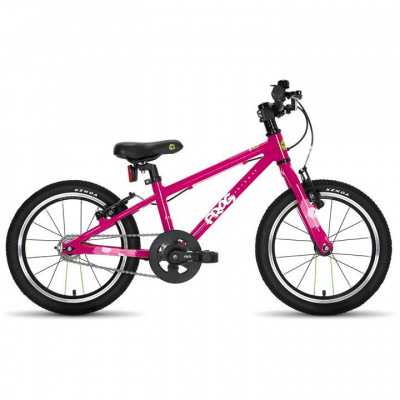
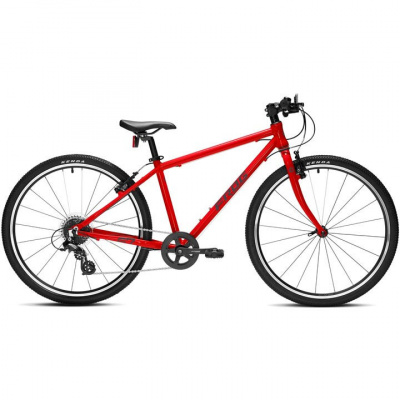
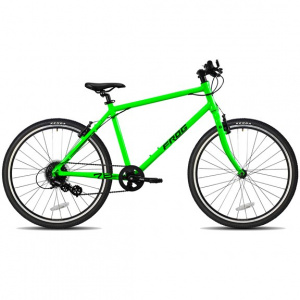
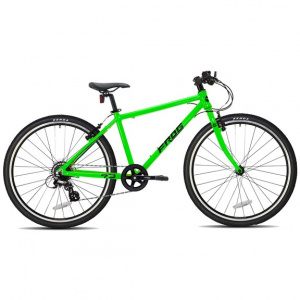
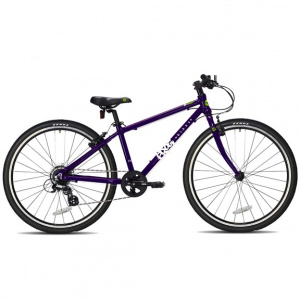
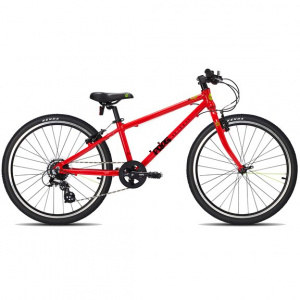
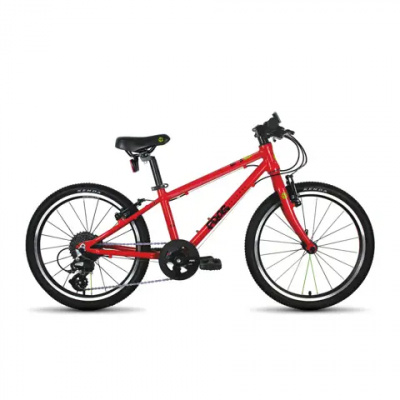
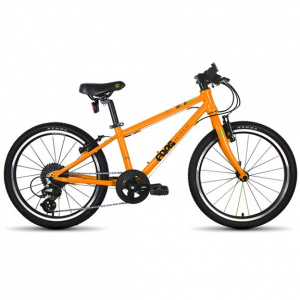
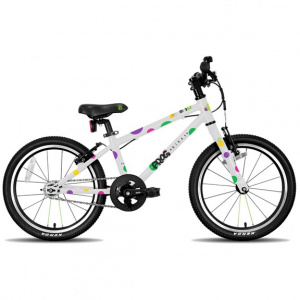
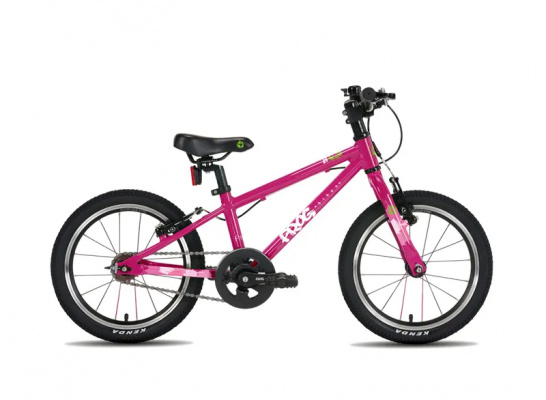
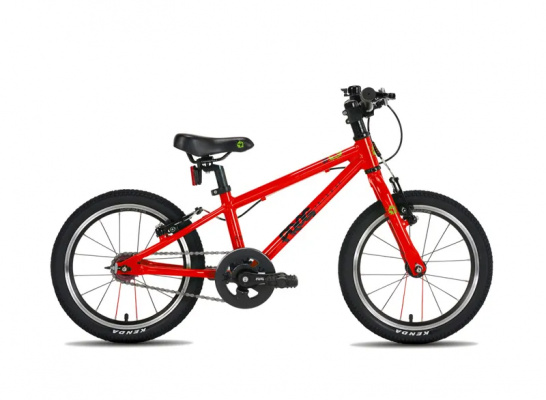
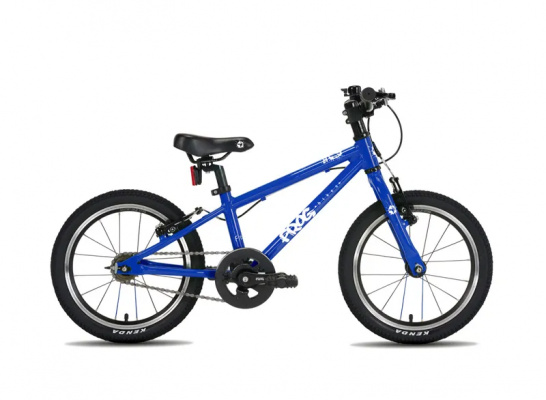
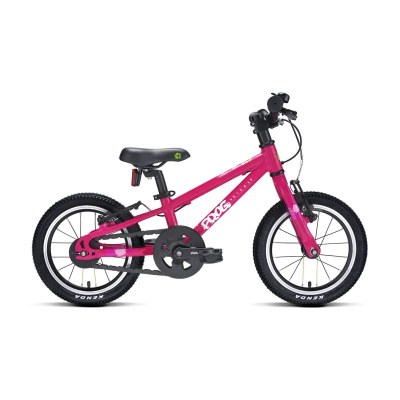
Prices and availability can change quickly. Delivery charges are not always included in listed prices.
Final price, stock status and delivery terms are set by retailer. We may receive a commission on purchases made.
Making Sense of the Frog Range
Frog's naming system is one of the most logical in children's cycling. The number on each bike - 40, 44, 53, 62 - refers to the minimum inside leg measurement in centimetres needed to ride it safely. Forget age brackets. Measure your child's inseam, match it to the number, and you're done. It means a tall five-year-old and a compact seven-year-old might end up on the same bike, which is exactly how it should work.
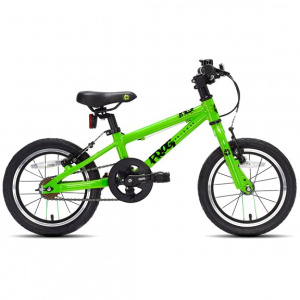
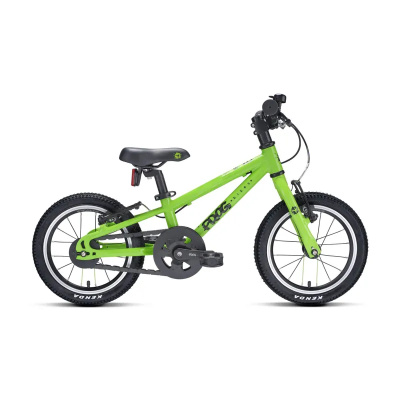
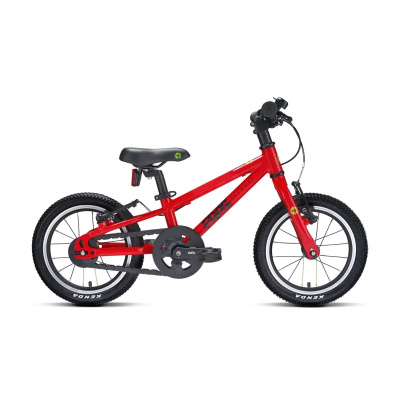
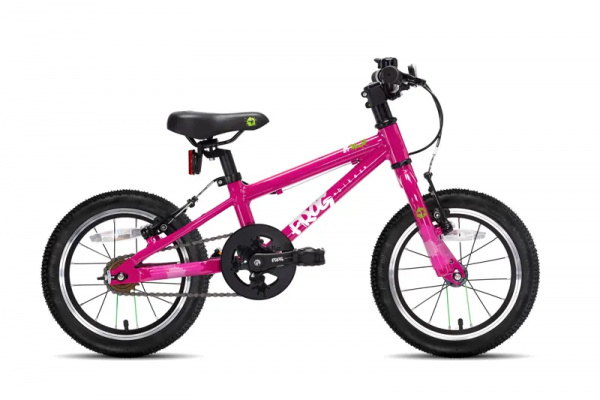
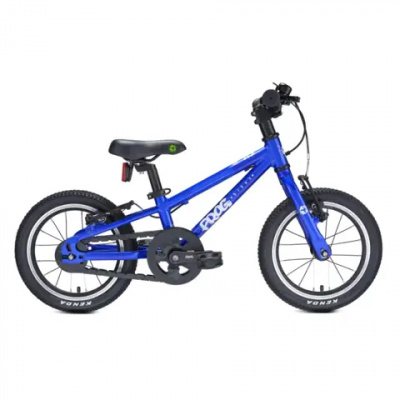
The First Pedal range covers the entry point into pedalling - think Frog 40 and Frog 44. These are the bikes that follow on from balance bikes, designed for riders just finding their confidence. The Frog 40 suits children with an inseam from 40cm, while the Frog 44 steps up proportionally for slightly longer legs. Both share the same child-specific philosophy: narrow Q-factor cranks, short-reach brake levers, and frames scaled to keep weight low. The Frog 40 vs 44 decision almost always comes down to inseam, so get the tape measure out before you decide.
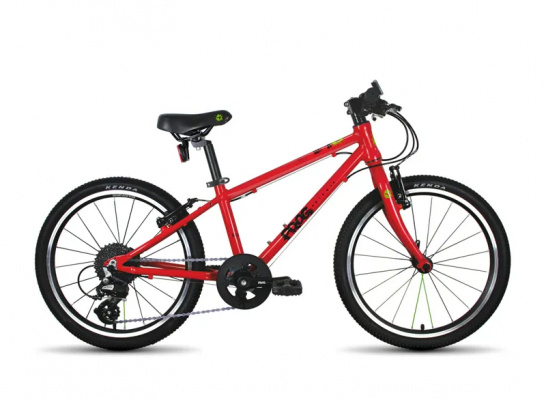
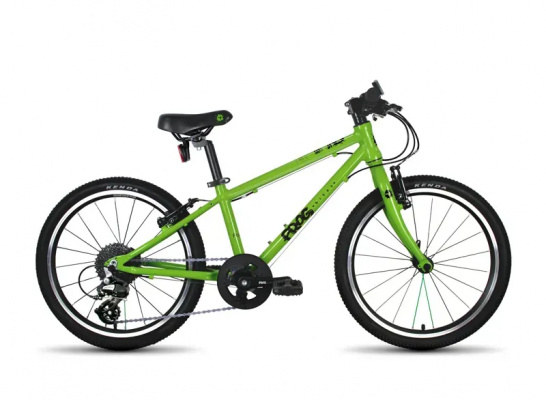
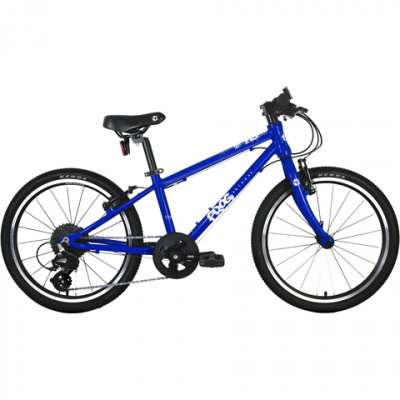
The Hybrid range - Frog 53, Frog 62, and beyond - suits older riders covering more distance. These are practical, versatile bikes: Kenda small block tyres that roll efficiently on tarmac and handle a muddy shortcut without drama, frame eyelets for mudguards and racks, and gearing that actually makes sense for a child's strength. If your child is commuting to school or clocking up weekend miles, this is the range to focus on. If you're weighing up Cube kids bikes or Carrera kids bikes at a similar price point, the key difference is almost always weight - Frog consistently comes in lighter, which younger riders notice immediately.
Frog also makes balance bikes for the very youngest riders, and dedicated mountain bikes, road bikes, and gravel bikes for children ready to specialise - each with geometry and components tuned for those specific disciplines. Those ranges have their own pages where you can dig into the detail.
Why the Engineering Decisions Actually Matter
The detail that separates Frog from most of the market is the patented crank design. Reducing the Q-factor - the lateral distance between the pedal surfaces - brings a child's feet closer together, mirroring natural walking width. On a standard cheap kids' bike, the wide stance forces the hips to rock with every pedal stroke. It looks awkward because it is awkward, and it bleeds power before it even reaches the rear wheel. Frog's cranks fix this at source, making pedalling feel more intuitive from the first go.
The Tektro easy-reach brake levers are another piece of the puzzle that's easy to overlook. Standard brake levers are sized for adult hands. A child pulling a full-sized lever with short fingers and limited grip strength either can't reach it properly or can't generate enough force to stop confidently. Frog's levers are shaped and proportioned for smaller hands, so the reach to the lever blade is shorter and the actuation feels manageable. It's the difference between a child who brakes confidently and one who panics and drags a foot.
Then there's the 6061 T6 aluminium frame. Lightweight kids bikes aren't just a nice-to-have. If a bike weighs 8 - 9kg and the rider weighs 20kg, that bike is nearly half the child's bodyweight. Pushing something that heavy around a car park trying to learn to balance is genuinely exhausting. Frog's aluminium frames come in well below that, which means less effort to get moving, easier handling, and - practically - a bike a child can actually pick up and carry if they need to. The alloy is also sized and shaped proportionally rather than just cut down from an adult template, so the stiffness and ride feel are calibrated for a lighter rider's inputs.
Owning a Frog in the Real World
British cycling conditions are what they are. Bikes live in damp sheds for months, get ridden through puddles on the school run, and occasionally spend a weekend in the back of a muddy estate car. Frog's sealed bottom brackets and rust-resistant hardware handle this far better than the cup-and-cone bearings and bare steel fasteners you'll find on department store bikes. You're not going to be replacing seized components six months in.
The mudguard eyelets are a practical detail worth calling out. Full-length mudguards are non-negotiable for a UK school run, and Frog frames are built to accept them properly - not bodged on with zip ties. Pair the bike with a kickstand and you've got a genuinely functional daily machine for a child, not just a weekend toy.
Resale value is quietly one of Frog's strongest arguments. These bikes hold their price on the second-hand market remarkably well - far better than heavier, cheaper alternatives. A Frog 44 bought for your five-year-old can be sold when they outgrow it and fund a meaningful chunk of the next size up. Over the ownership cycle, the apparent price premium shrinks considerably. That's worth factoring in when you're comparing sticker prices.
Frog bikes are also among the more straightforward to maintain at home. Cables run cleanly, components are quality branded parts rather than unbranded blanks, and finding replacements isn't a hunt through obscure catalogues. If your child is serious about riding, that matters when a brake cable snaps the night before a weekend out.
Frog Bikes Kids Bikes FAQs
What size Frog bike does my child need?
Measure your child's inside leg in centimetres and match that to the bike number - the Frog 44, for example, needs a minimum inseam of 44cm. Age is a rough guide at best; inseam measurement is how Frog sizes their bikes, and it's a much more reliable fit method than any age bracket.
Are Frog bikes worth the money?
For most families, yes. The lighter weight makes learning to ride genuinely easier, the child-specific geometry and brakes make handling safer, and the build quality means the bike lasts. Strong resale value on the UK second-hand market also means you'll recover a decent chunk of the cost when your child grows out of it.
Why are Frog bikes so lightweight?
Frog uses 6061 T6 aluminium for frames and forks - a premium alloy that's strong without being heavy. They also spec scaled, size-appropriate components rather than fitting adult-weight parts to a small frame. The result is a bike that a child can actually manoeuvre without fighting it.