
FFWD Fast Forward Road Wheels
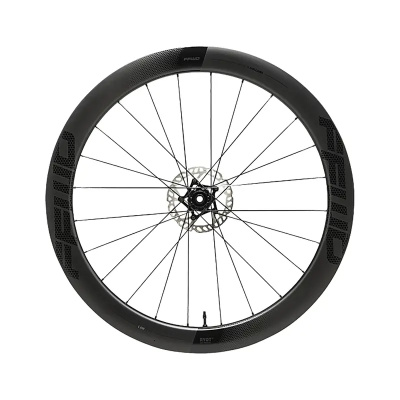
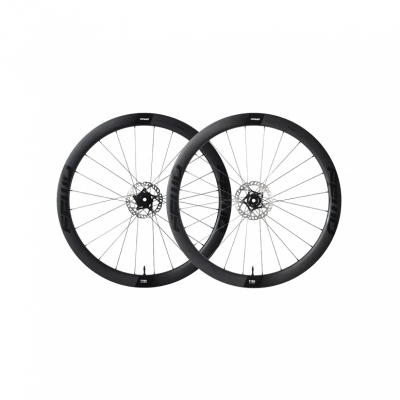
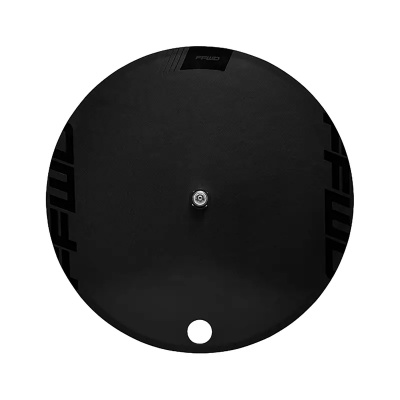
FFWD road wheels are hand-built in the Netherlands, and that Dutch precision shows the moment you start comparing rim profiles and hub specs. Fast Forward has been producing carbon wheelsets long enough to have refined what matters: aerodynamics that hold up in crosswinds, not just in a tunnel, and hub internals reliable enough to survive a British winter without falling apart between services. The proprietary LAW Tech rim profile - short for Laminar Airflow Wing - is the headline act here. It's shaped specifically to work with wider tyres, which also means it keeps its composure when a gust catches you on an exposed ridge road or a fast descent off the moors. Pair that with DT Swiss Ratchet EXP hub internals across most of the range, and you've got a wheelset that transfers power cleanly and can be serviced without sending it back to a workshop. Every current model is tubeless ready from the factory, pre-taped and valved. Whether you're eyeing the carbon-spoked flagship RAW or the versatile RYOT, the spec-to-price ratio across the range is worth a proper look.
Prices and availability can change quickly. Delivery charges are not always included in listed prices.
Final price, stock status and delivery terms are set by retailer. We may receive a commission on purchases made.
Axle Standards, Braking Interfaces, and Freehub Options
All modern FFWD disc brake road wheels run 12x100mm thru-axles up front and 12x142mm at the rear - the standard you'll find on virtually every current disc road frame, so compatibility is rarely an issue. Rotor mounts are Centerlock across the disc range, which keeps things tidy and makes rotor swaps straightforward with a standard Centerlock tool. If your rotor is 6-bolt, an adapter sorts it, though Centerlock is the cleaner solution long-term.
Freehub compatibility covers the three main standards: Shimano HG, SRAM XDR, and Campagnolo N3W. Most FFWD wheels ship with a Shimano HG body as default, so if you're running SRAM AXS or Campagnolo, check which body is included before ordering - swapping is simple on DT Swiss-based hubs, but you want the right part to hand. Riders who need to change standards will find our DT Swiss road wheels page useful for cross-referencing hub body options and spares.
One practical note for anyone running a deep-section RYOT 55 or RYOT 77: the rim depth means standard valve stems won't reach the pump head. Pick up valve extenders before your first tubeless setup session - it's a small thing, but turning up to a sportive without them is a nuisance you don't need.
How the FFWD Range Breaks Down: TYRO, RYOT, and RAW
FFWD structures its road wheel range in three distinct tiers, and the differences between them are mechanical, not just cosmetic.
The TYRO sits at the entry point. It uses conventional round steel spokes and either FFWD's own two-pawl hub or, on some builds, a DT Swiss 350 Ratchet EXP unit. The carbon layup is still solid, and it's a meaningful step up from a stock aluminium wheel, but the hub engagement and overall stiffness don't match what's above it in the range. If you're new to carbon wheels or building a training-specific setup, the TYRO makes sense. Don't expect it to feel like a RAW on a fast descent.
The RYOT is where most riders will land, and it's the wheelset FFWD puts the most range depth into - multiple rim depths, disc and rim brake variants, different hub specs. LAW Tech aerodynamic profiling is standard across the RYOT line, giving it that blunt, wide leading edge that manages crosswind pressure rather than fighting it. Hub options run to DT Swiss 240 or 350 Ratchet EXP internals depending on the build. The 36-tooth ratchet ring in the EXP system gives you 10 degrees of engagement - firm, fast, and very audible. It's the sort of hub that makes budget freehubs feel vague by comparison.
The RAW is the flagship, and it's built around one key difference: in-molded carbon spokes. These aren't bolted on - they're integrated into the rim during manufacture, which removes the spoke nipple flex point and makes the whole wheel measurably stiffer under load. Combined with DT Swiss 180 hubs and CeramicSpeed bearings, the RAW is as close to a dedicated race wheel as FFWD produces. It's lighter, stiffer, and more expensive to repair if something goes wrong. For most UK club riders, the RYOT is the more sensible long-term choice. The RAW is for those who race seriously and want the best FFWD carbon road wheels available.
If you're actually after something for gravel riding or bikepacking rather than road, the specs above don't translate directly - head to our FFWD gravel wheels page instead, where the rim widths and tyre clearances tell a different story.
For context against the wider market, ENVE road wheels and Campagnolo road wheels sit in similar territory at the premium end, each with different hub philosophies and rim construction approaches worth comparing if you're spending at RAW level.
Keeping FFWD Wheels Running Through a UK Winter
The DT Swiss Ratchet EXP system is the reason FFWD wheels stay low-maintenance even after months of wet riding. The freehub mechanism separates into two ratchet rings that can be pulled out, cleaned, regreased with DT Swiss special grease, and reassembled without specialist tools. No pawls to lose down a drain, no fiddly springs. If you ride through winter - and most UK riders do - that ease of access matters more than it sounds when you're cleaning grit out of hubs after a wet Saturday on the lanes.
The internal rim width on FFWD disc road wheels typically runs to 21mm or wider. That dimension matters because it's what allows you to run 28c or 32c tubeless tyres at lower pressures without the tyre folding off the bead under load. A 28c tubeless tyre on a 21mm internal rim, run at 60 - 65psi, absorbs pothole impacts that would pinch-flat a narrower, higher-pressure setup. On UK roads - which range from smooth A-roads to chip-and-tar county lanes that feel like riding across a cattle grid - that compliance makes a real difference to both comfort and confidence.
The DARC (Double Arc) aerodynamic technology appears on FFWD's legacy rim brake models and uses a different dual-curvature approach to the rim sidewall compared to LAW Tech. If you're running an older rim brake frame and considering FFWD, it's worth knowing which tech generation you're looking at, as the rim profiles differ meaningfully in crosswind behaviour. The LAW Tech profile on current disc models is the more refined system for wider tyre fitment.
Compared to options like Mavic road wheels or Fulcrum road wheels, FFWD's reliance on DT Swiss internals gives a serviceability advantage - DT Swiss parts are widely stocked by UK distributors, so you're not waiting weeks for proprietary components. That's a practical consideration worth weighing if you put serious miles in year-round.
FFWD Fast Forward Road Wheels FAQs
Are FFWD road wheels tubeless ready?
Yes. All current FFWD carbon road wheels leave the factory tubeless ready - pre-taped and supplied with valves matched to the rim depth. You'll still need your own sealant, but the setup process is straightforward. On deeper RYOT 55 or 77 rims, check that your valve stems are long enough before you start.
What hubs do FFWD wheels use?
Most of the range runs DT Swiss Ratchet EXP internals - 350-grade on TYRO and entry RYOT builds, 240 on mid-range RYOT models, and 180 on the flagship RAW. Some TYRO versions use FFWD's own two-pawl hub. The DT Swiss-based wheels are the stronger choice for serviceability and long-term reliability.
What is the difference between FFWD RYOT and RAW?
The RYOT uses steel spokes and DT Swiss 240 or 350 hubs - it's the workhorse aero wheel, well-specced and practical across a range of riding. The RAW steps up to in-molded carbon spokes, DT Swiss 180 hubs, and CeramicSpeed bearings. The result is a stiffer, lighter wheel built for racing, with a price and fragility trade-off to match.