
Falcon Mountain Bikes
Falcon Mountain Bikes have earned their place in the sheds and garages of everyday UK riders who want something dependable without spending a fortune. These aren't race-day machines chasing Strava segments - they're practical, robust bikes built for the kind of riding most of us actually do: weekend laps at a family trail centre, muddy canal towpaths, or a commute that doubles as a Saturday morning adventure when the mood takes you.
The range splits broadly between hi-tensile steel and 6061 alloy frames, with front-suspension hardtail and basic full-suspension options to choose from. At this price bracket, Falcon keeps things sensibly simple - Shimano drivetrains, mechanical disc brakes on newer models, and suspension forks that do a reasonable job of softening lumpy ground without demanding constant fettling. That low-maintenance approach is a genuine draw if you just want to ride, not wrench.
Falcon covers men's, women's, and junior sizing too, so there's usually something that fits the whole family without needing to mix and match brands. If you're after pedal-assist off-road riding, our Falcon E-Bikes hub is the better starting point. For everyone else, read on.
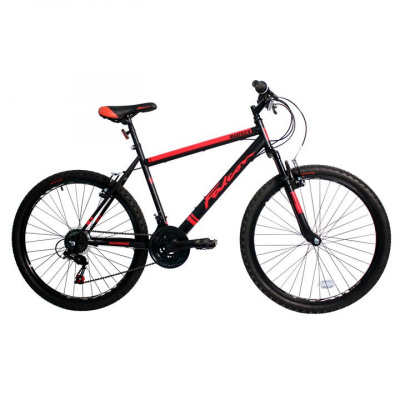
Prices and availability can change quickly. Delivery charges are not always included in listed prices.
Final price, stock status and delivery terms are set by retailer. We may receive a commission on purchases made.
Decoding the Falcon Mountain Bike Lineup
Falcon's range isn't vast, but it covers the bases most entry-level buyers actually need. At the more affordable end, you'll find hi-tensile steel hardtails - heavier than alloy, but genuinely tough and forgiving of the odd knock against a kerb or root. Step up slightly and you're into 6061 alloy frames, which trim a meaningful amount of weight and resist rust better over a British winter. Both constructions are designed for longevity rather than outright performance, which is the right call at this price point.
Falcon hardtail mountain bikes make up the core of what's worth looking at. A hardtail - rear triangle rigid, suspension only up front - is simply more efficient on the kinds of surfaces most UK buyers ride. Canal towpaths, gravel paths through Sherwood Pines, light forest doubletrack: none of that demands rear suspension, and without it you get a more direct, pedal-efficient ride. Every watt you put in goes forward rather than being absorbed by a budget rear linkage that's more compliant than useful.
Falcon does offer basic full-suspension models, and while the idea of bounce front and back sounds appealing, the reality of budget dual-suspension is worth considering honestly. At this price, rear shocks are typically basic coil units with limited adjustability, and the added weight and complexity can work against you on anything other than genuinely rough descents. If you're riding technical singletrack regularly, you'd want to be looking higher up the market - at something like a Carrera mountain bike or a Apollo mountain bike for a comparable step up. For most Falcon buyers, the hardtail is the smarter pick.
Wheel size splits between 27.5-inch and 29er options depending on the model and frame size. Taller riders generally suit a 29er - the larger wheel rolls over obstacles more smoothly and holds momentum on open trails. Shorter riders and younger riders fit better on 27.5-inch, which is more nimble and easier to manoeuvre. It's worth checking which wheel size comes with the specific model you're comparing before buying.
The Falcon Tech Philosophy: Built to Last
Falcon's approach to componentry is straightforward: use proven, widely available parts that riders can maintain without specialist tools or a bike-shop visit every few months. That's not a compromise - for leisure trail riding, it's genuinely the right philosophy.
The 6061 alloy frame on mid-range Falcon models is a workhorse material. It's light enough to not feel sluggish, resists corrosion well (relevant when your bike lives in a damp garage six months of the year), and takes impacts without cracking the way cheaper alloys can. Modern alloy Falcon frames also use integrated headset designs, which keep the front end tight and reduce the number of external parts that can work loose or corrode over time. Small detail, but it matters after a few hundred wet miles.
Gearing across most of the range runs through Shimano Tourney with Shimano Revoshift twist shifters. Revoshift divides opinion among experienced riders, but for a beginner or leisure cyclist it's hard to argue with - intuitive to use, simple to adjust, and Shimano spares are available in virtually every bike shop in the country. If you ever need a new cable or derailleur, you won't be hunting obscure catalogues. Tourney isn't glamorous, but it works and keeps working if you keep it clean.
The move to mechanical disc brakes on newer Falcon models is the single biggest practical upgrade over older V-brake setups. In dry conditions the difference is modest, but drag your wheel through a puddle of gritty towpath water and you'll feel it immediately - discs scrub speed consistently, V-brakes go vague and grabby. For a Falcon men's mountain bike or Falcon women's mountain bike being used through an autumn and winter, that stopping reliability is worth having. Mechanical discs are also easier to adjust at home than hydraulics: a couple of bolts, a few minutes, done.
Compared to brands like Boss mountain bikes or Indi mountain bikes at similar price points, Falcon's component spec is broadly comparable. The differentiator tends to be frame finish and geometry rather than any dramatic spec advantage - so focus on fit and intended use when you're comparing listings.
Living with a Falcon MTB in the UK
British riding chews through budget bikes faster than dry-climate use, so a bit of regular attention goes a long way. The Zoom suspension forks fitted to most Falcon hardtails are basic coil-sprung units - perfectly functional, but they develop stiction (that stiff, sticky feeling when the fork resists initial movement) if you let grime build up in the stanchions. A wipe-down after every muddy ride and a drop of suspension-specific oil on the seals every month or two keeps them moving freely. It takes five minutes and makes a noticeable difference to how the bike feels on rougher ground.
Tyre choice matters more than most people expect on a budget hardtail. The stock tyres on Falcon models are generally adequate for packed gravel and dry trails, but in proper winter mud - the kind you get on towpaths after a week of rain - a slightly knobbier tyre makes a significant difference to grip and control. Most Falcon frames have enough clearance for a modest tyre upgrade without mudguard fouling issues. Worth checking before you order, but usually fine.
Mechanical disc brakes are easy to live with, but they do need occasional pad inspection if you're riding in gritty conditions regularly. Contaminated pads (usually from chain lube overspray or muddy water carrying oil) can cause squealing and reduced bite. Replacing brake pads is a straightforward job - cheaper than a brake bleed, and something you can do in the kitchen. If you're riding through winter, check the pads every four to six weeks.
For commuters who also use their Falcon on weekend trails, a set of Falcon hybrid bikes might actually serve dual-purpose use better - but if the trail riding is the priority and the commute is secondary, the MTB geometry handles both fine. Fit a pair of slicker centre-ridge tyres for the week, swap back to knobbies for Saturday. Simple enough.
On sizing: Falcon uses standard frame sizing, typically 17-inch through to 21-inch for adult models. If you're buying for someone else, measure their inside leg and cross-reference with the stand-over height listed in the spec sheet - that's more reliable than height ranges alone, which can be quite broad on budget bikes.
Falcon Mountain Bikes FAQs
Are Falcon mountain bikes good for beginners?
Yes, genuinely. Falcon mountain bikes are built around simplicity and durability - straightforward Shimano gearing, increasingly disc-braked stoppers, and frames designed to take a knock. For light trails, towpaths, and getting to grips with off-road riding without a big financial commitment, they hit the brief well. Don't expect race-spec componentry, but for learning the basics they're a solid starting point.
What size Falcon mountain bike do I need?
Falcon adult frames typically run from 17-inch to 21-inch. A 17-inch suits riders roughly 5'5" to 5'9"; 19-inch or 21-inch frames suit those over 5'10". That said, always cross-reference stand-over height with your inside leg measurement - height-based size guides on budget bikes can be quite generous, and stand-over clearance is the more reliable check.
Do Falcon mountain bikes come with disc brakes?
Many current Falcon mountain bikes do feature mechanical disc brakes, particularly on alloy-framed models. They offer noticeably more consistent stopping power in wet and muddy conditions compared to V-brakes - important if you're riding British towpaths or trail centres through autumn and winter. They're also easy to maintain at home as pads wear down.