
E Thirteen 11 Speed Cassettes
E Thirteen 11 speed cassettes do something clever: they hand you a gear range that rivals modern 12-speed groupsets without asking you to bin your derailleur, shifter, and chain in the process. That's a meaningful saving, and it's why the TRS+ has built a loyal following among riders who want more capability from their existing 1x11 drivetrain rather than a full system overhaul.
The headline number is 511% gear range, achieved by pairing a 9-tooth cog for fast, open descents with a 46-tooth bailout gear for the kind of climb that has you questioning your life choices. That 9t cog is why you need a SRAM XD driver body on your hub - standard Shimano HG freehubs simply can't accommodate it. Worth confirming before you order.
Underneath the range figures, E Thirteen's two-piece design is doing real structural work: steel where the drivetrain loads are highest, aluminium where saving grams makes sense. It's a sensible split, and it has a practical maintenance upside too - more on that below. If you're weighing up an upgrade to your 11 speed drivetrain, these cassettes are one of the more considered options on the market.
Prices and availability can change quickly. Delivery charges are not always included in listed prices.
Final price, stock status and delivery terms are set by retailer. We may receive a commission on purchases made.
Freehub Compatibility - Get This Right First
Before anything else: E Thirteen 11 speed cassettes require an XD freehub body. The 9-tooth smallest cog is machined to seat directly onto the XD driver's splined interface, which is narrower and longer than a standard Shimano HG freehub. Put plainly, if your hub runs HG or Micro Spline, the TRS+ won't fit. Full stop. Check your hub spec before you start comparing prices - it'll save a frustrating trip back to the post office.
SRAM compatible hubs are the natural home here, though several aftermarket hub brands also offer XD driver options if you're running a non-SRAM wheel. Once the freehub question is settled, the rest of the compatibility picture is straightforward. You'll need a long-cage 11-speed derailleur - the 37-tooth wrap capacity demands it - but that applies whether you're running SRAM 11 speed cassettes or anything else in this range bracket. Standard 11-speed chains from SRAM, Shimano, or KMC all work without issue, which keeps your options open at service time.
It's also worth noting that Shimano 11 speed cassettes and SunRace 11 speed cassettes operate on HG freehubs, so if you're currently running one of those and want to switch to E Thirteen, a hub swap or new rear wheel is part of the conversation.
TRS+ Architecture - Where the Weight Goes
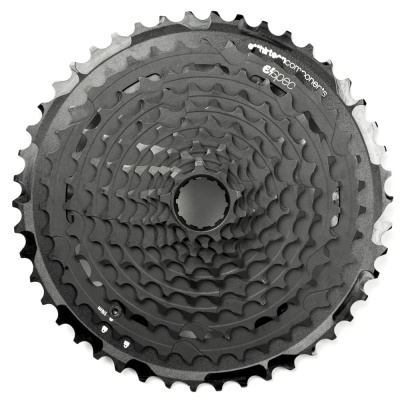
The e*thirteen TRS+ 11 speed cassette is the cassette you're here for, and its two-piece construction is what separates it from simpler designs. The lower cluster - the small cogs you're spinning on descents and flat sections - is machined from a single block of steel. That matters because these cogs take the most punishment: high chain tension, frequent use, and in a UK context, constant exposure to grit-laden water off wet bridleways. Steel handles that loading without deforming.
The upper climbing cogs, from the mid-range upward to the 46-tooth ring, are aluminum cogs - lighter material where the torque demands are lower and the priority shifts to reducing rotational weight. The result is a cassette that's meaningfully lighter than a fully steel alternative without compromising where durability actually counts. Think of it as putting your money where the stress is.
Fastening uses a pinch bolt and lockring tool system that secures both halves to the XD driver. It's a clean installation if you follow the torque spec - and worth doing properly, because a loose interface is where creaks start. If you're pairing this with an E Thirteen chainring, their chainring range is designed with the same drivetrain philosophy in mind and is worth a look for consistency across your 1x setup.
The 9-46t range and its 511% range figure puts it in a different category to a conventional 11-34t or 11-42t cassette. For enduro riding in the Peak District or anything with sustained technical climbing, that bottom gear makes a genuine difference to how you arrive at the top - less wrecked, more in control.
Keeping It Quiet Through a British Winter
Here's where UK riding conditions add a wrinkle. The two-piece interface between the steel lower cluster and the aluminium upper section is a spot where winter mud and grit can work their way in, and once they do, creaking follows. It's not a design flaw so much as a maintenance requirement - one that's easy to manage if you're on top of it.
Disassemble the cassette, clean both mating surfaces thoroughly, and apply a generous layer of Teflon or marine grease before reassembling. Marine grease in particular handles wet, muddy conditions well and stays put through multiple rides. Do this at the start of winter and again mid-season if you're riding regularly through January and February, and you'll likely not hear a peep.
The other practical upside of the two-piece design: you don't have to replace the whole cassette when the smaller steel cogs wear out. After a hard winter of riding gritty North York Moors trails or the Welsh valleys, the lower cluster takes the brunt - and you can buy and swap just that section independently. The best 11 speed wide range cassette MTB riders tend to gravitate toward isn't always the lightest or the most exotic; often it's the one that lets you manage running costs sensibly over a couple of seasons. This design does that.
If you're already running E Thirteen hubs, the compatibility story is particularly tidy - their hub range is built with XD driver options that pair directly with the TRS+ cassette. And if you're considering whether 11-speed is still the right call or whether a full system move makes sense, their 12 speed cassette range is worth comparing before you commit.
One honest trade-off to flag: the XD freehub requirement means the e*thirteen 9-46t cassette isn't a drop-in for every bike. If your hub isn't XD-ready, the cost calculation changes. And while the aluminium upper cogs are durable enough for most riding, riders hammering southern classics like Box Hill repeats in summer grit may find the upper section needs attention sooner than expected. A periodic clean and inspection costs you twenty minutes - far less than a new cassette.
E Thirteen 11 Speed Cassettes FAQs
Does an E Thirteen 11-speed cassette fit a standard Shimano freehub?
No. E Thirteen 11 speed cassettes need an XD driver body to seat the 9-tooth cog correctly. Standard Shimano HG and Micro Spline freehubs won't work. Check your hub spec before ordering - it's the one compatibility question that catches riders out most often.
How do you stop an E Thirteen cassette from creaking?
Creaking almost always starts at the interface between the steel lower cluster and the aluminium upper section. Take the cassette apart, clean both mating faces properly, and apply a good layer of Teflon or marine grease before reassembling. Do this at the start of winter and once mid-season if you're riding in wet, muddy conditions regularly.
Can I replace just the worn cogs on an E Thirteen cassette?
Yes - that's one of the more practical advantages of the two-piece design. The steel lower cluster and aluminium upper section can be purchased and replaced independently. If your smaller cogs have worn through a harsh winter but the climbing gears are still sound, you only pay for the part that actually needs replacing.