
DMR Mountain Bikes
DMR mountain bikes occupy a particular corner of the UK scene that nobody else quite owns - dirt jump credibility, proper hardtail aggression, and frames that treat 4130 chromoly steel not as a budget compromise but as the right tool for the job. Born in Britain, the brand has spent decades refining geometry and spec around the kind of riding that actually happens here: pump tracks on wet November afternoons, chunky northern singletrack, and the sort of heavy landings that sort durable frames from disposable ones.
Whether you're after a complete dirt jumper ready for the skatepark or a hardtail that'll handle a full day on the Twrch or the Megavalanche qualifier, DMR builds bikes with a clear sense of purpose. The range spans from the Sect and Rhythm dirt jumpers through the iconic Trailstar hardtail to the Sled full-suspension enduro bike - each one engineered rather than assembled from a parts catalogue.
If you're planning a custom build from scratch, head straight to our DMR Frames page. Shopping for a younger rider? Our DMR Kids Bikes page is the better starting point.
Prices and availability can change quickly. Delivery charges are not always included in listed prices.
Final price, stock status and delivery terms are set by retailer. We may receive a commission on purchases made.
Mapping the DMR Range: Which Bike Does What
DMR's lineup is tighter than most brands, which makes it easier to read once you know the logic. There are two distinct worlds here: dirt jump and pump track bikes on one side, trail and enduro bikes on the other.
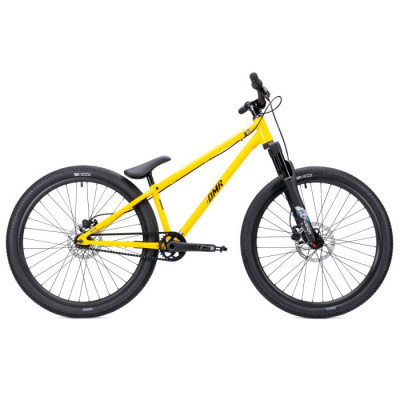
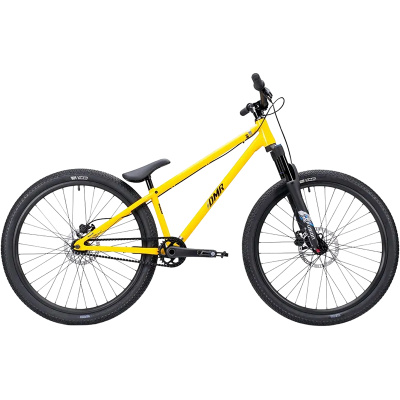
The Sect is DMR's classic dirt jumper. It runs a 4130 chromoly steel frame with geometry dialled for slopestyle and dirt jump lines - low bottom bracket drop for stability in the air, a short rear end for snappy rotations, and a tapered head tube for a stiff front end. It's the bike you see at BikeParks from Bike Park Wales to Dalby, and it's built to absorb the kind of repeated impact that kills lesser frames inside a season. Taperlock dropouts handle chain tensioning cleanly for singlespeed setups, which is the only drivetrain worth running on a dirt jumper.
The Rhythm takes a different approach. Alloy frame, lighter overall weight, and geometry that suits pump track racing and 4X more than big-hit slopestyle. If you're racing a pump track series or want a bike that responds quickly to track features rather than soaking up landings, the Rhythm is the sharper tool. The Sect forgives harder hits; the Rhythm rewards precise technique.
The Trailstar is the hardtail most UK riders think of first when someone says DMR. It uses heat-treated 4130 chromoly steel throughout, and the geometry reflects modern hardtail thinking - longer reach measurements, slacker head angle, low bottom bracket. It's not a cross-country bike. It's built for riders who want a hardtail that won't feel outpaced on blue and red trails. Pro trim levels add higher-end contact points and drivetrain components, while base builds keep costs down without changing the frame underneath.
The Sled is the outlier - 160mm of full suspension travel, designed for enduro and longer days in the rough stuff. It shares DMR's steel philosophy where it can, though the suspension platform is where the real engineering story sits. If you're weighing up something like a Cube mountain bike or a Giant mountain bike at the enduro end, the Sled warrants a serious look for what it does with its suspension kinematics.
Why DMR Builds the Way It Does
The choice of 4130 chromoly steel for the Trailstar and Sect isn't nostalgia. Heat-treated chromoly delivers a strength-to-weight ratio that competes seriously with entry and mid-level aluminium, but it adds something aluminium rarely does at this price: compliance. Steel flexes fractionally under load, which rounds off the harshest trail feedback without asking you to run a suspension fork with extra travel. On a hardtail, that matters across a four-hour ride in the Peak District more than it does in a car park test.
The other practical reality is fatigue life. A well-made steel frame, treated properly, outlasts most aluminium equivalents. DMR builds bikes to be ridden hard and kept - not replaced every two seasons.
The Orbit Link suspension system on the Sled is where DMR's engineering gets more involved. Developed with David Earle, it's a virtual pivot design - meaning the suspension's pivot point is calculated geometrically rather than fixed at a single physical location. The practical result is a bike that resists the tendency to jack up under hard pedalling while staying genuinely active over rough ground. Braking bumps, which can make full-suspension bikes feel deflated on steep technical descents, are handled better because the kinematics isolate braking forces from suspension movement. Oversized collet bearings in the Orbit Link pivots are a specific choice for UK conditions - they resist the grit ingress that eats standard pivot bearings through a wet winter season.
On the Sect and Rhythm, Taperlock dropouts deserve a mention. Singlespeed chain tension is one of those maintenance tasks that becomes tedious on bikes with fiddly dropout systems. DMR's design locks the axle position firmly once set, so you're not re-tensioning every other ride.
Owning a DMR in the UK: The Practical Side
Steel frames and British weather require one piece of maintenance that the manual won't always shout about. Internal rust prevention - a frame saver spray worked in through the bottle cage mounts or other openings - is worth doing once a year if you're riding through autumn and winter. It's a five-minute job that protects a frame you might own for a decade. Don't skip it.
The Trailstar's slender steel tubes are genuinely useful here too. Thin-walled chromoly leaves far more clearance around the tyre than a boxy aluminium frame, which means mud has somewhere to go on a Welsh winter ride rather than packing solid between tyre and seat tube. Running wider rubber or a chunkier tyre in colder months is straightforward.
Sizing dirt jump bikes like the Sect trips up a lot of first-time buyers. These aren't sized like trail bikes. Reach measurements and top tube length matter far more than seat tube height, because you're rarely seated - if ever. A rider who takes a medium trail hardtail might size down on a dirt jumper. Check the reach figure against your preferred riding position rather than defaulting to the same size you'd pick on an XC bike.
The Trailstar fits more conventionally, though the modern geometry runs longer than older hardtails, so riders coming from a compact frame might find themselves sizing down one. Pair the frame with DMR stems and DMR grips and you're keeping the contact points consistent with the frame's intentions. DMR's own pedals and saddles are worth considering too - they're built to the same standard as the bikes rather than specced to hit a price point.
DMR Mountain Bikes FAQs
Are DMR bikes good for dirt jumping?
DMR is as established as it gets in the UK dirt jump world. The Sect and Rhythm are built specifically for pump tracks and dirt jump lines, with geometry and frame construction that handle repeated hard landings. The Sect's chromoly steel frame absorbs impact exceptionally well; the Rhythm's alloy build suits faster, more precise pump track work.
What is the difference between the DMR Rhythm and Sect?
The core difference is frame material and intent. The Sect uses 4130 chromoly steel - more compliant, more forgiving on heavy impacts, better suited to slopestyle and big-hit dirt jumping. The Rhythm runs an aluminium frame, which is lighter and stiffer, making it the sharper choice for pump track racing and 4X where snappy response matters more than impact absorption.
How does the DMR Orbit Link suspension work?
The Orbit Link is a virtual pivot suspension system on the Sled, developed with David Earle. Rather than a fixed physical pivot, the geometry calculates a moving pivot point that keeps pedalling and braking forces largely separate from suspension movement. The result is a bike that stays active on rough ground without bobbing under power or deflecting under hard braking.