
Cube Overshoes
Cold, wet feet end rides early - and Cube overshoes are designed to stop that happening. Built around the kind of wet, gritty, salt-sprayed conditions that define British winter cycling, Cube's range of shoe covers combines serious weatherproofing with the durability and value the brand consistently delivers across its kit line.
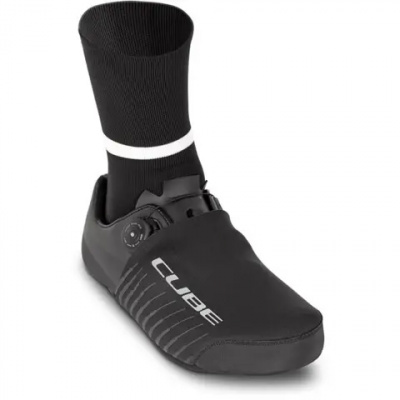
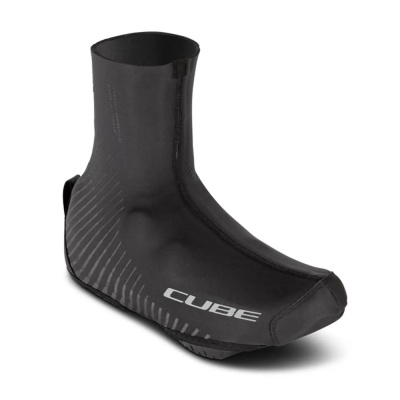
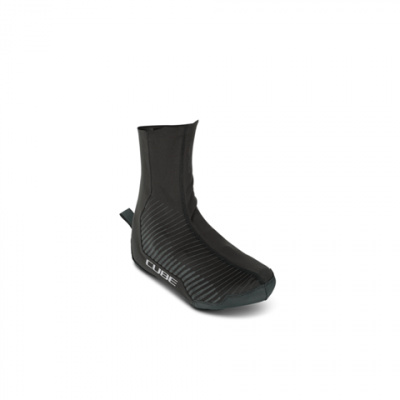
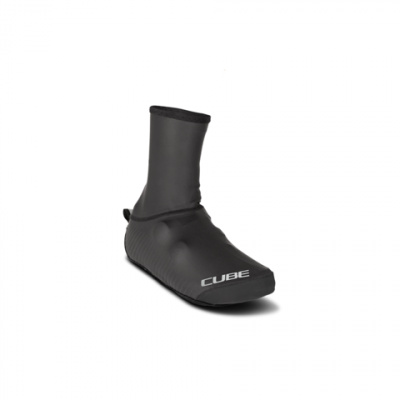
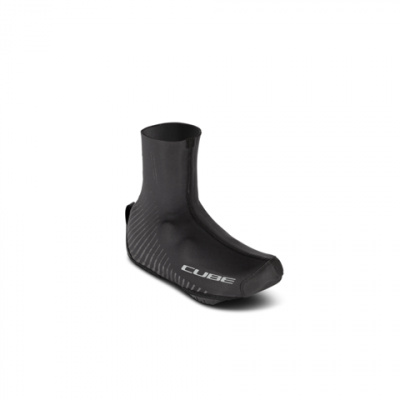
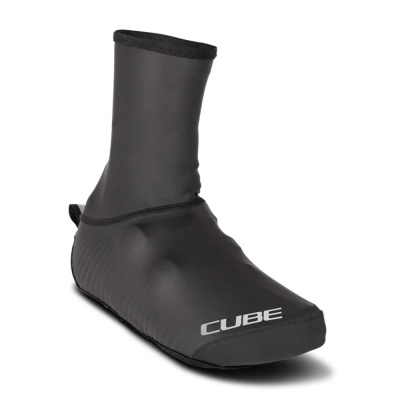
The range splits broadly into two camps. Thicker neoprene constructions handle the deep freeze - January base miles, pre-dawn commutes, mornings when the puddles have a skim of ice. Lighter PU coating-based covers suit the damp, grey days of autumn and early spring, where wind chill and road spray are the enemy rather than outright cold. Both approaches share reinforced wear zones at the toe and heel, plus reflective detailing that matters when you're rolling home in the dark at 5pm.
Whether you're riding road, gravel, or commuting through city traffic, there's a Cube shoe cover sized for your needs. Get the right one and your feet stay in the game all winter. Get the wrong one and you'll know about it somewhere around mile fifteen on a wet Thursday.
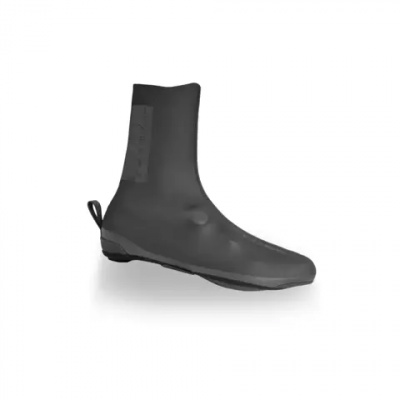
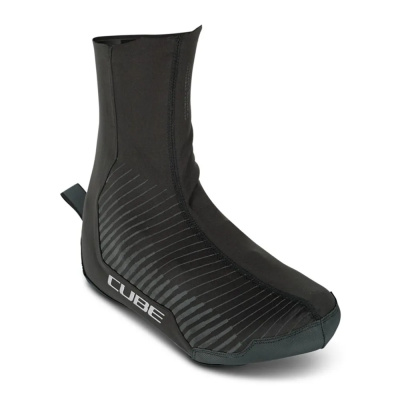
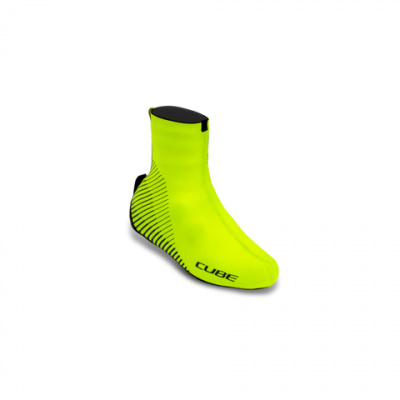
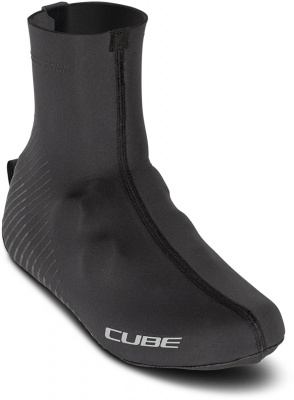
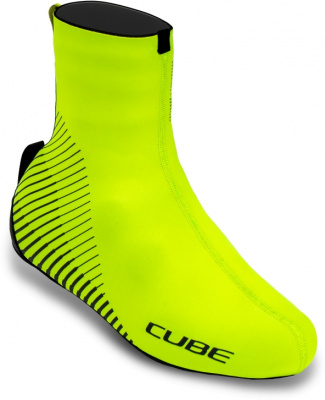
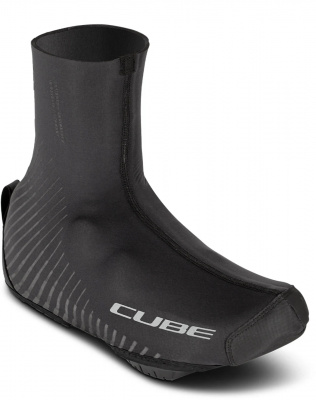
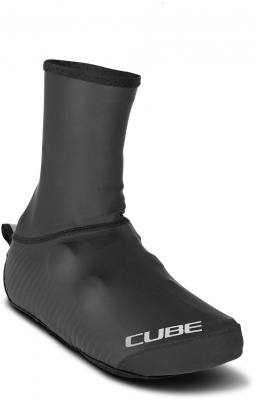
Prices and availability can change quickly. Delivery charges are not always included in listed prices.
Final price, stock status and delivery terms are set by retailer. We may receive a commission on purchases made.
Fabric Tech and Weather Performance
The material choice in any overshoe is the whole story, and Cube keeps it clear-cut. Neoprene is the go-to fabric for serious cold-weather protection - the same principle as a wetsuit. It doesn't stay bone dry in heavy rain, but it traps a thin layer of warm water against your shoe, meaning your feet stay insulated even as conditions deteriorate. On a freezing Peak District loop where road spray is relentless, that retained warmth is what keeps you pedalling through to the café stop rather than bailing at the halfway point.
Lighter Cube covers use a PU coating over a thinner fabric base. That polyurethane layer sheds rain and wind effectively and keeps the overall weight down, which suits riders who don't need maximum thermal insulation - think a soggy but relatively mild October commute rather than a January sufferfest. These covers pack down more easily too, useful if you're carrying kit in a jersey pocket on a ride that might turn wet.
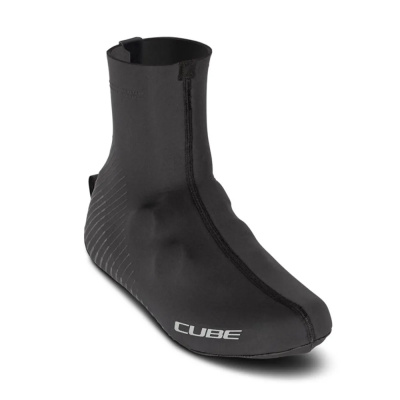
Where Cube puts genuine thought into longevity is at the wear points. Kevlar reinforced toe and heel panels resist the abrasion that comes from putting a foot down at traffic lights or walking across a car park in cleated shoes - the area that destroys cheaper overshoes within a season. Pair that with taped seams on the interior and a water-resistant zipper (typically a YKK-spec closure on better models), and you close off the ingress points that undermine otherwise solid weatherproofing. The zipper placement matters too: rear-entry closures are the most common and easiest to operate with cold fingers, though they do sit in the direct spray line from the rear wheel - another reason taped seams earn their place.
If you want to compare how Cube's neoprene approach stacks up against alternatives, Endura overshoes offer a strong UK-focused range with similar winter intent, while Castelli overshoes lean further into aero-optimised road covers for riders where weight and profile matter more than max warmth.
Fit, Shape and Choosing the Right Model
Cube winter cycling overshoes come in profiles suited to different shoe types, and picking the right one matters more than most riders expect. Road-specific covers are cut tight - a narrow profile that wraps closely around a road shoe's smooth sole, with a small cleat cut-out designed for the two-bolt or three-bolt road cleat geometry. That snug fit isn't just about aerodynamics; it creates a better seal around the shoe and stops the cover flapping at speed.
MTB and gravel covers are a different shape entirely. They're wider through the sole to accommodate the chunkier profile of a flat pedal or SPD shoe, with a larger cut-out that clears the protruding tread blocks typical of off-road footwear. Using a road-profile cover on a mountain bike shoe is a shortcut to a split seam, so it's worth checking the Cube product listing carefully before buying. If you're commuting on hybrid or casual cycling shoes, the MTB-profile covers usually give you more room without sacrificing the fit.
On sizing: base your choice on your cycling shoe size, not your regular shoe size. A snug fit is correct - you want the cover to sit flush against the shoe with no bunching at the toe. However, if you're running particularly bulky MTB kicks or wearing a thermal insole inside your shoe, consider sizing up one full size. Overshoes that are too tight strain the zipper closure and can split at the toe within a ride or two. Too loose and they drum in the wind and let cold air channel underneath.
For a broader look at what else Cube makes to keep your bike weather-ready, Cube mudguards are a natural pairing - particularly for commuters who want to protect the rest of their kit as well as their feet. And if you're riding in low light, Cube lights complement the reflective detailing on the overshoes themselves.
Layering, Pairing and Keeping Them in Good Shape
One thing that catches riders out: overshoes don't exist in isolation. The biggest source of wet feet on a long winter ride isn't rain soaking through the cover - it's water running down your leg and in through the top cuff. Pull your windproof or water-resistant bib tights over the top of the overshoe cuff, not tucked inside it. It sounds obvious once you know, but plenty of riders spend a whole winter wondering why their feet are still getting soaked. That single adjustment makes a significant difference on longer efforts out in the Dales or the Chilterns.
Waterproof overshoes for cycling are also worth pairing with a set of decent thermal socks - the overshoe handles external conditions, the sock handles internal warmth and moisture management. Cube neoprene shoe covers retain heat well, but thermal insulation works better when there's a quality layer between the shoe and your foot to begin with.
Care is straightforward but worth doing properly. Rinse neoprene covers after muddy or salty rides - salt is particularly aggressive on seam tape and zip seals over time. Wash at 30 degrees maximum; fabric softener strips the DWR treatments on PU-coated covers, so skip it entirely. Never dry neoprene directly on a radiator. The heat cracks the rubber and degrades the material fast - hang them somewhere warm and aired rather than blasting them with direct heat. Treated well, a decent pair of Cube overshoes should last multiple seasons.
If you're weighing up alternatives at this point, GripGrab overshoes are worth a look for Scandinavian-grade cold-weather focus, and Spatzwear overshoes lead the field on aero road covers if that's your priority. Cube sits in solid mid-ground - durable, well-spec'd, and priced accessibly for riders who want reliable winter kit without overcomplicating it.
Cube Overshoes FAQs
How do I choose the right size overshoes for cycling?
Go by your cycling shoe size, not your street shoe size. A snug, flush fit is what you're after - no bunching at the toe, no gap at the heel. If you ride with bulky MTB shoes or have added a thermal insole, size up one full size. Overshoes that are too tight put the zipper under stress and tend to split early.
Are neoprene overshoes completely waterproof?
Not completely, no. Water can work in through seams, the cleat cut-out, or run down from your leg in a sustained downpour. But neoprene works like a wetsuit - it traps a thin layer of warm water against your shoe, so your feet stay insulated even when conditions get properly grim. For most UK winter riding, that's enough.
How do you put on tight cycling overshoes?
For zippered covers, shoe goes on first - then pull the overshoe over the toe and stretch it back over the heel before zipping up. For zipperless aero-style covers, thread them up your ankle before your shoe goes on, then stretch them down and over. Trying to force a zipperless cover over a shoe you're already wearing is the fastest way to tear one.