
Cube Bar Bags
Cube bar bags let you push carrying capacity forward without turning your front end into a wobbling mess - and that balance matters whether you're loading a Cube gravel bike for a multi-day Scottish loop or just want somewhere dry to stash a rain jacket on the commute home.
The range leans heavily on Cube's ACID accessory line, which brings welded waterproof construction, secure harness systems, and a modular approach to storage that scales from a compact commuter pouch to a full bikepacking drybag setup. These aren't bags that rely on a DWR coating and hope for the best - the premium models use fully welded seams and PVC-free waterproof materials that hold up when a Welsh hillside decides to empty itself on you mid-ride.
Before you buy, there are two checks worth doing: measure the gap between your shifter hoods if you're running drop bars, and look at how much clearance sits between your front tyre and the underside of where a bag will sit. Get those right and you'll avoid the kind of problems that only reveal themselves at the worst possible moment. We'll walk you through both below, along with how the ACID lineup stacks up and how to protect your frame from grit damage once the bag is fitted.
Prices and availability can change quickly. Delivery charges are not always included in listed prices.
Final price, stock status and delivery terms are set by retailer. We may receive a commission on purchases made.
Fitting Your Cube Bar Bag: Clearances and Cable Routing
Drop bar riders need to measure the internal width between their shifter hoods before committing to a bag. The bag's body must sit narrow enough that both levers can still move fully inward - if it fouls the STI or DoubleTap throw, you'll get incomplete shifts or spongy braking without any obvious cause. Most ACID bags quote a maximum handlebar diameter and overall body width, so cross-reference those figures against your actual bar width before checkout.
Cable routing is the bit people skip and then regret. Gear and brake housings need to run cleanly behind or around the bag - any kinking in a housing will cause ghost shifting on mechanical groupsets and inconsistent lever feel on hydraulic systems. Foam spacer blocks, often included with the better harness kits, push the bag forward on the bar and create a clean channel for cables to sit in without being pinched. Worth fitting them even if the bag feels stable without them.
The tyre clearance check is non-negotiable on anything that sees rough riding. Measure from the top of your tyre to the underside of your stem or bar. Under hard braking or when a loaded fork compresses, that gap closes fast. A bag that clears with an empty fork can rub or lock against the tyre once you've added weight and hit a pothole on the A road down from the moors. Leave at least 50mm of clear air if you're loading the bag with any real weight.
The ACID Lineup: What You're Actually Choosing Between
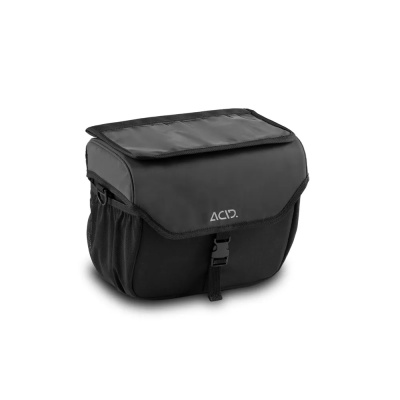
Cube's ACID bar bag range splits into two distinct camps. At one end you have integrated commuter-style bags - fixed-volume, zip-access, lighter mounting systems. Practical for a day bag, but they don't compress down and the waterproofing relies more on coated fabrics than sealed construction. Fine for a dry Tuesday, less convincing when the Peak District grit roads are running with surface water.
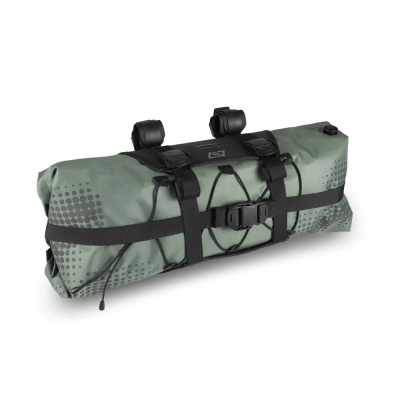
The ACID Pack Pro systems represent the serious end. These pair a dedicated harness system with a separate drybag insert, and the difference in real-world use is significant. The harness uses anti-sway mounting blocks to reduce the pendulum effect that plagues cheaper bar bags on rough tracks - the load stays planted rather than swinging through corners. The drybag itself uses welded construction with PVC-free waterproof materials, so there are no stitched seams for water to work through.
On the premium drybag models, air release valves let you purge excess air before rolling the top closed, which means you can compress the bag down properly and get a genuinely watertight roll-top closure rather than a lumpy, half-sealed cylinder. It also reduces the bag's frontal profile, which matters for handling. The ACID FILink attachment system is worth calling out separately - it's a rapid-mount interface that lets you pull the bag off the bike in seconds without unthreading straps. Useful when you're locking up in town or want to carry the bag into a bothy rather than leave it on the bike overnight.
Integrated MOLLE webbing on select models lets you clip on compatible accessory pouches - a useful slot for a phone, tools, or a compact battery pack without compromising the main bag's seal. If you're comparing against Apidura bar bags or Ortlieb bar bags, the MOLLE integration and FILink system are ACID's clearest differentiators - Ortlieb's seal quality is comparable, but the modular attachment options aren't as developed. Altura bar bags tend to sit at a lower price point with simpler mounting, suited to road commuters rather than loaded off-road riding.
If a single bar bag won't cover everything you need, pairing it with Cube frame bags or a Cube saddle bag gives you a coherent storage system designed to work together, with consistent mounting logic across all three contact points.
UK Conditions, Frame Protection, and Keeping the Bag Working
British riding does specific things to bar bags that a dry-climate review won't flag. The combination of grit, mud, and persistent vibration means that any strap sitting against bare carbon or painted alloy will eventually work like sandpaper. It's not a slow process either - a single winter commute through salted Surrey lanes can leave visible marks if the strap is slightly loose and allowed to move. Apply clear protective film (3M or equivalent helicopter tape) to every contact point before the bag goes on. Handlebars, stem clamp area, head tube if the bag sits close - cover it all. It costs almost nothing and saves a repair bill.
Velcro straps trap grit in their hooks almost immediately in UK conditions. Rinse them after muddy rides and pick the loops clear before the debris dries and sets. A stiff brush works better than water alone once it's dried in. For the roll-top closure, dried mud along the fold line will eventually compromise the seal - keep it wiped down, and if you're storing the bag between rides, leave the roll open so any residual moisture can escape rather than sitting in the fold.
Waterproof zips, where fitted, benefit from an occasional application of zipper lubricant. In winter, a wet zip that freezes in the car park before a ride is a minor irritation; a corroded zip that splits halfway through a trip is not. Glove-friendly buckles on the harness system are worth checking before you buy - the ACID Pro buckles are large enough to operate with winter gloves on, which is a genuine practical consideration once November arrives.
A Cube light mounted to the front of your setup is worth thinking about if you're fitting a bar bag - some mounting positions will block a standard bar-mount light, so check compatibility before assuming your current light position still works with the bag in place.
Cube Bar Bags FAQs
Do handlebar bags scratch your bike?
They can, and grit is the real culprit - particles trapped between a strap and your bar or head tube will abrade the surface as the bag vibrates. Apply clear helicopter tape (3M or similar) to every contact point before fitting the bag, and check straps are snug after muddy rides so they can't move independently of the bar.
How do you fit a bar bag with drop handlebars?
Measure the internal width between your shifter hoods and confirm the bag is narrow enough to allow full inward movement of both levers - fouling the STI or DoubleTap throw causes missed shifts and inconsistent braking. Use foam spacer blocks to push the bag forward, which creates a clean run for cables behind the bag and prevents kinking in the housing.
Are Cube Acid bar bags fully waterproof?
The premium ACID Pack Pro models use welded seams and waterproof PVC-free materials that hold up in genuine heavy rain - they're not relying on a coating that washes off over time. To get a watertight seal from the roll-top closure, roll it at least three times and use the air release valve to purge excess air before closing; a loose or air-filled roll will let water in eventually.