
Compass Mountain Bikes
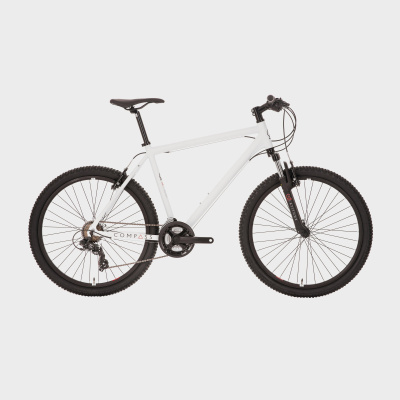
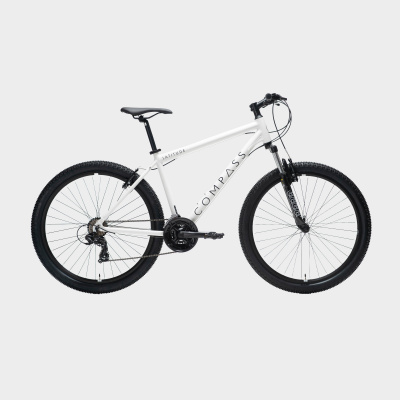
Compass Mountain Bikes deliver accessible, no-nonsense off-road capability for riders who want to get out on UK bridleways and trail centres without the faff. Built around lightweight 6061 aluminium frames and paired with reliable Shimano drivetrains, these hardtails strike a practical balance between performance and serviceability. You'll find mechanical disc brakes for predictable stopping power, front suspension travel that soaks up roots and rocks, and geometry relaxed enough to inspire confidence on descents yet steep enough to keep you efficient when the climb bites. Whether you're threading through the Chilterns on a Sunday morning or tackling fire roads in the Forest of Dean, Compass offers a Compass hardtail MTB or full-size rig that won't leave you stranded with proprietary parts headaches. Models typically arrive in 27.5 inch wheels or 29er geometry configurations, so you can choose the roll-over advantage or the nimble flick you prefer. Ready to get muddy? Pick your frame size, check the stand-over clearance, and you're sorted.
Prices and availability can change quickly. Delivery charges are not always included in listed prices.
Final price, stock status and delivery terms are set by retailer. We may receive a commission on purchases made.
Frame Build & Geometry Breakdown
At the heart of every Compass alloy mountain bike sits a 6061 heat-treated aluminium frame - industry shorthand for a material that punches well above its weight in stiffness and fatigue resistance. Hydroformed tubing, a process that shapes the metal under high pressure, allows engineers to vary wall thickness precisely where stress concentrates, shaving grams without sacrificing structural integrity. The result is a chassis that feels planted when you're wrestling through a rooty descent in the Peaks yet light enough to hoist over a stile without cursing your life choices.
Geometry leans toward the forgiving end of the spectrum. Expect a head angle around 68 - 70 degrees, which slackens the front end just enough to keep the bike stable when speed builds on loose gravel or wet Welsh slate. The seat tube, meanwhile, sits a touch steeper - typically 72 - 73 degrees - to position your weight over the cranks for better traction on climbs. Chainstay length hovers near 430 - 440 mm, offering a middle ground between snappy cornering and straight-line composure. If you're new to off-road handling, this setup won't punish you for being a fraction late on the brakes or slightly off-line through a berm.
Drivetrain & Component Choices
Shimano dominates the component spec across Compass models, and that's a deliberate nod to reliability and parts availability. Entry-level trail bikes in the range often run Shimano Tourney or Altus groupsets - 7- or 8-speed cassettes paired with either a triple chainring up front or a more modern double setup. Triple chainsets give you a wider gear range, handy if you're tackling steep gradients around the Brecon Beacons or the North York Moors, though the overlap between gears can feel redundant once you've got your cadence dialled. Doubles simplify shifting and shed a bit of weight, but you'll need to be comfortable spinning a higher cadence on the climbs.
Mechanical disc brakes - usually Tektro or entry-level Shimano - offer consistent stopping power in the wet, a non-negotiable for British conditions. Cable actuation means you can adjust or bleed them with basic tools in your shed, no hydraulic bleeding kit required. Mounting standards are IS or Post Mount, so sourcing replacement pads or upgrading to a beefier caliper down the line is straightforward. Derailleur hangers are standardised too, which means you won't be hunting for unicorn parts if you clip a rock and bend the hanger on a Saturday ride. For riders weighing up a Carrera or Apollo, Compass sits in similar territory - proven third-party components over proprietary experiments.
Keeping It Rolling Through the Seasons
British weather doesn't do you any favours, so a little preventative care goes a long way. Start with the fork stanchions: after every muddy ride, wipe them down with a damp cloth to stop grit grinding into the seals. Most Compass models ship with coil-spring or basic air forks offering 80 - 100 mm of front suspension travel, and while they won't rival a Pike or a Fox 34, they'll survive neglect better if you keep the lowers clean and add a drop of suspension oil every few months.
Drivetrain longevity hinges on lubrication. Wet-weather chain lube clings longer in the rain but attracts more grime, so you'll be wiping the chain more often. Dry lube works well on hardpack summer trails but washes off fast when the heavens open. Whichever you choose, degrease the cassette and chainrings every few weeks to stop the black sludge building up. Tyre pressure is your secret weapon: drop to 25 - 28 psi for muddy singletrack to maximise grip, then bump it back to 30 - 35 psi for gravel or road sections to reduce rolling resistance. Most Compass frames offer mudguard and rack eyelets, so if you're commuting through winter or linking trails with road stretches, a set of clip-on guards will keep the worst of the spray off your back. If you're after a more road-biased option for the daily grind, the Compass hybrid range shares the same practical ethos.
Accessible Mountain Biking Without the Hype
Compass carved its niche by focusing on riders who want to explore off-road without remortgaging for the privilege. There's no motorsport backstory or wind-tunnel aero claims here - just straightforward engineering aimed at getting you onto trails and keeping you there. The brand's dual-nature approach means a Compass mens mountain bike or Compass womens mountain bike can handle a Saturday loop at Cannock Chase, then swap to slick tyres and ferry you to work Monday through Friday. Rack and fender mounts aren't an afterthought; they're designed in from the start, which sets these bikes apart from pure race hardtails that treat practicality as a dirty word.
Stand-over height and reach figures tend to be conservative, making the bikes approachable for newer riders or anyone returning to cycling after a break. If you're sizing up, a Small typically suits 5'2" - 5'6", Medium covers 5'6" - 5'10", and Large fits 5'10" - 6'1", though inside-leg measurement matters more than height alone - check the geometry chart for exact stand-over clearance. Wheel choice between 27.5" and 29" comes down to preference: smaller hoops accelerate faster and feel livelier in tight switchbacks, while 29ers roll over obstacles more easily and hold momentum on open fire roads. Both work; neither is wrong. For families looking to get younger riders started, the Compass kids' range follows the same serviceability-first philosophy, and if pedalling effort is a concern, the Compass e-bike lineup adds a motor without abandoning the practical DNA.
Are Compass mountain bikes good for beginners? Absolutely. The combination of durable alloy frames, forgiving geometry, and trail-ready components inspires confidence on light trails and fire roads, exactly where most riders spend their first few months. You won't outgrow the bike overnight, but when you do fancy something more aggressive, the resale value holds reasonably well, and every component is standard enough that a new owner can keep it running without specialist knowledge. Compared to brands like Boss or Falcon, Compass leans slightly more toward modern geometry and component choice, though all three occupy the same accessible price band. If you're curious about stepping up to more refined suspension and carbon layups, a glance at Giant or Cube will show you where the next tier lives - but you'll pay for it.