
Cinelli Socks
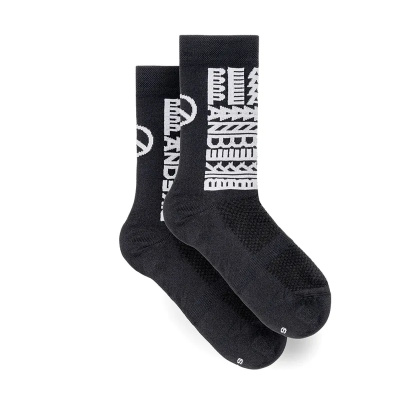
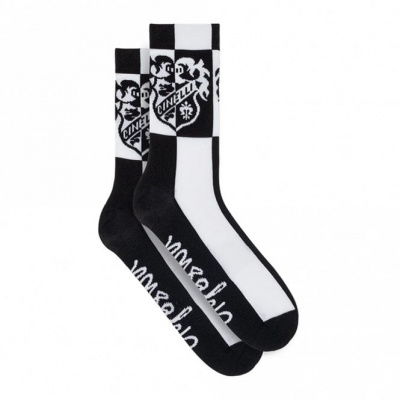
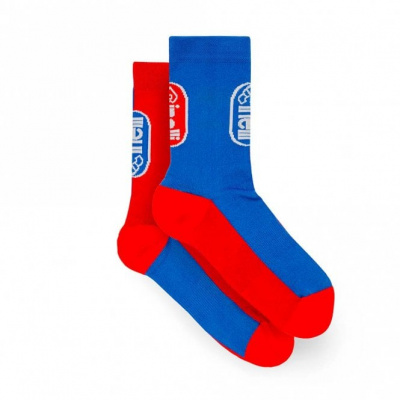
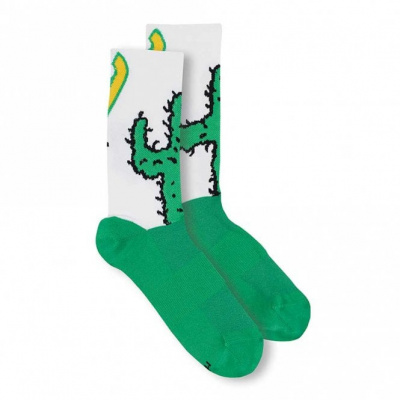
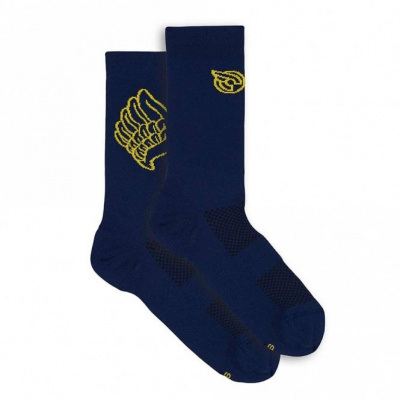
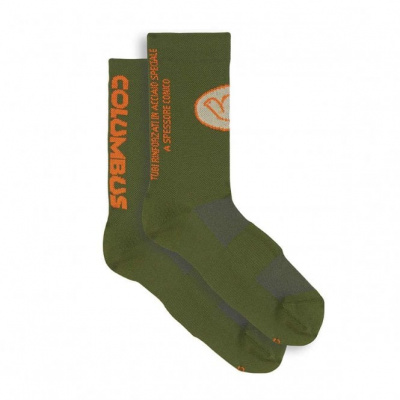
Cinelli cycling socks are one of those small details that quietly do a lot of work - bold graphics, the winged 'C' on the cuff, and underneath all that Italian flair, some genuinely thoughtful fabric engineering. These aren't just finishing touches for your kit. They're built with antimicrobial yarns like Q-Skin and Meryl Skinlife that actively fight odour and bacteria across long days in the saddle, paired with seamless toe boxes to keep blistering off the table and targeted arch compression bands that hold everything in place inside a stiff cycling shoe.
The range covers proper ground. Lightweight, high-cuff aero options suit fast summer riding - criteriums, sportives, anything where you're working hard and your feet need to breathe. Merino blends step in for damp winter base miles, keeping warmth even when things get soggy, which in the UK is a reasonable part of the year. The breathable mesh instep panels are a thoughtful detail on the summer options - useful when you're grinding up a muggy climb and your shoes feel like a greenhouse. High-contrast colourways also add a bit of lower-leg visibility on overcast roads, which matters more than most riders admit. If you're already running Cinelli elsewhere in your kit, these complete the picture neatly.
Prices and availability can change quickly. Delivery charges are not always included in listed prices.
Final price, stock status and delivery terms are set by retailer. We may receive a commission on purchases made.
Fabric Tech and How It Performs on UK Roads
The material story is where Cinelli cycling socks separate themselves from basic polyester options. Q-Skin yarn uses silver-ion technology to disrupt bacterial growth at the fibre level - so rather than just wicking sweat away and hoping for the best, the sock is actively reducing the conditions that cause odour in the first place. Meryl Skinlife works on the same principle, combining moisture management with antimicrobial action. Both yarns are woven into the fabric structure rather than applied as a coating, so the effect doesn't wash out over time the way surface treatments can.
On warm UK summer days - the kind where you're crawling up a long drag in still, humid air - the breathable mesh instep panels make a real difference. They create airflow through the top of the foot where heat builds fastest, keeping the overall temperature inside the shoe more manageable. It's not magic, but it's noticeably better than a plain knit all the way round.
For winter, Cinelli's Cinelli merino cycling socks bring thermoregulation into the equation. Merino wool retains warmth even when damp, which is exactly the property you need on a January morning in the Peaks or a wet February loop through the Chilterns. The trade-off is that merino takes a little longer to dry and needs more careful washing - but for base miles in cold conditions, it's the right call. If you're coming from a pure synthetic background, the feel is noticeably softer underfoot. Worth the switch for those months.
Fit, Cuff Heights and Getting the Size Right
Cinelli socks run with a compressive fit - snug through the arch and around the ankle, designed to sit flat inside a cycling shoe without bunching under the ball of the foot. That matters more than it sounds. A wrinkled sock inside a carbon-soled shoe creates pressure points over distance, and no amount of quality yarn fixes that. The compressive construction keeps the fabric where it's supposed to be, even during hard efforts when your foot swells slightly.
Cuff heights range from around 15cm on classic styles up to 18cm on the more contemporary Cinelli aero socks. The taller cuff is partly aesthetic - it's the current look in road cycling - but there's a marginal aerodynamic argument too, smoothing the transition between sock and leg at speed. For most riders, the practical difference is minimal, but if you're racing crits or time-trialling, it's a consideration worth making.
On sizing: Cinelli uses standard European shoe sizing, and the socks generally come up true to size. If you're sitting on the border between two sizes, go smaller. A slightly smaller sock will compress correctly and sit flat; the larger option tends to fold around the toe box, which defeats the point of the seamless toe construction. Check the size chart against your shoe size rather than your foot length - that's the more reliable reference point. This is a good moment to cross-reference with a Cinelli road bike or Cinelli gravel bike if you're building a full Cinelli setup - the brand's sizing philosophy is consistent across the range.
Compared to something like Castelli socks, which also run a compressive race fit, Cinelli tends to lean into bolder colourways and graphic-led design rather than subtlety. DeFeet offer a broader range of weights and constructions if you want more granular weather-specific choices, while GripGrab skew slightly warmer and more utility-focused for year-round commuters. Cinelli's niche is riders who want Italian design integrity alongside the performance fabric - the look and the function, not a compromise between them.
Caring for Your Socks Through a UK Season
Getting the most out of these socks across a full year of UK riding is partly about how you wash and store them. For summer options, washing at 30 degrees is the rule - hot washes degrade the elastic fibres that create the compressive fit, and they can reduce the effectiveness of the antimicrobial yarns over time. Skip the fabric softener entirely; it coats the fibres and blocks the moisture-wicking channels, which turns a breathable sock into something closer to a clammy liner. Air dry rather than tumble drying, and they'll hold their shape and stretch for considerably longer.
For the merino winter versions, the same logic applies - cool wash, no softener, air dry flat if possible. Merino is more resilient than its reputation suggests, but heat is its enemy. Handle the wash cycle right and these socks will last multiple seasons without losing their shape or loft.
On the shoulder seasons - March, October, that uncertain stretch where it can be 8 degrees at the start and 16 by midday - the summer socks pair well with a lightweight neoprene or windproof overboot if your feet run cold. You get the breathability of the sock without sacrificing warmth at the extremities. For deep winter, layer the Cinelli winter cycling socks under a proper neoprene bootie and you've got a genuinely capable setup for wet, cold miles. If you're putting together the full cold-weather picture, Cinelli's headwear range works alongside these for a consistent approach to layering across the extremities.
One practical note: keep a separate pair for turbo or indoor sessions. The heat and static environment of an indoor trainer produces a different kind of sweat load - and rotating your socks extends their life noticeably.
Cinelli Socks FAQs
Are Cinelli cycling socks true to size?
Generally, yes - Cinelli socks follow standard European shoe sizing and come up true to size for most riders. If you're between sizes, size down. The compressive fit works best when the sock sits taut and flat inside your shoe; the larger size tends to fold slightly at the toe, which undermines the seamless toe construction.
What materials are used in Cinelli cycling socks?
Summer options typically blend polyamide and elastane with Q-Skin or Meryl Skinlife antimicrobial yarns, giving you moisture-wicking performance and odour resistance without a coating that washes out. Winter versions bring merino wool into the mix for thermoregulation in damp, cold conditions - warmer than pure synthetic and effective even when wet.
How tall are the cuffs on Cinelli socks?
Most current Cinelli styles run between 15cm and 18cm cuff height. The taller 18cm options align with the modern aero sock look and offer a marginal aerodynamic benefit at speed. Classic styles sit closer to 15cm. Either way, the cuff is high enough to read cleanly on the bike and improve lower-leg visibility on overcast UK roads.