
Cinelli Road Bikes
Cinelli road bikes sit at a genuinely interesting crossroads: decades of Italian racing culture filtered through modern Columbus carbon engineering, wrapped in artwork that makes most peloton-standard builds look anonymous. Founded in Milan in 1948, Cinelli shaped professional road cycling long before carbon fibre existed, and that obsession with ride feel hasn't softened. What you get today is a range that spans full-gas aero machines and lightweight all-rounders to approachable endurance builds - each one carrying a frame philosophy that prioritises how the bike communicates with the road, not just how stiff or light it measures on paper.
For UK riders, that matters. Our roads aren't smooth Continental tarmac. You need a bike that can push hard on a Surrey climb without dissolving into vagueness, but won't rattle your fillings loose on a frost-heaved B-road descent. Cinelli's carbon layup work and geometry choices address that balance more deliberately than most brands at this price point. If you're planning a custom build rather than a complete bike, our dedicated Cinelli Frames page is the better starting point. Otherwise, the complete builds below cover every corner of what the range offers.
Prices and availability can change quickly. Delivery charges are not always included in listed prices.
Final price, stock status and delivery terms are set by retailer. We may receive a commission on purchases made.
Decoding the Cinelli Road Bike Range
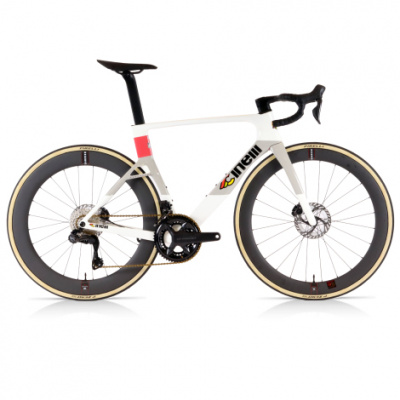
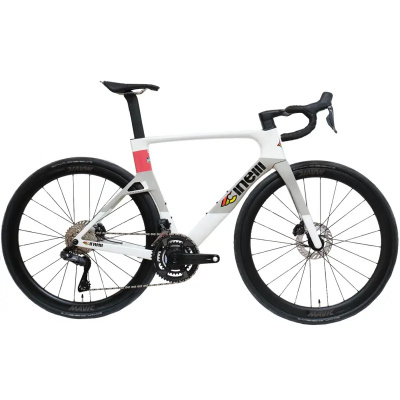
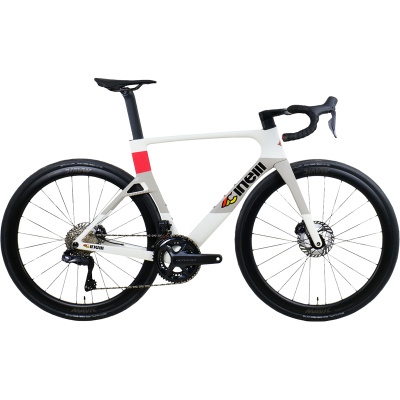
Three families do most of the work here, and they're more distinct than you might expect. The Cinelli Pressure is the pure aero road bike - fully integrated cable management, an aggressive racing geometry with a low front end, and a frame shape designed around tube profiles that reduce drag rather than save weight. This is the one for riders who want to go fast on flat or rolling routes and don't mind a position that demands some flexibility. Think criterium finishing sprints and timed sportive segments rather than five-hour Alpine days.
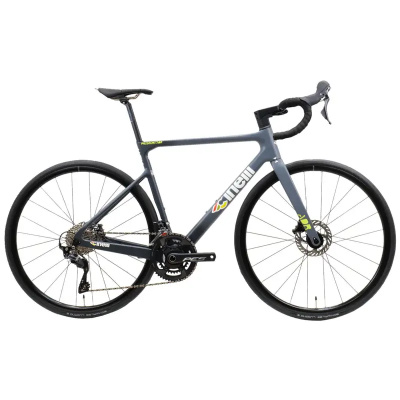
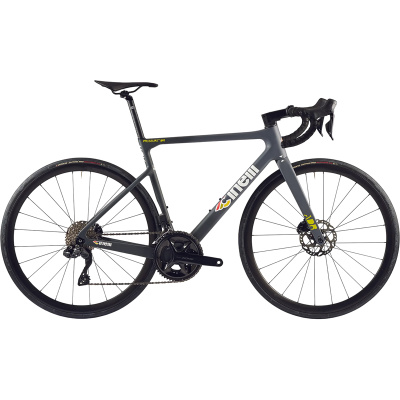
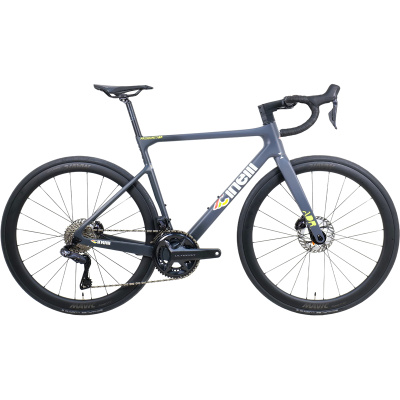
The Cinelli Superstar is arguably the most characterful bike in the range. It's a lightweight all-rounder with a stage-race geometry - not as slammed as the Pressure, but still purposeful - and it carries Cinelli's signature kinked top tube, which we'll get to in a moment. If you're doing mixed riding across a season: club runs, hillier sportives, the odd fast group ride - the Superstar is the bike that makes the most sense most of the time. Thinking about the Cinelli Superstar vs Pressure debate? The short version is: Pressure for speed-focused flat riding, Superstar for versatile all-round performance.
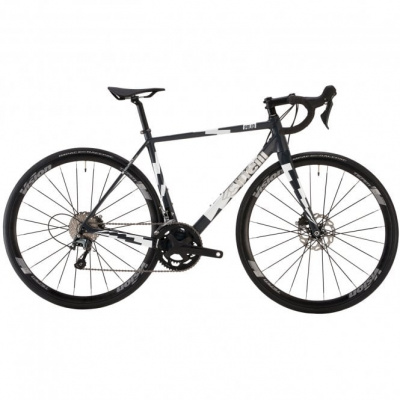
The Cinelli Veltrix is the entry point into Cinelli carbon road bikes. Stack is slightly taller, reach a touch shorter, and the geometry puts you in a more upright position than either of the bikes above. For riders building fitness, returning after a break, or simply wanting a comfortable platform for longer days without sacrificing the brand's characteristic liveliness, the Veltrix review consensus is consistent: it over-delivers at its level. It's also the most forgiving choice for rougher UK road surfaces. Beyond road, if drop-bar riding is pulling you in different directions, it's worth a look at our Cinelli Gravel Bikes page - or, for something completely different, the Cinelli Singlespeed & Fixie Bikes range if urban riding is part of the picture.
What Columbus Carbon Actually Does for the Ride
Cinelli's in-house Columbus carbon division is the technical backbone of these bikes, and it's worth understanding what separates it from generic Asian-sourced carbon construction. Columbus uses T700 and T800 carbon fibre grades - T800 being the stiffer, higher-modulus material typically reserved for areas that need to resist flex under hard pedalling loads. The key process is CCL (Combed Carbon Layering), where individual carbon sheets are oriented in specific directions before the monocoque frame is formed. The result is a frame that responds crisply to power input rather than feeling vague or springy - characteristics that can plague cheaper carbon builds. It's the difference between a frame that feels alive under you and one that just feels light.
On the Cinelli Pressure, the ACR (Aerodynamic Cable Routing) system routes all cables and hydraulic hoses fully internally through a proprietary handlebar-to-stem-to-head-tube interface. This isn't just aesthetics - clean internal cable routing genuinely reduces drag at speed, and the integrated approach also means the front end looks cohesive rather than cluttered. The trade-off is that internal routing maintenance takes longer, particularly if grit and salt work their way into the system over a British winter. Factor that into your ownership plan.
The Superstar's most discussed feature is its kinked top tube. That deliberate bend in the tube isn't a styling choice - it functions as a controlled deformation zone, allowing the rear triangle to absorb road chatter without introducing lateral flex under pedalling load. GCD (Geometry Control Design) is Cinelli's term for this approach: managing where and how the frame moves, rather than trying to make it completely rigid everywhere. On broken tarmac through a Lincolnshire fenland road or the rougher patches of the North Yorkshire Moors, you'll feel the difference over three or four hours compared with a frame that just transmits everything straight to your hands and backside.
Running a Cinelli on UK Roads - What to Know
Tyre clearance first, because it matters more than most buyers check before purchase. Both the Superstar and the Veltrix comfortably accept 28mm tyres, which is the minimum we'd recommend for most UK riding. That extra width softens the impact of potholed B-roads, reduces the risk of pinch flats, and gives you more confidence on wet descents - all without meaningfully affecting rolling speed on road surfaces. The Pressure runs narrower, which suits its intended use on smoother event roads, but factor that in if your regular routes are rough.
The BB86 press-fit bottom bracket that features across the Cinelli range is efficient and light, but it does have a known sensitivity to contamination. A creaking BB after a wet winter is a common complaint with press-fit systems in general, not specific to Cinelli. Keep it clean, regrease the shell during annual servicing, and it'll behave. If you're buying to use Cinelli road bikes year-round in the UK, build that maintenance step into your routine from the start rather than diagnosing the creak later.
For fit and feel, the cockpit is worth personalising early. Cinelli's own components integrate particularly well with these frames - Cinelli Handlebars are designed to complement the ACR system on the Pressure and sit proportionally on the Superstar, while Cinelli Bar Tape adds vibration damping and grip that stock builds sometimes skip on. Small changes, but they make a longer ride noticeably more comfortable. And if you want the full Italian aesthetic from the wheels up, the Cinelli Socks are worth a look - detail counts when the rest of the build is this considered.
If you're weighing up Cinelli against other Italian road bikes at a similar level, the comparisons worth making are with Basso Road Bikes and Colnago Road Bikes - both strong options with their own carbon layup approaches and geometry philosophies. Bianchi Road Bikes sit in a similar cultural space if heritage and ride character matter to you alongside the spec sheet. Cinelli's differentiator is the CCL carbon work and the Superstar's kinked-tube damping system - no direct equivalent exists in the Basso or Bianchi ranges at this price point.
Cinelli Road Bikes FAQs
Are Cinelli bikes still made in Italy?
Cinelli is a historic Milan-based brand, but their modern carbon frames are manufactured in Taiwan to strict Columbus carbon specifications. Painting, finishing, and final assembly take place in Italy. It's a common arrangement across premium Italian road bike brands - the provenance is Italian, even if the carbon moulding isn't.
Is the Cinelli Superstar an endurance bike?
Not exactly - it's a lightweight all-rounder with a stage-race geometry rather than a pure endurance stack. The kinked top tube absorbs road buzz and reduces fatigue over long rides, making it well-suited for UK sportives and big days out, but the position is still more committed than a dedicated endurance bike like the Veltrix.
What is the difference between the Cinelli Pressure and Superstar?
The Pressure is built around aero road geometry and fully integrated ACR cable routing - it's for riders who prioritise outright speed on flat to rolling routes. The Superstar is lighter, more versatile, and uses the kinked top tube to soften road vibration. If your riding is varied, the Superstar is the more practical choice for most UK conditions.