
Campagnolo 11 Speed Cassettes
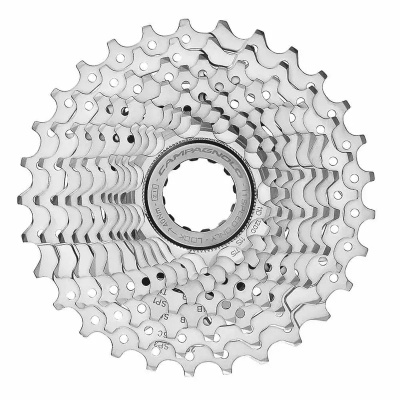
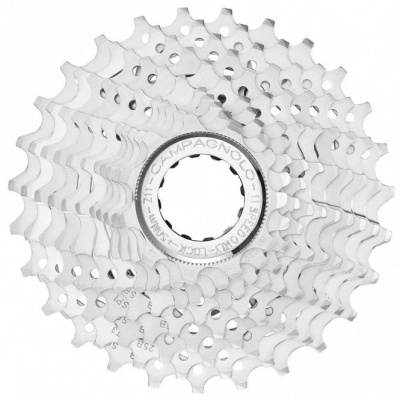
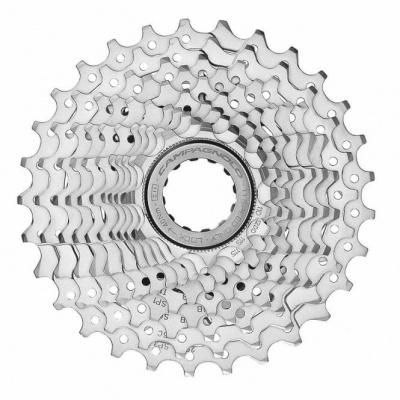
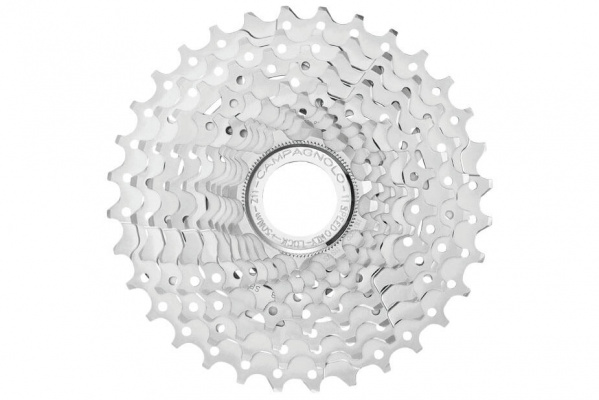
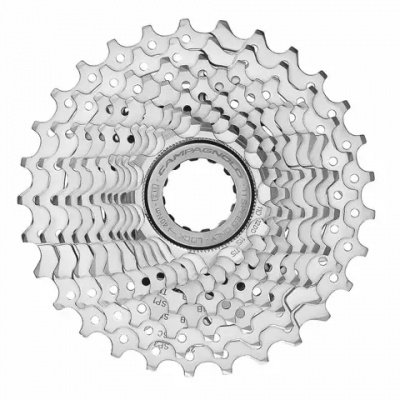
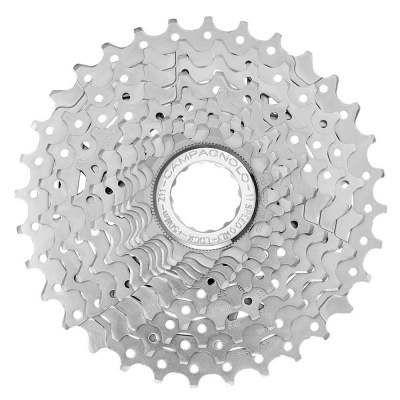
A Campagnolo 11 speed cassette is the component that makes that famously crisp, mechanical shifting actually happen - and when it's worn, even the best Italian groupset starts to feel like a gearbox full of gravel. Campagnolo's proprietary Ultra-Shift teeth design and sprocket synchronization geometry aren't marketing noise; they're what allow the chain to move cleanly across the block under load, mid-climb, when you're already breathing hard. Swap those for a worn-out cluster and you'll feel every missed shift in your knees.
Whether you're replacing a tired block on your winter training bike or stepping up to a titanium-sprocket cassette ahead of a hilly sportive, getting the ratio and the tier right matters. The range spans from the robust all-steel construction of Centaur and Chorus - workhorses that shrug nothing, they simply last - through to the featherweight Record and Super Record options where rotational weight is a genuine consideration. UK riders also need to think about ratio: steep, punchy climbs across the Peaks or the Brecon Beacons make a case for wider 11-32T gearing that a flat-road block simply can't cover. We compare UK prices across the full Campagnolo 11-speed cassette range so you can match the right block to your bike, your riding, and your budget.
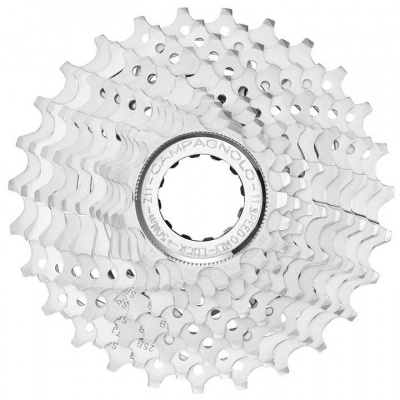
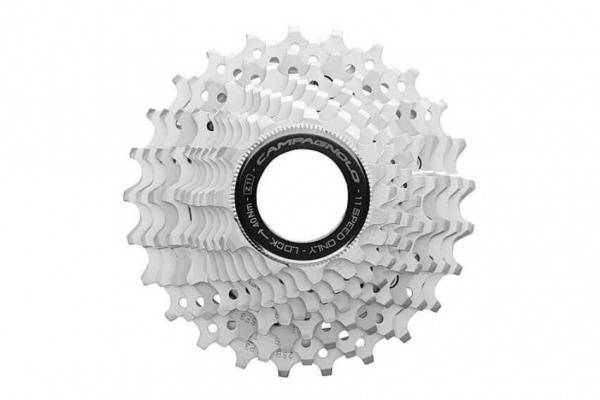
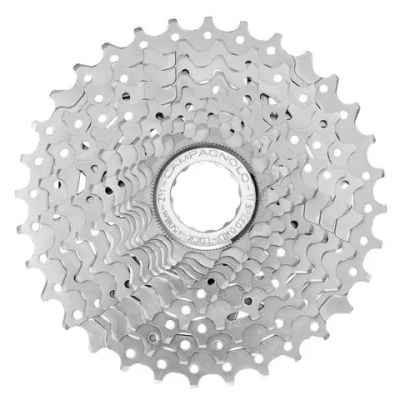
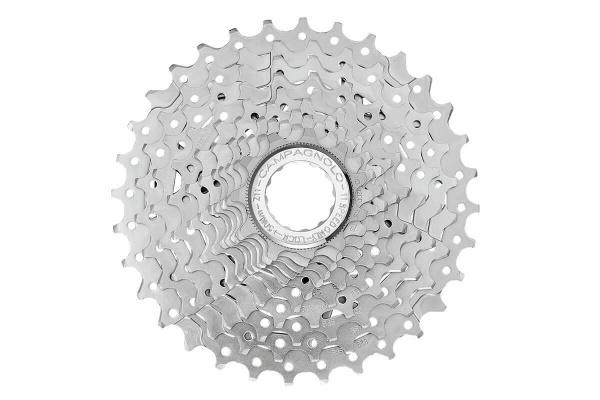
Prices and availability can change quickly. Delivery charges are not always included in listed prices.
Final price, stock status and delivery terms are set by retailer. We may receive a commission on purchases made.
Compatibility Matrix: Getting the Right Fit Before You Buy
Campagnolo's freehub spline pattern is deeper and shaped differently from Shimano's HG standard - the two are not interchangeable. A Campagnolo 11-speed cassette physically will not seat correctly on a Shimano freehub body, and vice versa. That's not a caveat buried in a manual; it's the first thing to confirm before you order. If you're running a Campagnolo-compatible wheel - whether that's a Campagnolo hub or a third-party hub built to Campagnolo's spline spec - you're good. If you're unsure, check the freehub body markings or ask your wheel manufacturer directly.
Derailleur cage length is the next variable that catches people out. A short cage rear derailleur - common on higher-end builds - maxes out at a 29T sprocket. If you want to run a Campagnolo 11 speed cassette 11-32 for climbing, you need a medium cage derailleur. Campagnolo's own 11 speed rear derailleurs are clearly specced by cage length, so cross-reference before purchasing. Potenza and Centaur groupsets typically ship with a medium cage as standard, which is one practical reason they suit UK riders who want wider ratios without a separate derailleur purchase.
One more thing: if you're moving to a larger cassette, check your chain length. Going from an 11-25T to an 11-32T block often means adding a link or two, otherwise you'll run out of derailleur travel under load. It's a two-minute job with a chain tool, but easy to overlook until you're already on the road.
Steel vs. Titanium: Choosing Your Tier
Campagnolo's 11-speed cassette range splits broadly into two material philosophies, and understanding that split saves you money and frustration. Centaur and Chorus use all-steel sprockets throughout, finished with a nickel-chrome surface treatment that reduces friction and extends service life. They're heavier than the top-tier options - nobody's pretending otherwise - but they wear predictably, they're significantly cheaper to replace, and they respond well to consistent cleaning and lubrication. For most riders doing year-round miles, they're the rational choice.
Record steps things up with three titanium sprockets on the most-used positions of the block. Super Record runs six titanium sprockets. The weight saving is real - rotational mass matters more than static mass on the bike - but titanium sprockets wear faster than steel under abrasive conditions, and the cost-per-replacement is considerably higher. If you're building a dedicated summer race or sportive bike and you're fastidious about cleaning, Record or Super Record makes sense. If you're covering mixed miles in variable conditions, the Chorus all-steel construction is a more considered buy. Brands like Shimano and SRAM follow broadly similar tier logic, though their freehub standards differ, as noted above.
The sprocket synchronization geometry - the precise ramp and pin placement that guides the chain from sprocket to sprocket - runs across all Campagnolo tiers. You're not losing the shifting character by going Centaur over Super Record. What changes is weight and wear rate, not the fundamental feel of the drivetrain. That's worth saying plainly, because it's often obscured by groupset marketing.
For riders considering alternatives, Miche produces Campagnolo-compatible 11-speed cassettes that can offer a cost-effective middle ground, particularly for training wheels where you'd rather not put a Record block through a Pennine winter.
UK Conditions, Wear Rates, and Keeping It Running
UK road grit - particularly the salt and sharp aggregate that coats roads from October through March - acts as a grinding paste on drivetrain components. Steel cassettes handle this better than titanium; the harder surface resists abrasion more effectively when contaminated chain lube turns to a fine grinding compound. If your winter bike is doing regular wet miles in the Peak District or out on the Somerset Levels, an all-steel Chorus or Centaur cassette is the pragmatic spec. Save the titanium-sprocket Record build for your dry-weather machine.
The single most effective maintenance habit for any Campagnolo 11-speed drivetrain is chain wear monitoring. Replace your Campagnolo 11 speed chain at 0.5% wear - not 0.75%, not when it starts skipping. At 0.5% the cassette sprockets are still within tolerance; push past that and the chain begins to hook the sprocket teeth, wearing a profile into the block that a new chain won't mesh with cleanly. A worn cassette that needs replacing because of a neglected chain costs considerably more than a chain checker and the discipline to use it.
When it comes to removal and refitting, Campagnolo cassettes use a splined lockring with a different pattern to Shimano or SRAM - which means you need the correct Campagnolo-specific lockring tool. Torque it to 40Nm. Under-torquing risks the lockring backing off under load; over-torquing can damage the freehub splines. A proper torque wrench and the right tool are a one-time purchase that protects a component worth considerably more. Don't improvise with a Shimano tool - the spline engagement is different enough that you risk rounding the lockring.
On the question of the best Campagnolo 11 speed cassette for climbing: the Campagnolo 11 speed cassette 11-32 ratio is the widest available in the range and genuinely useful on longer, steeper days out. Paired with a medium cage derailleur, it gives you a bail-out gear without requiring a compact chainset. If you're running a standard double and tackling anything resembling a proper Welsh or Scottish climb, that 32T sprocket earns its place.
Campagnolo 11 Speed Cassettes FAQs
Can I use a Shimano 11 speed cassette with a Campagnolo drivetrain?
Technically the 11-speed sprocket spacing is close enough that it can limp along in a pinch, but shifting won't be crisp and you'll accelerate wear on both the chain and sprockets. For anything beyond a roadside emergency fix, stick with a Campagnolo-compatible cassette on a Campagnolo freehub - the spline pattern is different anyway, so fitment on the wrong hub body isn't guaranteed.
What is the maximum cassette size for Campagnolo 11 speed?
The widest cassette in Campagnolo's 11-speed range is 11-32T. Running it requires a medium cage rear derailleur - a short cage unit maxes out at 29T. Check your derailleur spec before ordering the larger block, and budget for a chain length check at the same time.
Do I need a specific lockring tool for Campagnolo cassettes?
Yes - Campagnolo's cassette lockring uses a different spline pattern to Shimano or SRAM tools. Using the wrong tool risks rounding the lockring and damaging the freehub. Get the correct Campagnolo-specific tool, torque to 40Nm, and you won't have trouble. It's a worthwhile one-off investment.