
Bz Optics Sunglasses
BZ Optics sunglasses solve a problem most cycling eyewear brands quietly ignore: what happens when you need to read your Garmin mid-climb but your distance vision is fine and your reading glasses are back in the car? BZ Optics built the world's first photochromic bifocal cycling glasses specifically for this, and the result is a range that handles both jobs without compromise.
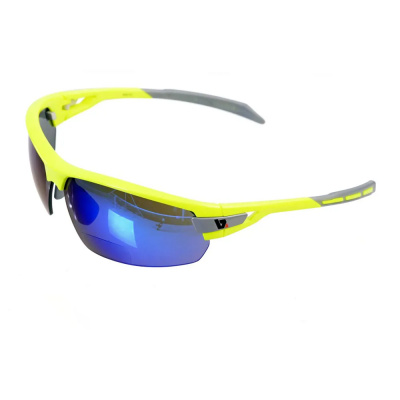
The concept is straightforward. A discreet magnification zone sits at the bottom of the lens - you glance down to check your power numbers or navigate a route, then look up and your distance vision is completely unobstructed. Pair that with photochromic lenses that react to shifting UV levels, and you've got eyewear that moves with you from a grey morning start to a bright afternoon finish without you ever reaching into a jersey pocket.
For UK riders, that combination matters more than it might elsewhere. Our weather doesn't follow a script. You can roll out under flat, overcast skies, hit a canopied lane that drops the light further, and emerge into sharp low sun within the same half-hour. BZ Optics lenses are built around exactly that kind of day. The TR90 polymer frames are light, tough, and flexible enough to survive a fumble in the car park. This is practical eyewear with a very specific, very useful point of difference.
Prices and availability can change quickly. Delivery charges are not always included in listed prices.
Final price, stock status and delivery terms are set by retailer. We may receive a commission on purchases made.
Lens Technology and Weather Performance
The photochromic lenses in BZ Optics glasses work by reacting to UV light - darken in bright sunshine, clear back down when the light drops. What makes them well-suited to UK riding is the speed of that transition. Move from open road into tree cover on a Peak District descent, or duck under a railway bridge on a winter commute, and the lenses adjust within seconds rather than leaving you squinting or stumbling. That's the practical difference between a lens that transitions and one that transitions quickly.
Flat, grey light - the kind that sits over most British rides from October through March - also strips contrast from the road surface, making it harder to spot potholes or wet patches. The photochromic coating doesn't just manage brightness; it adds definition in low-light conditions where a clear lens would leave you underprotected and a dark lens would be genuinely dangerous. UV400 protection is standard across the range, which matters even on overcast days when UV exposure is higher than most riders expect.
Humidity is the other British constant. Damp air, a hard climb, a warm face - it's a recipe for condensation on the inside of a lens, and that can blind you faster than any weather. BZ Optics address this with an anti-fog coating on the lens interior, combined with a water-repellent finish on the outside that sheds spray and rain rather than letting it pool. The two coatings work together: one keeps the inside clear, the other keeps the outside clean. On a wet Welsh trail or a soggy Surrey commute, that combination earns its place.
Making Sense of the BZ Optics Range
BZ Optics run a focused range built around their core bifocal and photochromic proposition, with a few distinct models covering different needs. The BZ Optics PHO is the photochromic bifocal - the one that does everything - and it's where most riders in the market for vision correction and light adaptability will land. The BZ Optics Tour is the non-photochromic bifocal option, aimed at riders who ride primarily in consistent light conditions and want the reading segment without the transition lens tech. Then there's the BZ Optics RX, which accepts an optical insert for riders with a full prescription rather than just a near-vision top-up.
Choosing between the Tour and PHO comes down to one question: do you ride in variable light? If your rides regularly mix bright and shaded sections - and most UK rides do - the PHO is the clear choice. The Tour makes sense if you're predominantly a sunny-day, open-road rider who just needs that bifocal segment to check a screen. The RX is a different conversation entirely, designed for riders whose distance vision also needs correction, making it one of the more practical prescription cycling glasses options available in the UK without going bespoke.
The TR90 polymer frames used across the range are worth a specific mention. TR90 is a thermoplastic that flexes under impact rather than snapping - useful if you've ever sat on a pair of glasses or had them fly off in a crash. The frames are also notably light, which matters on longer days when even small pressure points become distractions. Adjustable nose pieces let you dial in the fit for your face shape, and the non-slip temple grips keep everything in place once you're sweating. If you've worn glasses that migrate down your nose on a climb, you'll know exactly why that detail matters. Compared to something like Oakley sunglasses, BZ Optics frames are more narrowly focused on the correction and adaptation problem rather than aero or sport-performance styling - that's a considered trade-off, not a shortcoming.
The bifocal magnification comes in three strengths: +1.50, +2.00, and +2.50. Matching these to your existing reading glasses is the simplest approach - if your off-the-shelf readers are +2.00, start there. The magnification zone is moulded directly into the lower portion of the lens rather than added as a clip or separate element, which keeps the profile clean and avoids any optical distortion at the transition point between zones. Brands like 100% sunglasses and KOO sunglasses offer strong photochromic options, but neither brings a moulded bifocal segment to the table - that remains BZ Optics' specific territory.
One honest trade-off: the range prioritises function over fashion. These aren't the glasses you'd choose if you wanted a wraparound aero look or a bold colour story. The lens aperture is slightly more traditional in shape, which some riders will find less immersive at the sides compared to wider-shield designs from Endura sunglasses or Madison sunglasses. If peripheral coverage is a priority - particularly for fast road descents - it's worth factoring that in.
Keeping Your Lenses in Good Condition
Photochromic and anti-fog coatings are sensitive to abrasion and harsh chemicals. The biggest mistake riders make is wiping a gritty lens on a jersey - you're essentially dragging fine road debris across a coated surface, and over time that degrades both the coating performance and the optical clarity. It's the sort of thing that seems fine in the moment and then six months later you're wondering why your glasses look hazy.
The correct approach is simple: rinse with lukewarm water first to float off any grit, then use the microfibre pouch that comes with the glasses to wipe gently. Cold water works too, but avoid hot water near the lens coatings. Keep the pouch clean - a gritty pouch is almost as damaging as a gritty jersey. Store the glasses in their case rather than loose in a jersey pocket, and avoid leaving them on a dashboard in direct sun for extended periods, which can accelerate the degradation of the photochromic chemistry over time.
Don't use household glass cleaner or alcohol-based products on the lenses. These strip anti-fog coatings quickly and leave photochromic lenses patchy. Warm water and the microfibre cloth will handle the vast majority of cleaning jobs perfectly well.
Bz Optics Sunglasses FAQs
Are bifocal cycling glasses useful?
Genuinely, yes - especially if you're riding with a GPS head unit. The moulded magnification zone at the bottom of the lens lets you read your Garmin, Wahoo, or phone screen clearly without affecting your distance vision at all. Glance down, get the data, look up. No fumbling, no stopping, no squinting.
How fast do Bz Optics photochromic lenses transition?
Fast enough to be useful in practice - we're talking seconds rather than minutes. Ride from open road into a shaded lane and the lens is already adjusting as you enter. For UK riding, where you can move between bright sun and deep tree canopy in a single stretch of road, that response time is what makes photochromic lenses worth having over a fixed tint.
How should I clean my cycling sunglasses?
Rinse with lukewarm water to shift any grit, then wipe gently with the supplied microfibre pouch. Never drag a dry, dirty lens across a jersey or use alcohol-based cleaners - both strip the anti-fog and photochromic coatings over time. Keep the pouch clean too, or it becomes part of the problem rather than the solution.