
Brompton Rucksacks
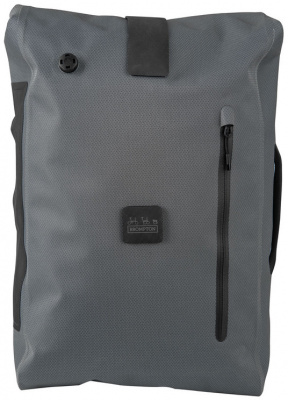
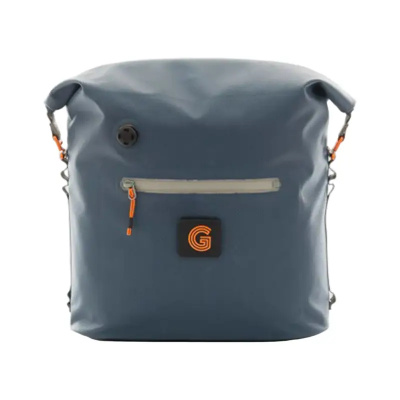
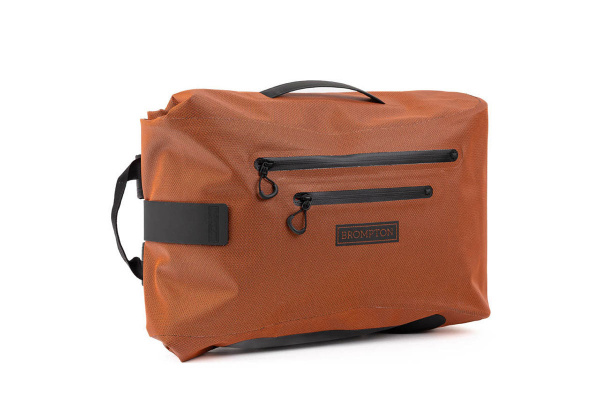
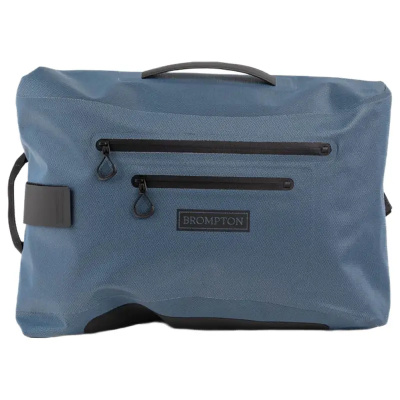
Brompton rucksacks are designed from the ground up to work with the bike, not against it. Wear a standard backpack on any folding bike and you're fighting two problems at once: your centre of gravity creeps up, and by the time you reach the office your back looks like you've swum there. Brompton's answer is to move the load off your body entirely, clipping the bag directly onto the front carrier block so the weight sits low and forward, right where it stabilises the steering rather than unsettling it.
The clever bit is the removable internal luggage frame built into the bag's back panel. On the bike, it locks onto the block and holds firm over cobbles and kerbs. Off the bike - folded, tucked under your arm, or rolling through a station - the bag works as a proper backpack, no faff, no adapters. The frame just stays hidden inside.
Built from Cordura fabric and Repreve recycled PET fabrics with DWR treatment, these bags are made to take UK winters seriously: road grit, spray, dark mornings, the lot. Reflective detailing helps when the light goes early in November, and a stowed high-visibility rain cover is there for the days when the forecast lied. If you're weighing up the best Brompton backpack for commuting, this is where to start.
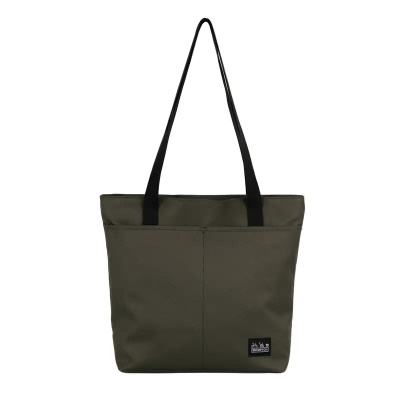
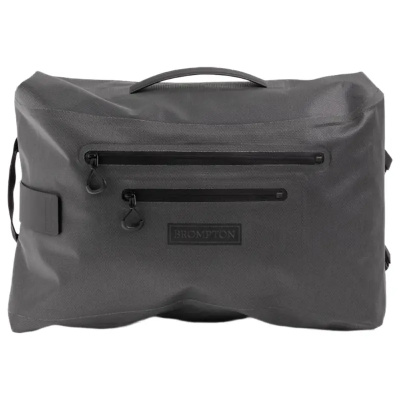
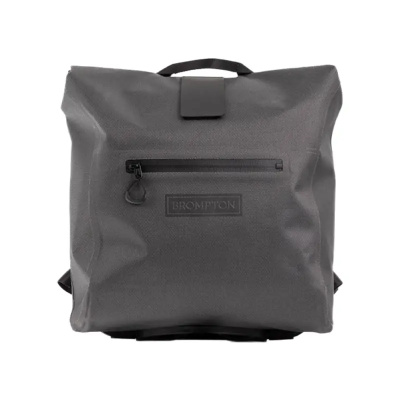
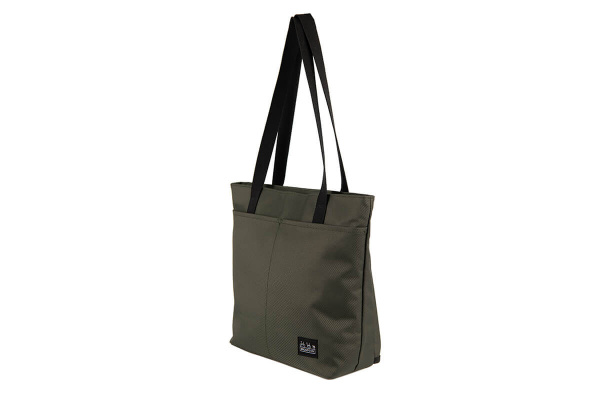
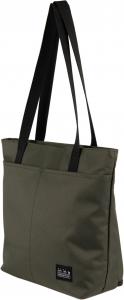
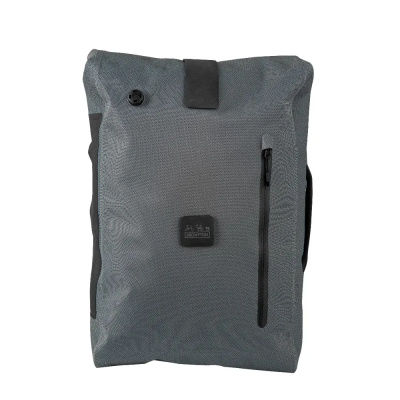
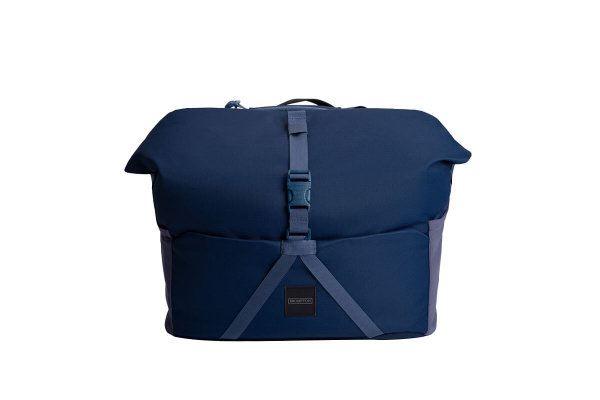
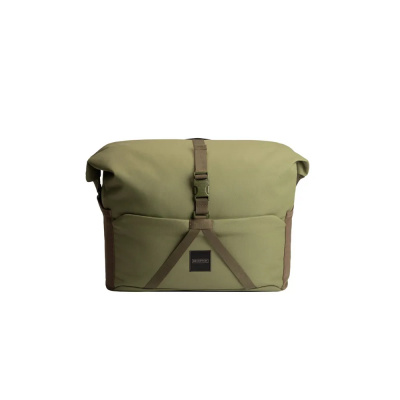
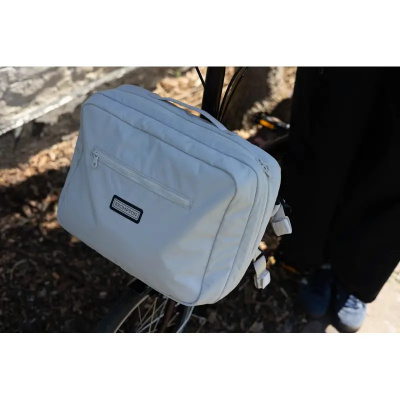
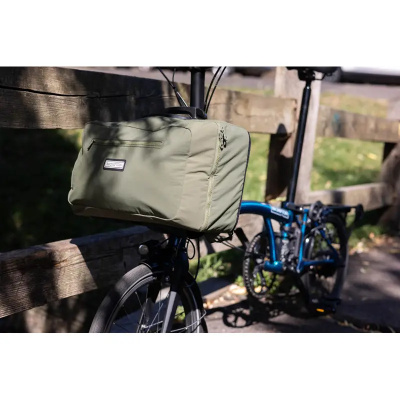
Prices and availability can change quickly. Delivery charges are not always included in listed prices.
Final price, stock status and delivery terms are set by retailer. We may receive a commission on purchases made.
How the Front Carrier Block System Actually Works
The front carrier block is a small but precisely engineered mounting point that bolts to the frame just below the headset. It's been a fixture on Brompton bikes for years, and every rucksack in the current range is built around it. The bag's internal frame - a rigid panel that sits flush against your back when you're carrying the bag - has a hook-and-slot interface at the top. You lift the bag slightly, slot the frame onto the block, and a quick-release lever at the base clicks it home. The whole process takes about three seconds once you've done it a couple of times.
Brompton rucksacks fit across all handlebar variants: S, M, H, and P-type. That said, if you're running an older pre-2017 S-type straight bar, it's worth checking cable clearance before committing to one of the taller bags in the range. On those older setups, a particularly large bag can sit close enough to the brake lever to cause interference - not dangerous, but annoying. A quick check with the bag mounted before you ride is all it takes.
Not looking for a backpack specifically? If you want to keep your back completely free but need a different carry style, Brompton messenger bags and Brompton pannier bags use the same FCB-compatible luggage system, while Brompton bar bags are worth a look for lighter, grab-and-go loads.
Borough vs Metro: Which Line Suits You
Brompton splits its rucksack range into two distinct families, and the choice between them comes down to how you actually use the bag once you're off the bike.
The Borough line is the more relaxed of the two. It uses a roll-top closure that lets you expand capacity as needed - handy if you're carrying a change of clothes or picking up groceries on the way home. The Borough comes in compact and large formats, with the larger version pushing up towards 28 litres when fully rolled open. The aesthetic leans casual: it works as well on a weekend ride out of London as it does on a Monday morning commute. If you're doing longer days or irregular loads, this is the one.
The Brompton Borough backpack range also makes good use of Repreve recycled PET fabrics, which is worth noting if sustainability factors into your buying decision - Repreve is made from post-consumer plastic bottles, and Brompton uses it without sacrificing durability.
The Metro line is built for the office-first rider. Structured zip closure, a padded laptop sleeve that fits up to 15 inches, and a more upright, organised interior with dedicated pockets for the things you actually need to find quickly - your Oyster card, your phone, your lunch. The Metro comes in at around 14 litres in the compact format, which is lean but purposeful. Move up to the larger Metro and you gain more organisation without losing the clean silhouette.
As you go up through the range, you'll find Fidlock magnetic closures on the higher-spec models. These replace traditional buckles with a one-handed magnetic snap - genuinely useful when you're clipping the bag on in the rain with gloves on. It's one of those details that sounds gimmicky until you've used it on a dark January morning at a wet station entrance.
For riders who want something beyond Brompton's own lineup, Brooks rucksacks offer a similarly urban-focused carry with a heritage leather aesthetic, while Chrome rucksacks lean harder into weatherproofing and messenger-style durability. Mission Workshop rucksacks are worth comparing if you want a waterproof roll-top with serious build quality - though none of them integrate with the FCB system, so you're back to carrying on your back.
Keeping Your Bag Going Through UK Winters
The FCB interface on the bag is plastic, and the block on the frame is metal. Road grit gets into that junction and, over time, causes wear that leads to a faint rattle when you're riding. Fix it before it starts: wipe the plastic interface down with a damp cloth every couple of weeks, and give the block itself a quick clean at the same time. It takes thirty seconds and keeps everything running quietly and cleanly.
The Cordura fabric and recycled PET materials used across the range are treated with a DWR coating from new. DWR is good, but it's not permanent - it degrades with use and washing, and once it goes, water starts soaking into the face fabric rather than beading off. You'll notice it when the fabric starts looking wet and dark rather than shedding droplets. The fix is simple: a spray-on DWR re-proofer (Nikwax or similar), applied after a clean. Do it once a season and the fabric performs as new.
For proper downpours - the kind of horizontal rain you get riding into Manchester or crossing any exposed bit of the South Downs in autumn - deploy the integrated high-visibility rain cover. It lives in a small pocket at the base of the bag and takes ten seconds to pull out and fit. The DWR coating handles light showers well, but the rain cover is the only fully waterproof option in the system. The hi-vis yellow also does useful work on dark commutes, which matters if you're riding unlit backstreets at 7am in November.
Reflective detailing is stitched into the bag panels on most models too, so even without the rain cover deployed you're not invisible. If you're putting together a proper winter commuter setup, it's worth pairing your bag with the right Brompton commuter tyres - the bag doing its job up front doesn't help much if you're sliding around on worn rubber underneath. And if you're still deciding on the bike itself, our Brompton folding bikes listings cover the full current range.
Brompton Rucksacks FAQs
Can you put a normal backpack on a Brompton?
You can, but it's not ideal. A regular backpack raises your centre of gravity and means a sweaty back by the time you arrive anywhere. Brompton-specific rucksacks clip directly onto the front carrier block, moving the load off your body entirely - weight stays low, steering stays predictable, and your back stays dry.
How does the Brompton backpack attach to the bike?
The bag has a rigid internal frame built into the back panel. That frame hooks onto the front carrier block below the headset, and a quick-release lever at the base locks it securely in place. To remove it, press the lever and lift - takes about three seconds. The frame stays inside the bag, so it carries normally as a backpack the moment you step off the bike.
Are Brompton rucksacks waterproof?
The fabrics - Cordura and Repreve recycled PET - are treated with a DWR coating that handles light rain and spray well. For heavy downpours, every bag in the current range includes a fully waterproof, high-visibility rain cover stowed in a base pocket. The DWR coating degrades over time, so re-proof with a spray treatment once a season to keep performance up.